Brooke Blosser

The Worldwide Responsibility to End Hostilities in Sudan
By: Brooke Blosser

Since April 2023, the Sudanese Civil War has been creating a humanitarian disaster. Sudan is currently facing “one of the worst humanitarian nightmares in recent history”, while much of the focus of the rest of the world is on other geopolitical issues. Due to dwindling global aid, The United States and other world leaders should take a more decisive stand on the war in Sudan, and commit to ending the humanitarian crisis and promoting democracy within the country.

The Sudanese Civil War is a consequence of political regime changes in Sudan over the past thirty years, most of which have come through violent military coups. Thus, political violence has been the norm in Sudan, and the country has had a difficult time achieving democratic stability. These trends set the stage for the power struggle between two factions of the Sudanese military: the Sudanese Armed Forces (SAF) and the Rapid Support Forces (RSF), a paramilitary group. These two groups worked together in 2019 and 2021 to carry out a coup and consolidate their power. However, questions of how the groups would work together led to a power struggle, and ultimately, the outbreak of the Civil War. The difference between this conflict and past conflicts in Sudan is that both groups are recognized by the government - neither of them can be considered rebels. With the fighting not expected to end anytime soon, the humanitarian situation can only grow worse.

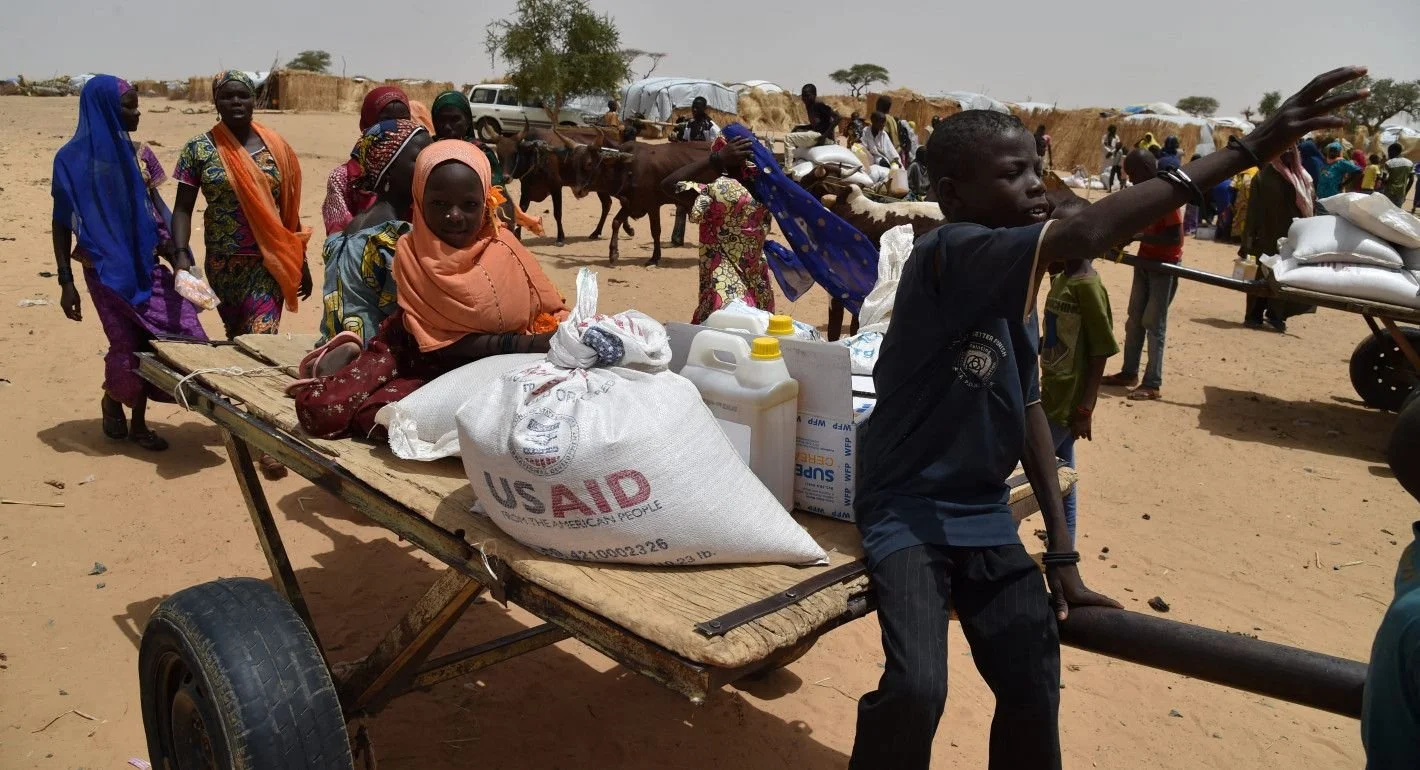
The UN reports that 12,000 Sudanese have been killed and eight million have been displaced. It is difficult for children to attend school and hunger is widespread, with 90 percent of the population facing food insecurity. Additionally, the Civil War has internally and externally displaced millions, adding to the instability both within Sudan and the Horn of Africa region. Refugees in surrounding countries like Chad and South Sudan are straining the already precarious economic systems, and compounding upon existing infrastructure issues in those countries. This crisis is currently one of the worst humanitarian issues in the world, and international organizations and world leaders need to step up to assist with ensuring humanitarian assistance reaches the people of Sudan.

Aside from assisting with humanitarian needs, organizations like the United Nations and world leaders, like the United States, must assist with brokering a peace, or, at the very least, a ceasefire to ensure protections. Aside from the obvious need to end the war for humanitarian reasons, the United States has a strategic interest in ending hostilities. If Sudan fails to return to peace, the country will become a breeding ground and safe haven for terrorist organizations. Additionally, when more migrants are forced to resettle in neighboring states, instability could spread and incite greater violence in the region and create even more space for terrorism to grow. However, even with these high stakes, no country or organization has been able to foster productive peace talks. One set of talks, organized by Saudi Arabia and the United States, fell apart due to disagreements between the Saudis and Americans. This is unacceptable, both for the citizens of Sudan stuck in a humanitarian crisis, and the world at large under the threat of terrorism.

However, it would be beneficial for both sides to explore peace: the RSF remains unpopular with the Sudanese people, while the SAF struggles to maintain order in an increasingly disorganized military structure. The incentives to pursue peace exist, both for actors in Sudan and around the world. The United Nations and other influential world leaders need to step up and provide areas for mediation to end the hostilities and protect the people in Sudan from a terrible humanitarian crisis. Additionally, the world must be committed to continuing this support through assisting with peaceful transitions of power and other democratizing measures in Sudan. Creating a culture of a peaceful democracy, which is a popular idea with the Sudanese, should not be undertaken with a goal of creating a “Western” democracy. Rather, the world should work with Sudan to create a peaceful democracy on their terms, not ours. By taking into account Sudanese culture, the world can assist with creating a lasting democracy that protects the Sudanese people from humanitarian crises, and the world from terrorists growing within their borders.

The Summer 2023 Crisis in Kosovo and International Response

By: Brooke Blosser

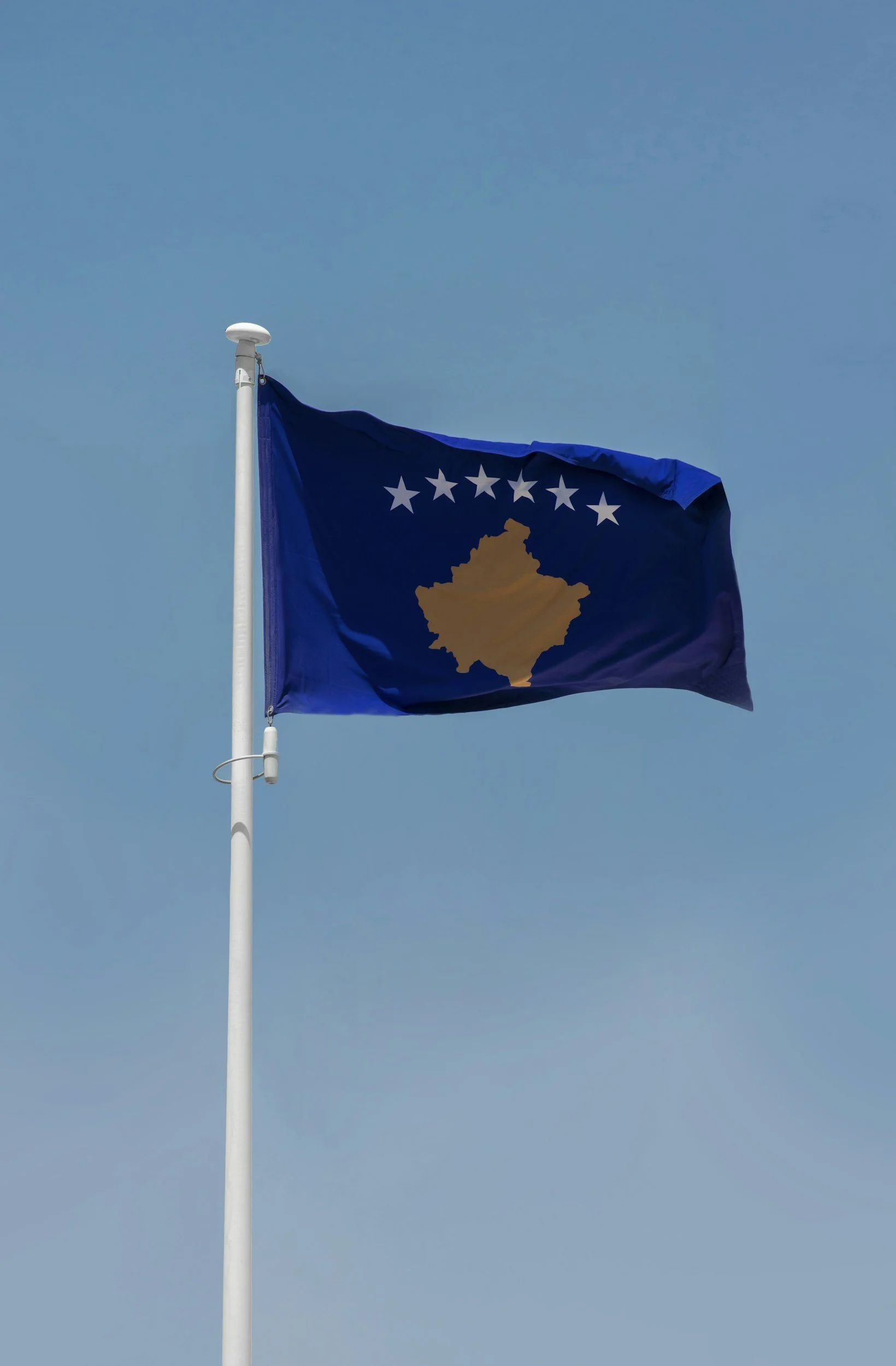
Tensions between Kosovo and Serbia have been a long standing reality of the Balkan Peninsula. In the twenty years since the breakup of Yugoslavia, relations have continued to be unstable, often with violent flare ups between the two countries. Tensions remain high because Kosovo used to be a province of Serbia, and Serbia does not currently recognize Kosovo as an independent state. Another point of contention are the pockets of ethnic Serbian minorities in the northern part of Kosovo, while the rest of the country is ethnically Albanian. Violence has taken many forms over the years and has come from both sides, with the most recent incident occurring this summer. Ethnically Albanian town officials were elected to a Serbian-majority area despite a boycott by Serbian civilians, causing a series of violent protests. These protests were a uniquely devastating flare up, warranting international concern over the longevity of the tensions. These tensions, if not resolved, could have significant impacts on each country's chances of gaining European Union membership, something that grows ever more important after Russia's invasion of Ukraine.

The 2013 Brussels Agreement between Serbia and Kosovo mandated the creation of a majority Serbian district with autonomous Serbian leaders. The Kosovar government called for elections in this district in November of 2022 following a mass resignation of Serbian officials. These officials had been influential in preserving the ‘parallel system’, which allows Serbia to maintain an influence on Kosovar government institutions in Serbian-majority districts and protect the majority Serbian population. When the Albanian government called for new elections, the Serbian majority boycotted the elections and only ethnic Albanians voted.  Thus, when Albanian leaders were elected in this district, Serbs living in the North and the Serbian government in Belegarde took issue. Serbians protested the instatement of these elected officials by demonstrating in front of the municipality buildings. They demanded new elections, in which the Serbians would voice their disapproval with Albanians serving in a position of power over the ethnic Serbian majority. After four days, these protests turned violent and garnered varied international response.

France and Germany were quick to call for new elections, saying that elections with less than five percent of the eligible voters was “not a condition of legitimacy”. This was a call for de-escalation, and an attempt to dissuade citizens from violence. Most international responses followed this logic – halting the violence and promoting compromise would be the best route for both countries involved. The United States, France, and other European Union countries have been extremely involved in creating compromises between the two nations, and have urged both leaders to follow the agreements that they previously created.

Neither Serbia nor Kosovo are currently members of the European Union. After Russia’s invasion of Ukraine in early 2022, EU membership has become ever more critical to a country’s security, especially in eastern Europe. Serbia has been in talks with the EU about accession to the organization since 2009, but the continuation of violence between Serbia and Kosovo has drawn out the process and ultimately dampened their prospects of membership. Kosovo has not applied for EU membership, and is only partially recognized around the world. Continuing tensions between these two countries vying for international approval – and an unwillingness to adhere to previous agreements – does not bode well for either of their futures. EU membership is vital for smaller countries for security: if one member is attacked, countries could be required to send military aid and assistance. Countries with smaller populations would benefit greatly from the extra assistance. Russia could become a threat to peace in the Western Balkans in the future, and these countries must be prepared in case they need military assistance.  If these two countries cannot put an end to the violence, prospects of either one gaining EU membership for essential security and economic integration purposes will dwindle, leaving them exposed and isolated from the rest of Europe while Russia invades Ukraine less than a thousand kilometers away. The United States and European Union members must continue to urge restraint between Serbia and Kosovo, and attempt to mediate before tensions escalate to a point of no return.