Private Military Companies: Shining a Light On Our Shadow Military
By: Stella Connaughton
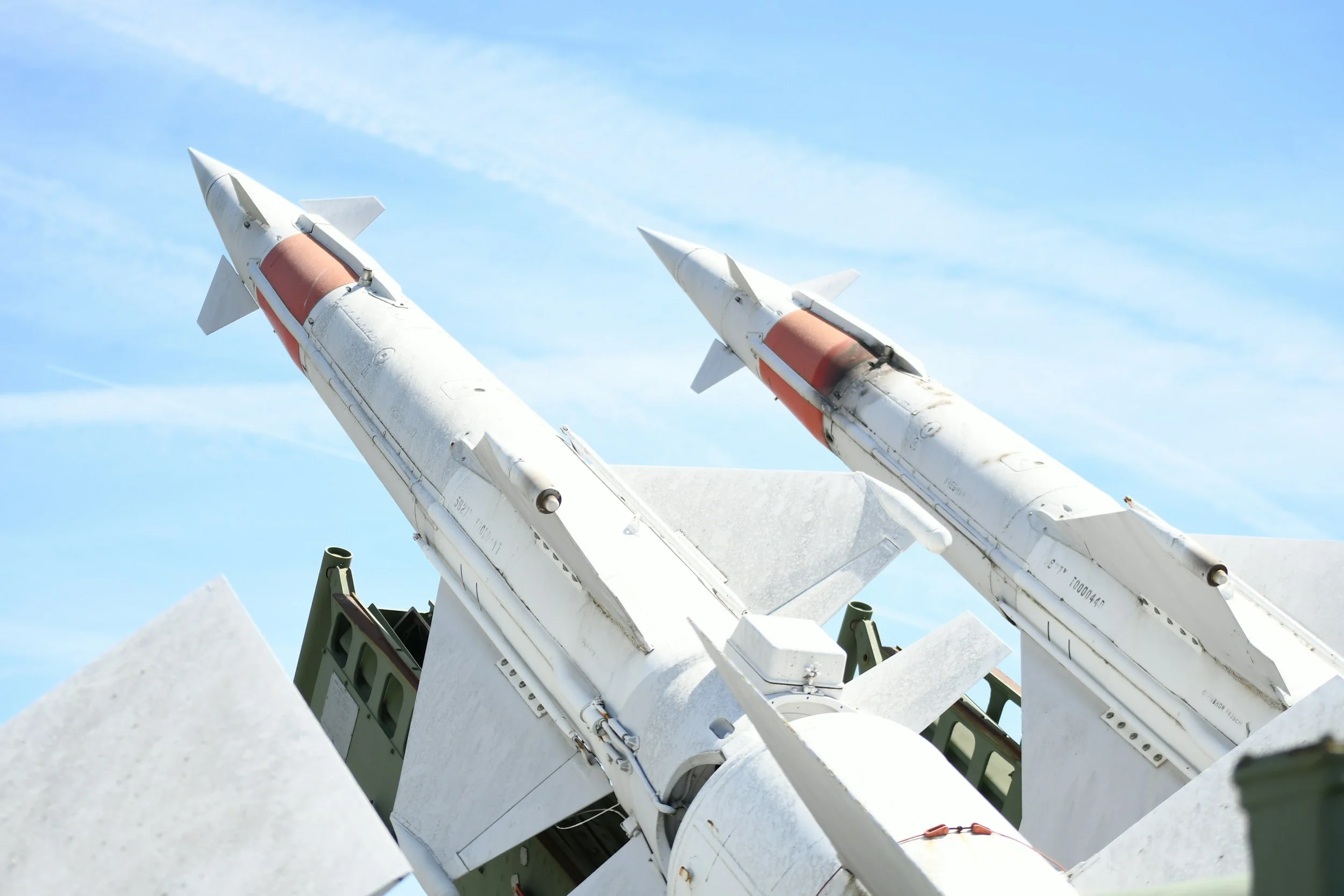
In 2004, a squad of soldiers killed 17 civilians in Baghdad. Although they were wearing American flags on their sleeves, they did not count as part of the 120,000 American soldiers in Iraq at the time. Instead, they were private military contractors: private sector soldiers that the American government paid to fight on the front lines.
Private military contractors are not a rare phenomenon: 50% of soldiers in Iraq were contracted by the American government and were not officially part of the U.S military. This industry of soldiers for hire has dramatically increased; during World War 2, only about 10% of soldiers were contracted.
Private military contractors create tricky situations in regard to their role in a conflict. While they are similar to mercenaries—soldiers for hire—PMC employees generally don’t meet the restrictive definition of a mercenary. Mercenaries are considered individuals, rather than a corporate entity that a PMC is normally defined as. On the other hand, they aren’t considered part of a country’s combatant numbers. Under international law, contractors are in fact considered civilians.
The industry of private military contractors (PMCs) is troubling. The industry generates their profit from warfare (Contractors made 138 billion dollars from the Iraq War), and their inherent profit incentive puts them at odds with American foreign policy and moral ideals. Military contractors hire soldiers from poor countries to take advantage of the thousands of men willing to be contractors for as little as a thousand dollars per month. Deficon International, one of the largest private military companies in the world, is based in Peru, a country still recovering from the effects of internal fighting. Deficon targets men who have been burdened by the cost of war and live in poverty, often with no other way to get a job.
PMCs show how reliant the United States is on the private sector for warfare as well as how the private sector is reliant on warfare for business.
Military and arms contractors are one of the biggest lobbying groups on Capitol Hill. The way they get business is when the United States needs soldiers, guns, bombs, and weapons—when the U.S goes to war. The American government then puts out a bid for a contract, often totaling hundreds of billions of dollars. In 2017, the Pentagon appropriated $320 billion for contractors.
Military lobbyists perpetuate war because it creates perpetual profits for businesses. To promote war, lobbyists spread fear. Inflation of international threats in order to increase public support for the war on terror remains a Washington tradition. Today, the arms lobby pushes for deeper US intervention in countries like Syria, Iraq, and Iran. Since the United States is not required to officially count contractors in “boots on the ground” statistics, there is less political cost associated with deploying military contractors. As a result, the United States deploys more troops in a “bigger equals better” mindset, due to the sheer number of contractors available. This incentive for intervention ultimately ends up boosting terrorism. Empirically, increasing military personnel increases anti-American terror by 30%.
As seen in the mindless killings of innocent Iraqis by contractors, private soldiers are not regulated and are more likely to commit human rights abuses. Since they don’t have to be held accountable by the U.S military, they often are more aggressive and less responsible. In addition, they are rarely trained in international law and human rights. Increases usage of PMCs will turn public opinion against U.S military occupation and increases anti-American sentiment.
The United States needs to change its current approach to private military contractors to maintain U.S support in military conflicts and regain legitimacy in peace-building operations. The federal government should establish a non-partisan independent body with the task of specifically regulating and vetting private military companies and ensuring that they’re trained to properly enter combat zones and other operations.
Most importantly, the United States should enter multilateral treaties with other countries to oversee private military contractors and avoid jurisdiction issues regarding contractors abroad.
With the long-term in mind, the United States must decrease its reliance on private military companies. They’ve empirically been a huge waste in our already bloated military spending and perpetuate one of the most harmful lobbying groups in Washington. Furthermore, the United States will never be seen as a country that prioritizes democracy and peace if we continue to rely on companies that depend on warfare for profit. When the United States goes to war, the outcome doesn’t matter: the PMC industry will always win.
The Kafala System
By: Manaal Khwaja
Last year in April, a Kuwaiti woman recorded her Ethiopian maid clinging onto a window, then falling from the seventh floor while the maid called for help. This video gained a large amount of attention globally and in Kuwait. The maid fortunately only suffered a minimal amount of injuries, and the employer was jailed, but these actions are representative of a larger social ill plaguing the Gulf states and the greater Middle East. Migrant workers are systematically and socially dehumanized. Obviously, this employer’s inhumane actions do not categorize all Kuwaitis or the Middle East. There was an enormous amount of social media backlash from the region, and the Kuwaiti Society for Human Rights called for an official investigation of the incident. However, the employer’s actions in the video display how extreme dehumanization can be, and how dangerous it is. Even with public condemnation, the mistreatment of migrant workers continues in the region, and it is permitted legally through the kafala system.
The kafala system is a sponsorship program through which unskilled workers can enter the country if they have a sponsor, which is usually the employer. Through that relationship, the worker earns a visa and legal status. However, these sponsorship relationships often lead to exploitation. It is not uncommon for employers to take away their employee’s passport (not allowing them to leave), pay them unlivable wages, and force inhumane conditions upon them (long work days, inadequate housing, physical abuse, and general mistreatment). Such exploitation has become a backbone of economic structures in the region.
This legal system allows for the exploitation of migrants, mainly from South and Southeast Asia as well as parts of Africa. 23 million workers are affected in the countries of Bahrain, Iraq, Jordan, Lebanon, Kuwait, Oman, Qatar, Saudi Arabia, and the United Arab Emirates. Although each country has its own specific regulations dictating the implementation of the system, the overarching purpose is to monitor migrant laborers who work primarily in the construction and domestic sectors. This system has been criticized as being modern slavery, and in many aspects it is.
The kafala system is not an overtly discriminatory system since workers are promised a contract that binds both the employer and employee. In practice, however, the contract is rarely followed by employers, nor does it have to include agreements that benefit the employee. Migrant workers don’t receive much judicial protection either, and there are no laws discouraging employers from mistreating workers. In fact, certain countries’ labor laws, such as Qatar and Lebanon, specifically exempt migrant workers from protection under the law against wage inequality, discrimination, and from paternal leave. Consequently, the migrant is bound to the kafel (sponsor), depending on them for full economic and social status.
This system further establishes a racial hierarchy and order through the continuation of colonial systems and values. Certain ethnicities (such as South and Southeast Asians and Africans) associated with migrant work are viewed as inferior. Migrant workers are considered to be at the bottom of society due to racist and classist beliefs that were exacerbated by colonialism. Such beliefs permit the continuation of the kafala system and ensure that progressive movements to change the system are hindered by social prejudices.
There has been increased discourse and pressure to alter this system, especially in the wealthier nations that currently use it. Right now, Qatar has promised to abolish the system by 2020, in time for the World Cup. The United Arab Emirates, Bahrain, and Kuwait have all also stated they aim to end this system. However, there is little evidence that reforms are underway, and what alterations have been made still permit abuse.
It is not possible for the kafala system to fully be abolished until social attitudes within these nations change. Currently, these states depend upon and have developed around low labor costs. As a result, completely recreating the economic system requires a large social component; one that recognizes human life as valuable and not just as a tool.
An Unconventional Tool of War
By: Daisye Rainer
In the Middle East, water is potentially the greatest weapon a state can have. The region has for decades experienced the effects of water scarcity, which has been exacerbated by a multitude of factors such as climate change and poor agricultural practices. But no factor bears the most influence on water insecurity than the region’s political conflicts.
First, populations in the Middle East are heavily dependent upon agriculture to survive and meet basic needs. In his book Farming Systems and Food Security in Africa, John Dixon calculated that approximately 70% of those living in rural areas rely on agriculture alone, and Alexandra Barton estimated that water withdrawals for farming account for 85% of total water withdrawals across the region.
But in reality, this water insecurity impacts much more than the 84 million farmers in the Middle East dependent upon water for irrigation to survive. Water is the root of so much of our world, and its decline will affect all populations in the future. For example, a lack of water harms major water-using sectors, like manufacturing, energy, and construction, which won’t be able to satisfy consumer needs and will see a decline in profit. Water, then, is crucial to not simply a country’s agricultural sector but its entire economy. And with a declining availability of water for a dependent population, it has become a tool of war.
The scarcity of the resource has increased tension among competing neighboring states, with conflict arising particularly among states who share a body of water, like the Jordan River, and has resulted in geographical and political disputes. Historically, these states have competed for water by diverting from the source at extreme rates, leading to political conflict and in even some cases, war.
But recently, the rise of extremist groups—namely ISIS—has severely impacted water security in the Middle East. Syria and Iraq present the most telling illustrations of water’s influence on political stability and politics’ influence on water security. Water here has been targeted, sequestered, and seized as means of political intimidation and deprivation. According to Globalist author Markus Heinrich and People author Lisdey Espinoza Pedraza, ISIS has launched multiple offensives since 2014 to conquer Syrian and Iraqi dams that hold enough water to sustain their respective populations. CNN also reported that ISIS-inflicted violence in Mosul, Iraq against Iraqi-led militant groups in 2016 led to the destruction of a major water line in the city, depriving half a million civilians of water. In extreme cases such as these, humanitarian aid cannot transport enough water for the millions of people affected. Political unrest and conflict have also displaced many people in the past decade, which, according to Phillip Connor of Pew, has almost doubled the number of migrants in the region and further imposed pressure and stress on the water scarcity issue.
The Middle East, especially Iraq and Syria, will continue to feel the effects of water insecurity as long as political tension exists in the region. Any direct action to combat the political groups would only aggravate conflict and possibly instigate violence against civilians. For this reason, solving this issue is a challenge: we must both seek policy solutions to safeguard the availability of water through measures such as water management reform and wrest the control of water from extremist groups who have sought to deprive their victims of earth’s most important resource.
The Ongoing LGBTQ+ Rights Crisis in Malaysia
By: Landon Holben
For each step forward that the LGBTQ+ community and its allies make, there is almost always a counterexample that shows the world is still as dangerous a place as ever for the community. Recently, a constitutional referendum vote to explicitly limit same-sex marriage was struck down before it even reached the voting stage in Romania. Yet just a month before, world news headlines described the horrific public caning and fining of two homosexual women in Malaysia. The LGBTQ+ rights crisis is a human rights crisis and should be treated as such, especially in regions such as Southeast Asia where the community is often helpless in the face of state-sponsored homophobia and discrimination.
The punishment of the two women took place in Terengganu, a state to the east of Malaysia’s capital, Kuala Lumpur. The state is known to be governed by Sharia law, including special courts specifically for Muslims. Each woman was lashed six times after being caught attempting to have sex in a parked car. They were also required to pay a fine of 3,300 ringgits ($800) each. This punishment was carried out within a courtroom with many public observers. Current Malaysian anti-sodomy law, largely unchanged since 1826, provides for whipping and up to a 20-year prison sentence for homosexual acts.
On September 22, 2018, Prime Minister Tun Dr Mahathir Mohamad, the current head of government in Malaysia, responded to criticisms made by The Human Rights Coalition of Malaysia (Suhakam) by stating that LGBT rights and same-sex marriages were unacceptable in Malaysia due to its status as a Muslim-majority nation. That same day, Suhakam itself announced that they also do not support same-sex marriage, despite their championing of the universality of human rights and criticisms of the Malaysian government’s human rights record. This is a common theme in Malaysia, as many organizations criticize discrimination and violence against the LBGT+ community, yet maintain the stance that members of the community are going against Islam and need to return to the “right” path. Since the mid-1970’s Malaysia has been undergoing a period of Islamization, in which the government has set traditional Islam on a crash course with constitutional law. Anti-sodomy laws were rarely enforced in Malaysia through most of the 20th century, yet the politically-charged persecution of the former parliamentary Opposition Leader Datuk Seri Anwar Ibrahim has now set the nation well behind many of its Southeast Asian counterparts. Anwar was first charged and jailed in 1998 before the verdict was overturned in 2004. Charges were brought again in 2008, but after trials in 2010, 2011, and 2012 he was acquitted. The Malaysian Court of Appeal overturned this acquittal in 2014, sentencing Anwar to five years in prison, which he served until his pardon on May 16, 2018. It can be argued then, that discrimination has worsened in recent years due to a combination of stricter government adherence to traditional Islam and the public discrediting of Anwar. The general population of Malaysia is being held back from learning to accept progress for the LGBTQ+ community due to the current administration’s reliance upon traditional Islam as the basis for the law.
Singapore, another nation that inherited its laws against homosexuality from the British Empire, began to review these laws throughout the last decade, essentially leading the government to declare that private acts between consenting adults would not be prosecuted. This, coupled with a dramatic rise in public acceptance for same-sex relationships over the last five years, presents a promising outlook for Singapore’s future with human rights. This goes to show that if the government is willing to lessen discrimination laws, the general public will often follow suit. This is also the case in India, which legalized homosexuality on September 6, 2018, a decision that has enjoyed support from a majority of the general population.
The case could be similar in Malaysia if the government were to lessen their support for discrimination, as India especially is a deeply traditional and religious country, much like Malaysia. The Malaysian government, however, has publicly defended human rights epidemics such as child marriage as being a lesser problem than LGBTQ+ activity. The government has also contributed directly to the HIV/AIDS epidemic in the nation by limiting public advertisement of condom-usage and treatment options. Malaysia is seventh highest in adult prevalence of HIV/AIDS in all of Asia, and even current government programs to curve the upward trend are ineffective due to the widespread discrimination and social stigmata around HIV/AIDS. This trend, which affects far more than just the LGBTQ+ community, could be reversed with government intervention and the allowance of resources to change social perspectives and combat the disease.
Famine, Peace, and War in the World's Newest Nation
By: Tristan Guarnieri
On the twelfth of September, 2018, South Sudanese president Salva Kiir and rebel leader Riek Machar signed a peace deal, formally ending the South Sudanese civil war, which had lasted five years. With an estimated 400,000 deaths, the South Sudanese civil war has proven to be one of the deadliest armed conflicts in recent history. How did the conflict escalate so far? To understand this, we have to go to back to 2011, where this nation and its problems were born.
Gaining its independence from Sudan in 2011, South Sudan’s creation marked it as the world’s newest country. This independence, however, did not mean peace for the nation, as between 2011 and 2013 the government waged war against Sudanese armed forces occupying nine out of the country’s ten states. Simultaneously, growing inter-ethnic tensions led to other forms of conflict. Not only did these conflicts contribute to the nation’s instability, but conflicting claims over oil fields fueled tension between South Sudan and Sudan. These tensions culminated in a battle between South Sudanese and Sudanese forces in March of 2012 for the Heglig oil fields, which were eventually permanently claimed by Sudan. With the economy relying on oil it did not own and with continued widespread instability, South Sudan rapidly became one of the poorest countries in the world, experiencing incredibly low literacy and widespread poverty. South Sudan’s problems thus far have been a result of war against Sudan, but it was actually conflict within the South Sudanese government itself that led to the country’s downfall in late 2013. A power struggle between President Kiir and his deputy at the time, Riek Machar, led to a tumultuous five years of war between the president’s governmental forces and Machar’s rebel forces. The South Sudanese public were helplessly caught in the crossfire.
Despite bloodiness of South Sudan’s recent history, many worldwide remain in the dark about the South Sudanese civil war. This can be traced back to two main causes: South Sudan’s resources and refugee movement. South Sudan’s main resource is oil, but although they do have some oil fields, these are not near large enough to garner international interest,, especially considering the country’s current instability. Besides this, refugees from South Sudan have not been fleeing towards Europe, and it is near impossible to garner attention from the mainstream press without causing problems for western countries..
But why care about this conflict if it has ended? Unfortunately, this recent peace agreement is far from the first this country has tried. In fact, according to The Economist, there have been at least nine ceasefires since the civil war started in 2013, and all were eventually broken. There’s no telling how long this period of peace will last, which makes using this ceasefire to help the South Sudanese population all the more important. This help is desperately needed, as the real victims of this violent war have been civilians, who have . not only been killed in the violence, but continue to suffer silently through a UN classified famine that began in 2017. With over five million of the country’s 12 million people in severe hunger and 2 million displaced, humanitarian aid is urgently needed. It is imperative to get to get food and other forms of aid to these people before warfare resumes. Even with this urgency, organizations such as the UN are struggling to finance these efforts, with a recent UN appeal of 1.7 billion dollars to aid the country being only 45% funded. To aid those in suffering, we must help spread this country’s story and make governments and other organizations aware of South Sudan’s hardships. Without interference, South Sudan will likely continue down its destructive path, creating more torment for those who have already suffered too long.
An East Asian Refugee Crisis
By: Emily Ma
Indefinite detention. Forced labor. Brutal torture. These are the realities that North Korean refugees face for escaping their totalitarian state. In accordance with a 2010 statement by the North Korean Ministry of Public Security, leaving the country without permission amounts to a “crime of treachery against the nation.” Despite the severity of this threat, thousands of men, women, and children risk their lives to escape across the 880-mile boundary between North Korea and China. Tightening border security by both countries has made this no easy feat. Yet even in the face of patrol guards, barbed wire fences, and surveillance cameras, these defectors still flee towards the hope of safety, freedom, and a better future.
Unfortunately, the struggle doesn’t end at the border. China currently refuses to recognize North Korean defectors as real refugees. It instead classifies them as illegal economic migrants, using the pretext of that label to forcibly repatriate them to their home country, despite the knowledge of the certain punishment they face upon return. According to a 2013 report by the UN Commission of Inquiry, China has deported tens of thousands of North Koreans over the past twenty years. Human Rights Watch has also reported crack downs on the networks of local guides that help facilitate the flight of these defectors, making future escape that much more difficult.
Even those that manage to evade law enforcement find themselves without the financial means to reach safety in countries like South Korea. Instead, they’re stranded, hiding illegally in a completely foreign world. In China, these vulnerable individuals have no recognized rights, and unscrupulous individuals, from brokers to human traffickers, are eager to take advantage of their desperation. As a result, many refugees are forced into invisible industries like prostitution or black-market manufacturing, living in fear of discovery by Chinese authorities.
While China certainly has a legitimate state interest in controlling its borders, as well as an agreement with North Korea that compels it to stop “illegal border crossing of residents,” China’s interest in preserving its UN obligations and international integrity should take precedence. As a party to the UN Refugee Convention, China’s current behavior violates objectives to protect refugees; it’s evident that these individuals meet the 1951 UN Refugee Convention definition of the term “refugee.” For one, these North Koreans are clearly fleeing for fear of persecution; Pyongyang has legalized inhumane penalization for any kind of political “dissent,” from practicing religion to listening to foreign music. Moreover, testimonies submitted to the Committee for Human Rights show that those who return to North Korea are interrogated and imprisoned without due process in labor camps where beatings, starvation, sexual violence, and execution are common.
By enabling the continued abuse of refugees, China has allowed itself to become complicit in North Korea’s human rights violations. Beijing’s refusal to change its policy in this case represents a failure to the international community because, by suppressing the voices of these refugees, China hinders other countries’ and supranational organizations' abilities to identify and understand Kim-Jong Un’s extensive crimes against humanity and take action against them.
The international community has a responsibility to hold China accountable. Faced with this humanitarian crisis, multilateral action is needed to pressure China to, at the very minimum, immediately cease its deportations, allowing these refugees the chance to at least seek asylum elsewhere. However, preferably, China should work with the UN High Commissioner for Refugees to organize a refugee adjudication system that could determine official refugee status parameters and institute measures for protection and resettlement. Although this approach could have far-reaching implications for China’s deteriorating relationship with North Korea, it also has the potential to save thousands of North Korean victims.
Tourism: An Economic Weapon
By: Matt Heller
It has become far too apparent recently that the People’s Republic of China, to be referred to simply as China, has far too much leverage over other countries in its efforts to eradicate support for the Republic of China, commonly regarded as Taiwan. Just recently, US air carriers acquiesced without incident to a Chinese ultimatum to drop any mention of Taiwan as a sovereign country. China’s ability to force foreign entities to accede with its policy demands is augmented by its ability to control its population and businesses more effectively than almost any other major power. Nowhere is this truer than with China’s control of its tourism industry, as the Chinese government has weaponized Chinese tourism to coerce states to give into its demands.
According to an article in The Economist, there were over 130 million international tourists from China in 2017, accounting for over $260 billion in spending, more than any other individual country. Chinese tourism is expected to continue considerable growth in tandem with China’s burgeoning middle class. And China wields near absolute control over its tourists by exercising strict oversight over all travel agencies (responsible for the majority of international Chinese travel) and by maintaining a list of acceptable countries for Chinese tourists to visit. This gives China immense leverage in cutting off this massive economic driver, especially over countries dependent on tourism.
One good example is the Dominican Republic, which switched its diplomatic recognition for the official Chinese government from Taiwan to the People’s Republic in 2018. In large part, this shift was due to promises by the Chinese government to increase the flow of tourists. China is able to use tourism as positive incentive for following China’s policy while countries opposed to China’s policy, such as Taiwan or the United States, find it difficult to respond with incentives of their own as they do not have the same control over where their tourists go as does China. For a tourism-dependent country like the Dominican Republic, an influx of new tourists presents a tantalizing increase in revenue and for China, the offer costs nothing. For another state to counter that and stop the defection of a nation to China’s sphere of influence, it would require a direct financial investment, one that a nation like Taiwan is often unable, and the United States unwilling, to provide.
Nowhere is the use of weaponized tourism more overt than in Palau, a small Pacific island state where tourism is one of the main economic drivers. Palau recognizes Taiwan as a sovereign country, and China recently barred its tourists from visiting Palau. This has resulted in a drop in airline bookings, a rise in empty hotel rooms, and a dramatically decrease in tourism revenues in a country where half of all tourists were Chinese. In this case, China is not offering to open up tourism to Palau, but instead is aggressively cutting Palau off to cause them economic pain. Perhaps the only reason Palau has not caved into Chinese demands for a change in diplomatic recognition is that the United States is still under agreement to provide funding until 2024, and Palau has historically relied heavily on American financial assistance. However, with American interest in the partnership dwindling and financial assistance’s ineffectiveness in growing the Palauan economy, it is likely only a matter of time before the island nation switches recognition to China.
Though Palau and the Dominican Republic are both small countries and the diplomatic recognition of China over Taiwan is a relatively trivial issue among more important international policies (most countries maintain de facto relations with both Chinas, including the US), China’s use of tourism to coerce policy change is still a threat to American and Western interests. At absolutely no cost to its government, China is able to offer a country a large financial investment that has the potential to grow, tying those countries economically to China and gradually bringing them under its influence. Though the weaponization of tourism is less effective against larger countries, as China’s ban on tourism to South Korea during the THAAD deployment had minimal effect, it is still a major threat as those small countries under China’s sway can provide much needed votes in the UN, potential locations for foreign military bases, and markets for foreign goods. Though today China is just leveraging these countries to switch recognition away from Taiwan, tomorrow it could be coercing them to vote in China’s favor at the UN or to open up their soil for military bases of a China ever readier to assert its influence in the world.