
Mirrored Corruption in Southeast Asia
In Southeast Asia, political reform is like a game of musical chairs. In the past year alone, both the Philippines and Indonesia have faced waves of public outrage over corruption and governance failures, and each time, their leaders responded by rearranging it.
In early 2024, the Philippines was submerged: literally and politically. A massive ₱500-billion (US$10.15 billion) flood control program, designed to protect provinces from typhoon damage, became the center of a national scandal after reports revealed that much of the funding had become “ghost projects.” Entire floodwalls existed only on paper, and many communities in Pampanga and Bulacan watched their homes drown again during the rainy season. Days later, President Ferdinand Marcos Jr. announced a sweeping cabinet reshuffle, replacing several high-profile leaders in what he called a “renewal of government integrity.” But few believed that new faces meant new ethics.
The Philippines reshaped nearly every branch of government. The Department of Public Works and Highways (DPWH) Secretary Manuel Bonoan stepped down amid investigations, replacing former Department of Transportation Secretary Vince Dizon, who swiftly demanded courtesy resignations from senior officials and filed graft complaints against implicated contractors.
The Senate, too, saw upheaval. Francis “Chiz” Escudero was ousted as Senate President, accused of delaying impeachment proceedings and linked to firms that profited from flood projects, and Vincent “Tito” Sotto III reclaimed the presidency. In the House of Representatives, Speaker Martin Romualdez, a cousin of the president, resigned following allegations of budget insertions, succeeded by Faustino “Bojie” Dy, who vowed “zero tolerance” for corruption.
To many Filipinos, this felt more like repositioning than reform. The symbolism was clear: in a country where corruption routinely erodes public trust, reshuffling the cabinet may avoid the headlines, but it cannot rebuild the foundations of integrity.
Across the sea, Indonesia was living through its own spectacle. In October of 2025, mass protests erupted across Jakarta, Surabaya, and Yogyakarta after police killed a motorcycle taxi driver during a labor demonstration. The protests, initially about police brutality, soon grew into a broader indictment of corruption and elite privilege. Lawmakers’ generous housing allowances, rising food prices, and the widening gap between politicians and citizens fueled resentment. Just a week later, President Prabowo Subianto unveiled his second major cabinet reshuffle since taking office.
Purbaya Yudhi Sadewa, former head of the Deposit Insurance Corporation, became Finance Minister. Djamari Chaniago replaced Budi Gunawan as Coordinating Minister for Political and Security Affairs. The Minister of Youth and Sports, Dito Ariotedgo, was replaced by Erick Thohir, a businessman and former Minister of State-Owned Enterprises. President Prabowo also announced a new Hajj and Umrah Ministry, expanding what he called the “Merah Putih Cabinet,” although it had the opposite effect.
Indonesians were unconvinced. For many, the reshuffle symbolized not renewal, but repetition, not addressing the public’s demands. Instead of reform, it appeared to be a disguise to project control while preserving political loyalty: the same robust networks, merely rearranged.
Both Prabowo and Marcos rely on reshuffling as a political strategy rather than a governance tool. It suggests responsiveness, even if nothing changes beneath the surface. What makes this cycle so dangerous is not merely the corruption itself, but the illusion of progress it sustains. Each reshuffle is framed as a cleansing measure, yet it reinforces the same networks of patronage and elite exchange that enabled the corruption to begin with.
This illusion of reform carries beyond politics. Foreign and domestic confidence wavers as fiscal accountability weakens. Inequality deepens when funds intended for infrastructure or welfare are diverted into private interests. Most dangerously, public cynicism grows. The more leaders rely on reshuffles to manage outrage, the more fragile their democracies become.
In this way, the Philippines and Indonesia are mirror images of one another: vibrant democracies on paper, but systems still driven by personal loyalty and patronage. Each government appointment rewards alliances, and each scandal threatens them. But corruption is not just tolerated; it becomes institutionalized. Until they stop playing musical chairs, every promise of reform will sound the same.
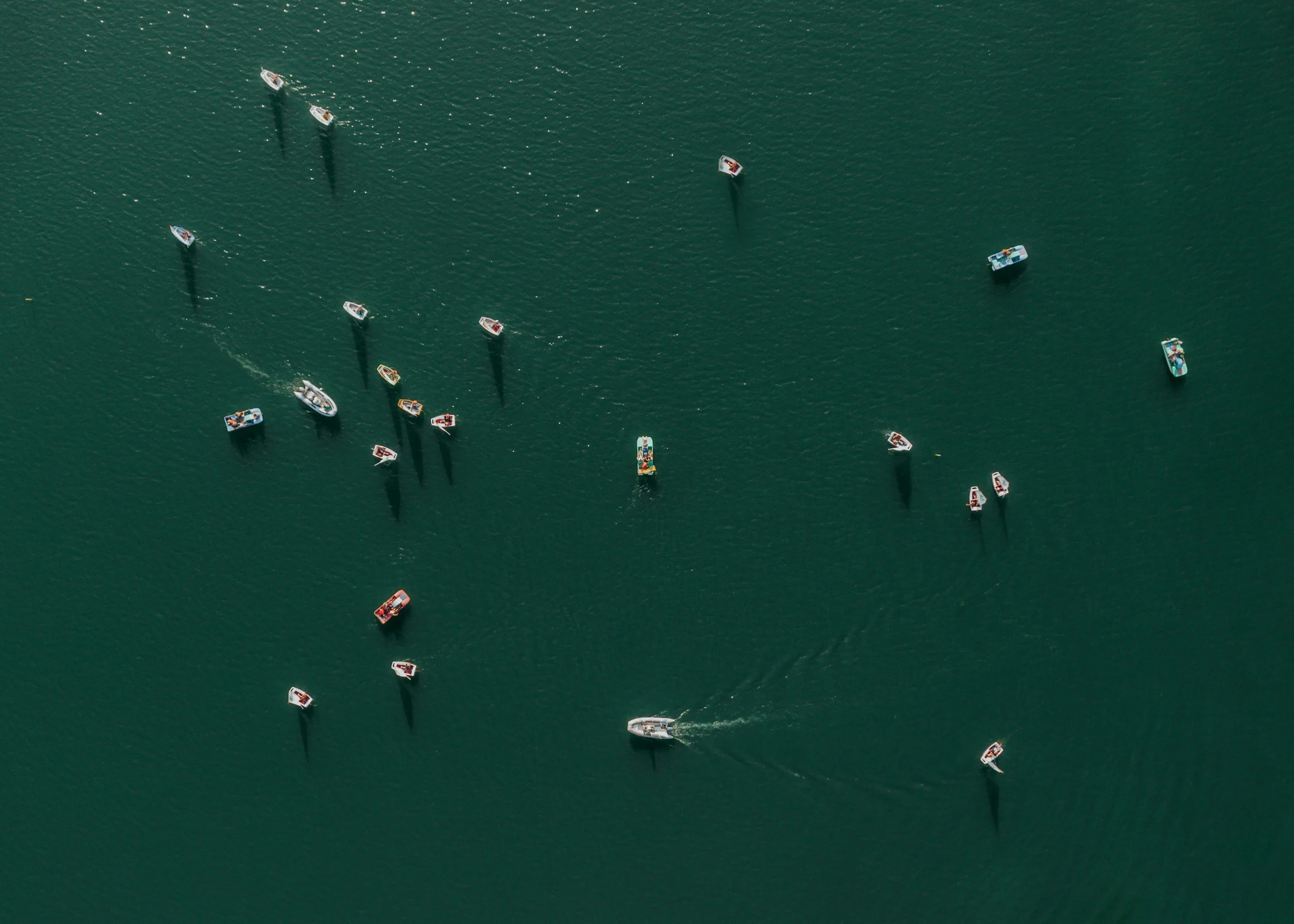
Boat Strikes Make Everyone Less Safe
Since September, the United States has attacked several boats off the coast of Venezuela that were allegedly carrying illegal drugs into the United States, killing tens of people in the process. The Trump administration has defended these actions, asserting that “[e]ach boat that we sink carries drugs that would kill more than twenty-five thousand Americans,” and that they will “blow [drug smugglers] out of existence.”
These attacks reflect a dubious interpretation of international law with possible significant geopolitical and legal consequences.
While the first strike was carried out in early September, the administration has laid the foundation for these attacks since the President assumed office in January.
On Inauguration Day, President Trump signed an executive order that allowed for drug cartels and criminal organizations to be classified as “foreign terrorist organizations.” This classification has historically been reserved for politically violent organizations such as ISIS and al-Qa’ida. Drugs and border security were critical issues in President Trump’s campaign, and are at the forefront in the minds of Americans. Still, the actions being taken by this administration to address these issues are irresponsible.
In February, eight cartels in Latin America were classified as “foreign terrorist organizations,” including Tren de Aragua (TDA), a Venezuelan street gang, and in August, the United States deployed missile destroyers off the coast of Venezuela in a more concerted effort to deter Latin American drug cartels.
The White House has also asserted that President Maduro of Venezuela is working with Tren de Aragua members to spread drugs and crime in the United States, even though an April 2025 memorandum from the National Intelligence Council asserts that “the Maduro regime probably does not have a policy of cooperating with TDA and is not directing TDA movement to and operations in the United States.”
As a result, the White House has deported several reported Tren de Aragua members, arguably without due process, and increased the bounty that was on Maduro for previous narcoterrorism charges.
Several possible international law violations may be associated with these attacks.
One example is that engaging in these activities in Venezuela’s territory is a violation of its sovereignty, which deems the United States’ actions “internationally wrongful,” according to the United Nations’ Responsibility of States for Internationally Wrongful Acts.
These attacks could also be considered an interference with a nation’s sovereignty, because they interfere with Venezuela’s “inherently sovereign functions,” such as law enforcement. The United States’ destruction of evidence of drugs and related evidence directly interferes with Venezuela’s ability to serve as law enforcement in these cases. Ultimately, this may harm America’s interests by inhibiting or disincentivizing the local prosecution of drug smugglers in their country of origin.
Another potentially applicable international law violation is wrongful intervention in Venezuela’s internal affairs. To be considered wrongful intervention, the operation(s) in question must involve coercive interference with the domaine réservé, which is essentially the “internal or domestic affairs of a State.”
The International Court of Justice (ICJ) ruled in Nicaragua v. United States in 1986 that “the element of coercion, which defines, and indeed forms the very essence of, prohibited intervention, is particularly obvious in the case of an intervention which uses force,” which is the case here. Regarding the domaine réservé interference, serving as a law enforcement force via deadly attacks, the United States interferes with Venezuela’s internal or domestic affairs.
For such attacks to be considered self-defense, which is what the Trump administration has asserted that they are, Article 51 of the United Nations Charter specifies that a state has the right to defend itself in the case of an “armed attack.”
This raises several concerns. First, there are many steps involved in producing and smuggling drugs. This longer causal chain and period of time between actions weaken the case that this can be considered an armed attack.
Second, the ICJ implied in the majority view of Nicaragua that armed attacks are only “the most grave forms of the use of force.” While drug trafficking is terrible, it is hard to imagine that it reaches this high threshold.
This weakening of international law has several implications. For one, it raises questions about the actions of other nations. The United States plays a significant role in global affairs, and its disregard for international law may send a message to other countries that it is acceptable for them to do the same, making the world less safe.
Additionally, the buildup to these attacks, including the reclassification of TDA, deportations, and an increased bounty on President Maduro, raises concerns that the US could be perceived as trying to justify a political war under the guise of an invasion. Secretary of State Marco Rubio added to this perception by saying the President “wants to wage war on these groups” and previously claiming that “Venezuela and the Maduro regime has become a threat to the region and even to the United States.”
These extrajudicial attacks by the US open the door to greater future possibilities of lawlessness in other Latin American countries, if Latin American countries follow this American example.
There are also domestic concerns that the US is using Venezuela to justify actions within the United States, like deportations without due process. More broadly, it can be seen as part of a pattern of actions that stretches the perimeter of executive action well beyond what is considered acceptable by most legal scholars. These actions include the recent deployment of the National Guard in Los Angeles. There are similar themes of violated sovereignty, and the actions taken with Venezuela do not inspire confidence that the current administration will honor this sovereignty. It could continue deploying the National Guard in cities across the United States.
The administration’s actions, at best, stretch the boundaries of several aspects of international law, and at worst, are a flagrant violation. This disregard for international law spells out dangerous consequences for Americans and foreigners alike.

The Cost of Exclusion: How H-1B Visa Policy Changes Threaten U.S. Innovation and Security
By: Céleste Wetmore
The United States is no stranger to a competition. Throughout the second half of the 20th century, Americans faced a nuclear arms race with the Soviet Union. Today, the U.S. competes neck-to-neck with China in a technology race equally essential to national security. In this race, the U.S. federal government relies on the private sector’s success, investing billions to integrate private sector tech solutions into intelligence and national security efforts, therefore developing a dependence on private sector strategies. However, the Trump administration’s recent changes to the H-1B visa acquisition process could jeopardize the very individuals needed to protect our national security.
The H-1B visa program connects specially skilled foreign applicants with American employers “who cannot otherwise obtain needed abilities from the U.S. workforce” by authorizing the temporary employment of qualified individuals not otherwise authorized to work in the United States. The program is heavily used, particularly in the science, technology, engineering and math (STEM) fields. In fiscal year (FY) 2024, 65 percent of the 400,000 approved applications were renewals, illustrating the private sector’s continuous reliance on individuals working under an H-1B visa.
Throwing a wedge into this process, President Trump recently announced a new $100,000 fee on H-1B visa petitions. Following the policy’s effective date on September 21, 2025, employers looking to hire new H-1B applicants are now required to pay this amount before continuing the petition process. The Trump administration hopes this move will incentivize private companies to hire out of the American applicant pool. However, the Trump administration has failed to consider the policy’s troubling implications given the current context.
The Trump administration’s actions disrupt a private sector that is paramount to national security efforts and built with contribution from foreign talent accessed through the H-1B visa. The COVID-19 pandemic demonstrated the critical importance of H-1B workers in responding to national emergencies. For instance, between FY 2010 and FY 2019, eight U.S. companies that helped develop the COVID-19 vaccine received H-1B approvals for 3,310 biochemists, biophysicists, chemists, and other scientists.
At this moment, the Trump administration should be attracting talent, not chasing it away. Where the COVID-19 pandemic was unexpected, the global technology race is publicly and rapidly gaining momentum, especially with the Artificial Intelligence movement. While both nations are superpowers, the U.S. holds a unique edge: massive private investment in a variety of industries, including recent AI development, an amount nearly 12 times that of China in 2024. In FY 2025, Meta, Microsoft, and Amazon were top employers of H-1B visa holders, companies projected to invest 240 billion into AI development by the end of 2025. Historically, the US has excelled at attracting top STEM talent from abroad, while China has struggled to do so. However, his policy change could push international talent back to the East. In FY 2023, Indian nationals accounted for 73 percent of approved H-1B visas, with Chinese nationals a distant second at 11.7 percent. China produced 47 percent of the top AI talent in 2022, far surpassing the United States at second place with 18 percent. With an increasingly competitive American visa process, however, Indian and Chinese talent is likely to deflect into Chinese research and development (R&D) efforts, giving critical advantage to a major U.S. adversary.
Republicans argue that companies take advantage of H-1B visa workers: paying foreigners less than Americans to save profits, therefore disadvantaging American applicants and the national economy. Following this logic, targeting companies with extra costs should force executives to reevaluate the benefits of supporting H-1B recipients and refocus on American talent. While this argument for the administration’s new policy holds a legal basis, the U.S. government is responsible for holistically evaluating the effects of their policies. This responsibility is further augmented when federal national security efforts are in danger of extensive indirect impact.
Whether the static dynamic aligns with the Trump administration’s political agenda or not, the reality is that the private sector operates with a dependence on foreign workers. The $100,000 fee is a crude fix—forcing key R&D companies to drastically shift their workforce over the next year will take funding and focus away from crucial R&D initiatives. Projects will be disrupted, potentially exposing vulnerabilities within U.S. national security. Even worse, the foreign talent driving America’s tech edge will funnel to other countries. The U.S. currently leads private enterprise in AI innovation, but China is undoubtedly its primary technological rival. With Indian and Chinese nationals accounting for over 80% of H-1B visa holders, restricting their entry risks diverting world-class talent toward Beijing instead.
Now is hardly the time to clog the international talent pipeline and disturb the delicate private-public exchange that keeps the U.S. ahead of China. If the Trump administration is desperate to address abuse of the H-1B visa, it must conduct triage: employ a delicate, calculated approach to extend support to impacted companies currently reckoning with these workforce changes.

Ireland, Populist Xenophobia, and Right-Wing Populism in the Western State
By: Luke Crafton
Almost three years ago, in November 2022, a new wave of far-right Irish politics erupted. For the first time, fierce protests arose over the development of asylum housing for 380 men, women, and children in a former office building in East Wall, Dublin. Locals involved in the protest cited widespread claims which pinned their frustration over the housing struggles of area natives on the influx of migrants. Protestors also expressed distress over anecdotes of disproportionate amounts of unmarried males arriving in Ireland, highlighting unfounded reports of violence and aggression habitually being expressed by migrants and asylum-seekers.
In November 2023, riots broke out across Dublin that instantly circulated on social networks. Following the stabbing of three children in East Dublin, new Irish right-wing platform Gript, along with various right-wing politicians, began rapidly disseminating information about the perpetrator. Riad Bouchaker’s Algerian identity became a focus, despite his status as an Irish citizen of 20 years.
The manifestation of this vitriol boiled over on the 23rd. Events included a riot peaking at 500 people involving fireworks and flares, the assault of the gardaí (the Irish police), and the destruction and burning of a Luas tram and gardaí vehicles, costing tens of millions in damage. The ramifications of misinformation and biases were unleashed in some of the most severe disarray that Dublin has seen in recent history.
This rise in violent far-right demonstrations in Ireland is rooted in populist xenophobia, and has led to the manipulation of a population with valid grievances over housing, economics, and crumbling social welfare systems. Migrants’ concern for their community’s well-being has been weaponized against their communities, which are some of the most vulnerable in the country. Brian Killoran, the CEO of Immigrant Council in Ireland, states that “The far right is a lightning rod…They are harnessing dissatisfaction in communities and blaming migrants when actually there are much bigger structural problems.”
Many experts point to the fact that the areas of Ireland most active within the wave of nationalism are those in “ignored and deprived” regions where “disproportionate” amounts of migrants are housed due to vacancies and lack of competition. The presence of migrants in these areas is more clearly visible to the Irish natives, therefore reinforcing a collective sense of neglect from the Irish government.
In response, these populations feel validated in their belief that they are being displaced and thrive upon rhetoric that continues to blind them to the larger serious, but repairable, problems that Ireland faces.
Ireland represents the experiences of many Western countries as they continue to face challenges in housing, economy, and in the provision of social services, especially following the COVID-19 pandemic. Ireland is not an isolated example of right-wing populism, as countries globally lean towards more drastic right-wing platforms centered around xenophobic rhetoric and anti-immigration policies. However, whether or not this fever faces the root causes of these systemic problems or scapegoats migrants to cope with the issues remains to be seen.
Migration will continue to grow in our highly globalized world due to conflicts, inflation uncertainty, and economic recession. With the West perceived as increasingly welcoming to migrants, America and Europe will have to make a decision. They must decide whether they are willing to honestly confront the changing dynamics of the international community, or if they will turn to ethnocentrism and withdraw from responsibilities to global politics for temporary relief from uncertainty.
Currently, the West has the ability to choose whether it will tackle these problems with awareness and tolerance, or lead our societies to experience firsthand the failure of right-wing populism as a miracle cure for growing domestic and international crises.

Forcibly Taking the Panama Canal Would Be a Disaster for the U.S.
As Trump continues to threaten to reclaim the Panama Canal, fears of military action, invasion, and loss of sovereignty rise. This would do much more harm than good.
December 2024 marked the 25th anniversary of the handover of the Panama Canal to the country’s government in 1999. The U.S. did this for geopolitical reasons, addressing numerous rising security threats by doing so. Since then, the U.S.-Panama partnership has grown and solidified, reaping many rewards for the U.S.
There were 3 important reasons why the U.S. originally handed over control of the canal. As decolonization spread after World War II, the sovereign American colonial control over the Canal Zone became increasingly unpopular. Panamanians resented the foreign control that split up their land and provided almost no benefits, leading to growing violence. Additionally, as guerilla violence in Latin America spread and increasingly framed their struggles as liberation from U.S. domination, other countries began to criticize the situation. Finally, a left-wing and nationalist military dictatorship seized power in Panama in 1968 whose main goal was to take back the Canal, with force if necessary.
Negotiations began around this time as the Nixon administration became aware of the rising threats. Famous international relations theorist and Nixon’s Secretary of State Henry Kissinger summarized the threat at the time, saying that “if these [Canal] negotiations fail, we will be beaten to death in every international forum and there will be riots all over Latin America.” President Carter completed the project, signing the 1977 Torrijos-Carter Treaties that committed to transfer control by 1999.
Though it did not happen immediately, this transfer fueled close ties between the country that eventually led to Panama’s establishment as a democracy. Today, Panama remains a committed U.S. ally with a booming economy.
Taking back control of the Canal would be disastrous to this relationship and to American influence in the region.
The Trump administration argues that the U.S. faces excessive and disproportionate tolls for ships passing through the canal. They also argued that China controls it, and could use it in a conflict to undermine American interests. Though some Chinese companies have made investments in Panama, there is no evidence to support this claim. Additionally, even if there is worry over potential influence in the Canal’s operation, forcibly retaking the Canal will not solve this problem.
Retaking the canal would effectively be recolonization, as the zone was operated as an entirely sovereign U.S. territory before 1999. This move would not counter China’s threat – in fact, it would benefit them directly. Research shows that Latin Americans have mixed feelings about China’s role in the region. An unprovoked U.S. invasion would “provide China precisely the rhetorical ammunition needed to present itself as a responsible alternative to an out-of-control U.S,” according to Americas Quarterly.
“It would likely make Panama more pro-China, not less.”
Additionally, the canal is not a simple piece of real estate to take. It is central to Panamanians' sense of their nation. Panama’s efficient and professional operation of the canal has fueled prosperity, expansion, and shown better success rates than when under U.S. control.
It is simply not in the U.S.’s interest to take the canal back. In fact, it could be catastrophic.
If concerns over Chinese influence are to be mitigated, the Trump administration must look towards other solutions, like continuing to fuel the region’s prosperity. Additionally, a main criticism, that Panama charges U.S. ships excessively, is actually an environmental concern. In 2023, the country suffered its worst drought in decades, impacting the water supply the Canal runs on. Transits were restricted because of this shortage, though some ships could pass through faster if they paid more. In general, “canal fees are applied transparently and neutrally to all countries.” To prevent this from occurring in the future, the current administration may find more success in preventing further environmental degradation from climate change.
Trump’s claims, which have now escalated to military threats, have been met with only rejection from Panamanian authorities.
Panama President Jose Raul Mulino has rejected Trump's claims, arguing that there is “no presence of any nation in the world that interferes with our administration.”
“The operation of the Panama Canal itself, and performing under the terms of the neutrality treaty, we have followed the neutrality treaty to the letter,” says Ricaurte Vasquez, Panama Canal’s administrator. “We believe that both the U.S. and Panama obey the rule of law, and we are consistent in our performance and behavior are consistent with the rule of law…if you go to military intervention I think that will be detrimental for Panama but probably will be more detrimental to the U.S. presence in the world.”
“There is a rule of law, and there is no need for any military intervention in Panama as we stand right now.”

Climate Change is Fueling the Food Crisis in Chad
Global food insecurity has surged since 2022, and the problem is not going away. Around 345 million people are impacted across 82 different countries.
Chad is the third hungriest country in the world, and it is only getting worse.
From flooding, to drought, to wildfires, climate change directly impacts food security. Geographical features drastically change, crop yields fail, and production levels decrease. The consequences are not limited to agricultural zones themselves. Agricultural chains are intricately connected, so effects in one region can lead to consequences that ripple across the entire market. In fact, in 2021, rising food commodity prices overall were a main driver of approximately 30 million people in low-income countries facing increased food insecurity.
As climate change continues to impact food production, the most at risk continue to suffer. 17% of Chad faces food shortages, and in 2024, the Government declared a “food security and nutrition emergency.”
Out of the hundreds of millions of people who face high levels of acute food insecurity, the United Nations estimates that “over two thirds…are there because of climate and conflict.”
António Guterres, Secretary-General of the United Nations stressed that climate and conflict were the main causes of acute food insecurity for around 174 million people in 2022. “A global food crisis is creating a hellscape of hunger and heartache for many of the world’s poorest people.”
Food insecurity exacerbates conflict, driving regional instability and threatening the entire world order. Hunger, especially driven by climate change, is a risk to international security. Beth Bechdol, Deputy Director-General, Food and Agriculture Organization, agrees, arguing that “there is no food security without peace, and no peace without food security.”
The U.S. has direct interests in maintaining global order and peace, and therefore direct interests in promoting the stability of Chad. This can be done by mitigating the impacts of climate change on food security in the region.
Questions remain over what is to be done. Some argue for sustainable agricultural practices, like effective water usage, drought-resistant crops, and policies to manage demand for certain products. Others point more to the harm of the global food system itself, noting that the industry is responsible for around a third of greenhouse gas emissions–second only to the energy sector. Food harvesting, storage, and transportation, can all be improved, in a multitude of ways. Additionally, many call for the increased usage of climate-smart technology, like precision watering and early-warning systems. Whatever solutions are implemented, it is important to consider the context of Chad itself in order to successfully mitigate the issue.
According to Simon Stiell, Executive Secretary of the United Nations Framework Convention on Climate Change, “1 in 10 people on Earth already suffers from chronic hunger — a reality that will worsen with accelerating climate change. In the not-too-distant future, there could be huge supply shocks, and if heating continues, food production will decline across many countries.”
To increase food security and avoid conflicts, he called for increased investment in adaptation, resilience and clean energy, declaring that “done right, climate action can help build peace.”
“It is in places like [Chad] where violence and weather shocks drive hunger,” stresses The World Food Programme. “More than one third of the families living in Chad are worried about the same thing right now: ‘when will we eat the next meal?’”

Purity Culture is a Vehicle for Sexual Violence
By: Priya Buddhavarapu
I was in New Delhi this August when a 31-year-old female trainee doctor in Kolkata, West Bengal, was found half-naked, brutally raped and murdered, on the fourth floor of the government-run RG KAR Medical College and Hospital.
Reading the news that day, pure disgust ran through me. As a woman, I was immersed in an acute fear that lashed at my core every time I roamed the streets of New Delhi in the days after. As an Indian-American, I felt overwhelming loathe towards the culture that I had always known as vibrant and joyous. Perhaps the most chilling aspect of my reaction, however, was my complete lack of surprise as I read the harrowing details of the victim’s experience.
The majority of Indian women would be able to tell you firsthand about the catcalling, staring, and vulgar body language that they are accustomed to when walking down a local street. I couldn’t even escape this unwanted attention in broad daylight with my dad, a fully grown man. The majority of Indian women would be able to tell you of the rules imposed onto them by their families–don’t walk alone, don’t stay out past dusk, don’t make eye contact with strangers, don’t go out without a specific destination.
Their daily experiences, I believe, are indicative of a much more threatening, parasitic force preying upon Indian society. From the 1992 Ajmer rape case, where over a hundred schoolgirls were sexually molested, to a more recent case in Thanjavur, Tamil Nadu, where a 23-year-old woman was gang-raped by six men, it is clear that institutionalized injustice against women has plagued India for decades.
What could be the root of the systemic sexual violence Indian women face? Why does the world seem to hate Indian women?
I believe the source of the problem is this: India’s sickening commitment to purity culture.
The term purity culture refers to an ideal, often in a religious and traditionalist context, where a person’s value is contingent upon their chastity and sexual abstinence. In societies where purity culture is prominent, the burden of keeping a community chaste typically falls to women. This also means that in cases of abuse or harassment, women are the ones who are left accountable for the actions of men–whether it be because of what they wore, what they did, or where they were.
On the other hand, men are held relatively unaccountable, sheltered by the pillars of the patriarchal society in which they were brought up in. They are inadvertently excused from any consequences; hence the burdens of their actions defaults to the shoulders of women. In a world where women are stigmatized, and women shoulder accountability, what might possibly stop a man from catcalling, molesting, raping a woman? Certainly not the fear of facing the consequences of their actions.
For this reason, I believe that purity culture is a vehicle of sexual violence.
Historically, an Indian woman’s value as a functioning member of society is contingent upon her perceived adherence to the values of purity and modesty. Her decision-making power over her own bodies, in both a sexual and reproductive context, is traditionally granted to the man who has power over her–her father, and then her husband. Virginity is sacred; sexual activity outside the hallowed bond of marriage is sacrilegious.
Purity culture, I believe, is also responsible for rape culture. In a world where Indian women increasingly dare to step outside the bubble they have been confined to, the coinciding spike in assault cases is proof of the following: sexual violence is a provoked response to women gaining ownership over their own lives. It is deep-seated, wrathful retribution to the fact that women have refused to exist solely within the roles their fathers and husbands have assigned them to. Sexual violence is an unmeasured, unequivocal response to a deviation from purity culture.

African Governments Perpetuate Intimate Partner Violence
By: Priya Buddhavarapu
The global average of reported intimate partner violence (IPV) cases is 30%. In Sub-Saharan Africa it’s, 36% and in East Africa it’s 44%.
IPV refers to abuse or aggression in a relationship, including physical violence, sexual violence, stalking, and psychological aggression. Women in rural areas, as well as marginalized groups, such as sexual minorities, are more likely to face IPV.
There are three primary stigma components that prevent IPV help-seeking measures. “Cultural stigma” refers to societal norms that put into question the experiences of women facing abuse. “Stigma internalization” refers to the practice of women believing the negative stereotypes about themselves . “Anticipated stigma” accounts for the judgement women believe they will face (i.e. status loss and discrimination).
However, still underlying these variants of stigma is the perpetuation of “victim blame and deservingness” attitudes. Many victims often hold themselves accountable for IPV if they feel they have violated gender role expectations; have provoked their partners; or feel that they are less deserving of empathy or humane treatment, particularly apparent in racial minority women.
Even still, other victims lack awareness that what they are experiencing is non-consensual and wrong; it is within the scope of their marriage, they believe, to be treated in such a way. These narratives are only revolutionized by societal stereotypes that IPV is the result of provocation of the partner by the victim.
Taken together, each of these factors justify the following: when a woman is facing IPV, it is incredibly difficult to seek help. I propose two reasons for why this conclusion is particularly relevant across the African continent.
First, on average, African nations tend to rank lower on the democracy index than other European, North American, and Asian regions. In 2024, the Democracy Index (calculated by the criteria of the Economist Group) of Sub-Saharan Africa was 4.00,North Africa was 3.12, while Western Europe was 8.28.
There also tends to be a relationship between the quality of human rights and a country’s adherence to democratic principles, providing some insight on why women nations with lower Democracy Index scores might face more consequences in pursuing IPV help-seeking measures, particularly when the dominant culture is highly sensitive and conservative.
Second, rural African women may face even less awareness on issues such as consent and sexual safety; compounded with the conservative tendencies of these rural communities to uphold societal customs and traditions, this may exacerbate IPV and other forms of domestic violence across isolated communities. Furthermore, the lack of infrastructure in rural regions of Sub-Saharan Africa also inhibits a woman’s access to proper reporting networks.
Thus, due to a lower awareness, societal stigma, and the lack of reporting mechanisms, IPV is particularly grave for the 55%-85% of African women residing in rural areas.
If IPV is a prominent issue across the continent, what, then, stands in the way of government-led preventative measures?
One argument worth considering regards privacy rights. How is the government supposed to interfere in the affairs of a consensual marriage without infringing on individual privacy rights? This question is particularly relevant for African nations such as South Africa, Nigeria, and Ghana, with comprehensive privacy protection legislation.
However, in the case of other nations with few established freedoms and low Democracy Index scores, this question seems ironic– why would privacy rights even be of concern?
The answer might lie not in privacy rights, but potentially in the continuous systemic marginalization of African women. Whether it be through inheritance rights or education policies, women remain at the bottom of the African social ladder, maintaining little access to education, land, credit, and education. If these governments fail to protect these rights, there is little hope that they will address IPV in the near future.
Thus, in order to effectively combat IPV, legal reform towards the rights of African women must first occur. Until then, our efforts must go towards spreading awareness and changing our own deep-seated negative perceptions of IPV.