The Transatlantic Alliance's Greatest Threat Is Coming From Within
Russia and China do not need to defeat the transatlantic alliance. They only need to wait for it to defeat itself.
As NATO allies debate defense spending, China’s rising influence in Indo-Pacific relations, and how to proceed in the Russia-Ukraine War, a crisis is taking place closer to home. On both sides of the Atlantic, the democratic foundations that the alliance was built upon are under strain, which presents urgent security concerns. Democratic erosion within the transatlantic community is a greater long-term threat to the alliance than external adversaries, and the U.S. and EU must prioritize shared democratic resilience as a strategic imperative.
The Atlantic Council’s Sona Muzikarova argues that this populist advance, while once confined to certain regions, is growing into a wider cross-continental movement. Democratic reversals are not new, as waves occurred between the world wars and during the Cold War. However, we are now seeing shifts in countries that were previously considered stable, including the US, India and Greece. These shifts have been driven not by underground, secretive military-style coups, but by democratically elected leaders that appear to be using a similar set of strategies to expand power. Emerging trends in previously reliable Poland, Romania, and Czechia reflect a growing concern of a cross-continental shift.
The security threat is not simply that citizens around the world are losing faith in democracy. The threat is that political elites are responding to this loss of faith by moving away from the institutional commitments that hold alliances together. Hungary is a clear example in its developments of the past 15 years. Viktor Orbán, after winning election in 2010, subsequently diminished the power of the Hungarian National Assembly, rewrote the constitution, and moved away from democratic rule. Today, Hungary is seen as an uncooperative antagonist in the EU, and tens of thousands of citizens have gathered in the past year to protest Orbán’s rule. Researchers show that this phenomenon is not simply between pro- and anti-democratic values, but between anti-establishment and technocratic approaches to governance.
On Washington’s end of the alliance, citizens are experiencing a similar erosion of trust in institutions and democratic norms. According to Freedom House’s Freedom in the World Index, the United States has fallen by 11 points from 2011 to 2023 in democratic health, placing the U.S. behind many long-standing democratic nations on the 100-point scale. Freedom House studies attribute the phenomenon in the US to structural forces, including deepening political polarization, persistent inequality, and a rapidly changing media environment. However, the key is in how leaders respond. If institutional resilience depends on how political elites proceed, then the future of the US democratic health relies on elite commitment to the institutions that sustain it. Elite behavior is the decisive variable in whether democratic institutions hold; when considering this trend alongside parallel institutional pressures in Europe, these developments have the potential to threaten the alliance as a whole.
Reports show that the world is seeing “a truly global wave of autocratization,” and for the first time in over 50 years, countries are moving more towards autocracy than democracy. These developments are reflected in weakening transatlantic relations, which are occurring simultaneously in trade, security, international institutions, and democratic values. This phenomenon is an unprecedented convergence of pressures, and one that threatens the entire European-American order.
It is necessary to understand how these developments threaten the security of both regions. If an alliance built to defend democracy is only as strong as the democracies within it, what happens when those democracies begin to fracture from within? When the anchors of the transatlantic alliance experience declining trust in democracy, the entire system is called into question – this effectively weakens the credibility of the democratic model that the alliance itself is built to defend. If external adversaries like Russia and China seek to exploit democratic weakness for their own gain, current trends mean there will soon be little unified alliance left to resist them.
There are many evolving attitudes on how to combat this problem. Some argue directly against "appeasing" the US, claiming that strengthening Europe as an independent region is necessary to ensure resilience in the face of changing relations with Washington. Yet abandoning the alliance system would leave both regions more vulnerable, not less. The key is to make elite defection from democratic norms more costly, to reduce the appeal of prioritizing short-term political incentives over long-term institutional commitments. Mechanisms in the EU exist for member states who violate democratic norms, but enforcement has been weak. Institutional structures must be strengthened in order to constrain self-serving elite behavior, regardless of who holds power. Judicial independence, press freedom, and legislative oversight must all be bolstered, both domestically and in international institutions. Internationally, this also means increasing transatlantic engagement between elites to reduce isolationism and strengthen shared norms. Bringing together policymakers, economic leaders and engaged citizens can strengthen the transatlantic relationship, making individual elite defection less likely and much harder. These strategies are not just national political concerns, but alliance assets.
University of Chicago professor Susan Stokes argues that “effective resistance to democratic erosion requires strong institutions, social trust, and political elites committed to upholding democratic norms.” If elite commitment is the current variable, then the solution is building domestic institutions and transatlantic structures that make democratic commitment the rational choice for elites. If this doesn’t happen, the entire alliance system is in danger.
And, as political scientist John Peterson has demonstrated, “the futures of the liberal order, transatlantic alliance and western democratic politics are inextricably bound together.” The transatlantic alliance was built to defend democracy from external threats. Today, the greater threat is coming from within, and if not corrected, could bring down the system before Russia and China even need to try.

Forcibly Taking the Panama Canal Would Be a Disaster for the U.S.
As Trump continues to threaten to reclaim the Panama Canal, fears of military action, invasion, and loss of sovereignty rise. This would do much more harm than good.
December 2024 marked the 25th anniversary of the handover of the Panama Canal to the country’s government in 1999. The U.S. did this for geopolitical reasons, addressing numerous rising security threats by doing so. Since then, the U.S.-Panama partnership has grown and solidified, reaping many rewards for the U.S.
There were 3 important reasons why the U.S. originally handed over control of the canal. As decolonization spread after World War II, the sovereign American colonial control over the Canal Zone became increasingly unpopular. Panamanians resented the foreign control that split up their land and provided almost no benefits, leading to growing violence. Additionally, as guerilla violence in Latin America spread and increasingly framed their struggles as liberation from U.S. domination, other countries began to criticize the situation. Finally, a left-wing and nationalist military dictatorship seized power in Panama in 1968 whose main goal was to take back the Canal, with force if necessary.
Negotiations began around this time as the Nixon administration became aware of the rising threats. Famous international relations theorist and Nixon’s Secretary of State Henry Kissinger summarized the threat at the time, saying that “if these [Canal] negotiations fail, we will be beaten to death in every international forum and there will be riots all over Latin America.” President Carter completed the project, signing the 1977 Torrijos-Carter Treaties that committed to transfer control by 1999.
Though it did not happen immediately, this transfer fueled close ties between the country that eventually led to Panama’s establishment as a democracy. Today, Panama remains a committed U.S. ally with a booming economy.
Taking back control of the Canal would be disastrous to this relationship and to American influence in the region.
The Trump administration argues that the U.S. faces excessive and disproportionate tolls for ships passing through the canal. They also argued that China controls it, and could use it in a conflict to undermine American interests. Though some Chinese companies have made investments in Panama, there is no evidence to support this claim. Additionally, even if there is worry over potential influence in the Canal’s operation, forcibly retaking the Canal will not solve this problem.
Retaking the canal would effectively be recolonization, as the zone was operated as an entirely sovereign U.S. territory before 1999. This move would not counter China’s threat – in fact, it would benefit them directly. Research shows that Latin Americans have mixed feelings about China’s role in the region. An unprovoked U.S. invasion would “provide China precisely the rhetorical ammunition needed to present itself as a responsible alternative to an out-of-control U.S,” according to Americas Quarterly.
“It would likely make Panama more pro-China, not less.”
Additionally, the canal is not a simple piece of real estate to take. It is central to Panamanians' sense of their nation. Panama’s efficient and professional operation of the canal has fueled prosperity, expansion, and shown better success rates than when under U.S. control.
It is simply not in the U.S.’s interest to take the canal back. In fact, it could be catastrophic.
If concerns over Chinese influence are to be mitigated, the Trump administration must look towards other solutions, like continuing to fuel the region’s prosperity. Additionally, a main criticism, that Panama charges U.S. ships excessively, is actually an environmental concern. In 2023, the country suffered its worst drought in decades, impacting the water supply the Canal runs on. Transits were restricted because of this shortage, though some ships could pass through faster if they paid more. In general, “canal fees are applied transparently and neutrally to all countries.” To prevent this from occurring in the future, the current administration may find more success in preventing further environmental degradation from climate change.
Trump’s claims, which have now escalated to military threats, have been met with only rejection from Panamanian authorities.
Panama President Jose Raul Mulino has rejected Trump's claims, arguing that there is “no presence of any nation in the world that interferes with our administration.”
“The operation of the Panama Canal itself, and performing under the terms of the neutrality treaty, we have followed the neutrality treaty to the letter,” says Ricaurte Vasquez, Panama Canal’s administrator. “We believe that both the U.S. and Panama obey the rule of law, and we are consistent in our performance and behavior are consistent with the rule of law…if you go to military intervention I think that will be detrimental for Panama but probably will be more detrimental to the U.S. presence in the world.”
“There is a rule of law, and there is no need for any military intervention in Panama as we stand right now.”

Climate Change is Fueling the Food Crisis in Chad
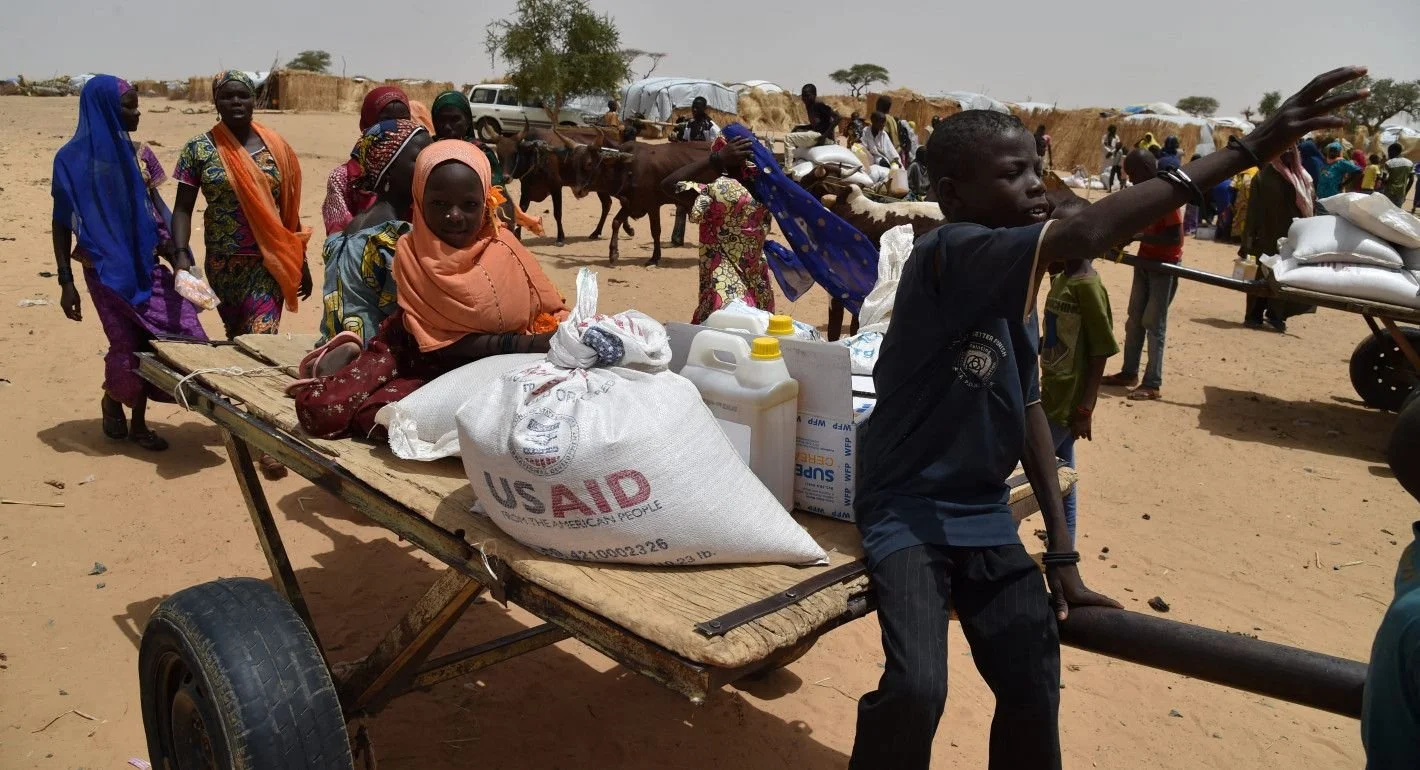
Global food insecurity has surged since 2022, and the problem is not going away. Around 345 million people are impacted across 82 different countries.
Chad is the third hungriest country in the world, and it is only getting worse.
From flooding, to drought, to wildfires, climate change directly impacts food security. Geographical features drastically change, crop yields fail, and production levels decrease. The consequences are not limited to agricultural zones themselves. Agricultural chains are intricately connected, so effects in one region can lead to consequences that ripple across the entire market. In fact, in 2021, rising food commodity prices overall were a main driver of approximately 30 million people in low-income countries facing increased food insecurity.
As climate change continues to impact food production, the most at risk continue to suffer. 17% of Chad faces food shortages, and in 2024, the Government declared a “food security and nutrition emergency.”
Out of the hundreds of millions of people who face high levels of acute food insecurity, the United Nations estimates that “over two thirds…are there because of climate and conflict.”
António Guterres, Secretary-General of the United Nations stressed that climate and conflict were the main causes of acute food insecurity for around 174 million people in 2022. “A global food crisis is creating a hellscape of hunger and heartache for many of the world’s poorest people.”
Food insecurity exacerbates conflict, driving regional instability and threatening the entire world order. Hunger, especially driven by climate change, is a risk to international security. Beth Bechdol, Deputy Director-General, Food and Agriculture Organization, agrees, arguing that “there is no food security without peace, and no peace without food security.”
The U.S. has direct interests in maintaining global order and peace, and therefore direct interests in promoting the stability of Chad. This can be done by mitigating the impacts of climate change on food security in the region.
Questions remain over what is to be done. Some argue for sustainable agricultural practices, like effective water usage, drought-resistant crops, and policies to manage demand for certain products. Others point more to the harm of the global food system itself, noting that the industry is responsible for around a third of greenhouse gas emissions–second only to the energy sector. Food harvesting, storage, and transportation, can all be improved, in a multitude of ways. Additionally, many call for the increased usage of climate-smart technology, like precision watering and early-warning systems. Whatever solutions are implemented, it is important to consider the context of Chad itself in order to successfully mitigate the issue.
According to Simon Stiell, Executive Secretary of the United Nations Framework Convention on Climate Change, “1 in 10 people on Earth already suffers from chronic hunger — a reality that will worsen with accelerating climate change. In the not-too-distant future, there could be huge supply shocks, and if heating continues, food production will decline across many countries.”
To increase food security and avoid conflicts, he called for increased investment in adaptation, resilience and clean energy, declaring that “done right, climate action can help build peace.”
“It is in places like [Chad] where violence and weather shocks drive hunger,” stresses The World Food Programme. “More than one third of the families living in Chad are worried about the same thing right now: ‘when will we eat the next meal?’”
The U.S. Must Take Immediate Action to Aid the Sudanese Healthcare Crisis
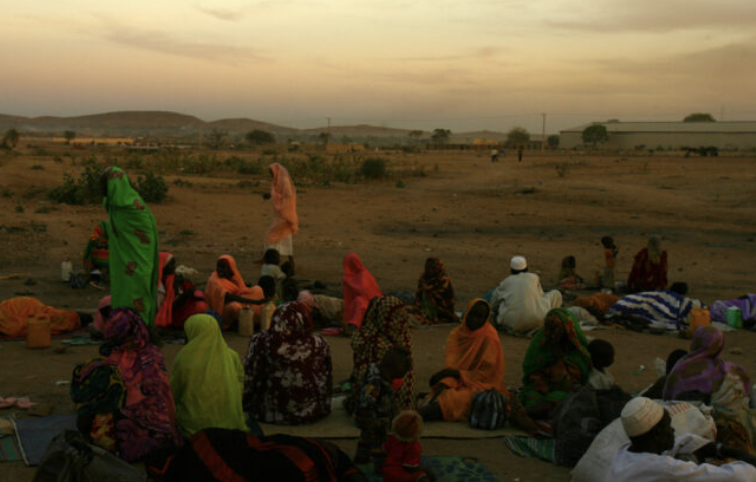
Sudan is experiencing a rapidly deteriorating humanitarian crisis. The International Rescue Committee cites the escalating fighting, an economic crisis, and a near collapse of health care services, among other causes.
The healthcare crisis presents the most urgent problem, and the United States must do more to help.
In April of 2023, conflict between the Sudanese Armed Forces (SAF) and the Rapid Support Forces (RSF) erupted into civil war. Though fighting has been concentrated in the capital city of Khartoum, reports of ethnic cleansing exist in other regions. More than 61,000 people have died. 26,000 deaths were a direct result of the violence, while the majority resulted from largely preventable diseases and starvation.
The Sudanese conflict is the world’s worst humanitarian crisis. According to the World Health Organization, 11 million are in urgent need of life-saving health care.
The healthcare crisis precedes the conflict, driven by long-term political and economic instability. The problem is compounded by lack of access to food, a key driver of disease. Millions are experiencing malnutrition, and famine was officially declared in the Darfur region in August of 2024. Exacerbated by the fighting, 25.6 million, over half of the population, are in desperate need of aid.
Over 70% of health facilities are currently non-functional. Sudan faces a complete lack of funding, supplies, and staff. Hospitals suffer from targeted attacks as well as repeated looting and occupation from both sides of the conflict.
"The situation in health clinics is beyond words," said Amelie Chbat, who oversees the International Committee of the Red Cross in Sudan. "The injured lack medicines, food, and water, and the elderly, women, and children are without essential treatments like dialysis or diabetes medications. And the situation is deteriorating."
Sudan’s health care system has virtually collapsed.
The consequences are immeasurable. There is a severe strain on resources, including water, sanitation and hygiene services. Measles has killed more than 1,000 children, while a severe cholera outbreak has led to 8,000 cases and 299 deaths. Malnutrition is rampant, immunization levels are low, and care is nonexistent. Outbreaks will continue to have devastating effects, particularly for the youth.
Humanitarian organizations have attempted to help, including the IRC, Doctors Without Borders/Médecins Sans Frontières (MSF), The Red Cross, and more. However, access to the Sudanese has been difficult. Violence and movement restrictions on organizations have constrained aid delivery, especially in the south–where need is highest. The Assessment Capacities Project (ACAPS) rated aid constraints a 5 out of 5 (extreme).
“The cost of inaction is already unbearable,” said Dr. Tammam Aloudat, president of the MSF Netherlands board. “It can be measured in the tens of thousands of lives lost and the millions of lives that are on the line as we speak.”
The U.S. has contributed financial assistance, food, and medical services to Sudan and neighboring countries. The most recent $424 million package was announced in September 2024, bringing US aid since April 2023 to over $2 billion. However, as diplomacy fails to reduce the conflict, the capacity to target rising needs will continue to fall.
The United States must do more.
Though U.S. officials claim to be “steadfast in [their] support for the people of Sudan,” they must do more than call on the RSP and SAF to cease hostilities and allow in aid. Existing support is not enough–America must use its global influence to end the crisis.
International pressure must be increased on the Sudanese forces, and the U.S. can play a major role. Unobstructed aid flow into the country is vital, and solutions are necessary to allow delivery of medical support. The United States can increase support for humanitarian organizations to bolster their presence and create a reliable supply movement into Sudan.
“Sudan and its suffering people have slipped down the world's list of priorities—forgotten by the media, neglected by political will, and overlooked by the humanitarian donor institutions that should be putting this catastrophe front and center,” says Dr. Mohamed Bashir, Sudanese medical staff member.
“Amid all this, I plead with the world: Do not let Sudan slip from your attention. At times, it feels as though no one cares, as if Sudan has been deliberately deprioritized by the global decision makers, pushed aside for other crises.”
“How much longer can we tolerate this inaction?”

Engagement With China: Lessons From United States-Japan Relations
Today, the United States and China compete across almost every facet of the global market. Whether surrounding nuclear weapons, Taiwan, or economic relations, nearly every conversation has grown tense. Cooperation has broken down since 2018, largely due to various administrations’ trade wars, specifically the Trump administration’s strategies of hostile engagement.
Attitudes coming from China reflect much of the same hostility. Advocates of aggression have grown stronger – one of the only things Democrats and Republicans agree on today is a tough stance against China. This won’t change on its own, even with the upcoming election.
We must not fall into this trap. A pre-Trump engagement strategy is not only possible, but necessary.
The U.S. must aspire to stabilize the tense relationship and allow conflict resolution. Mutual benefits include addressing shared challenges, like climate change and nuclear proliferation. An engagement strategy aligns with U.S. principles of international cooperation and diplomacy and ensures peace and stability are supported globally.
To examine the effectiveness of engagement in promoting a liberal world order, we can turn to historical experiences with Japan.
The U.S. saw confidence grow under the Bretton Woods System as trade barriers were reduced and Japan experienced rapid growth. As this growth continued into the 1980s, the U.S. began to worry about Japan’s rising influence. Economists warned Congress that Japan would surpass the U.S. in economic size. By 1995, Clinton was taking relations to the brink of a trade war – the U.S. even briefly imposed 25 percent tariffs on luxury vehicles.
A breakdown in cooperation was clear.
Many argue this supports the realist prediction that engagement will fail in the long run. However, U.S.-Japan cooperation in the 1990s continued, countering the realist theory. A 1988 bilateral deal opened Japan’s beef, orange, and cigarette markets to imports, and the collision over automobiles was averted when the U.S. withdrew luxury car tariffs a month later.
Though the end of the twentieth century witnessed international tensions that arguably undermined liberal institutionalism, this tension did not produce a collapse of the international system. Despite tensions with Japan, cooperation remained.
The realist perspective that increasing tensions inevitably lead to trade wars does not always explain how countries will interact. To better understand U.S.-China relations, we can consider the neoliberal institutionalist prediction that countries continue to move to a liberal world order.
Moves like trade restrictions are only a partial solution to combat a rising China. Export controls by the U.S. are unlikely to succeed unless other participating countries do the same, which they won’t do for fear of Chinese retaliation. It seems to be unavoidable that restrictions will either stagnate and dissipate or the two economies will forever be separated — the latter being unrealistic.
The conflict between China and the United States is not inevitable, but depends entirely on the next moves from both sides. It is clear, then, that the U.S. must return to increased engagement with China.
Responses may vary. Countries with close economic relationships with China, including South Korea and Japan, may view engagement positively. However, others with competitive concerns may profit from a limited U.S.-China trade flow. Additionally, regions like Taiwan may not react positively to an apparent U.S. acceptance of China’s policies. While countries may be wary of China’s growing regional influence, increased engagement is more effective than trying to convince them to confront China through other means, given fears of retaliation.
The urgency for renewed engagement is clear. Rising tensions threaten global stability and undermine U.S. efforts to pursue cooperation. Both nations have the opportunity to address pressing challenges, though it remains to be seen how China would respond to such a move. We cannot rely on the upcoming election for a change. The stakes are high, but the attitude that the U.S. adopts creates impacts far beyond the borders of Washington and Beijing.