Fall 2025

Complicit in War Crimes: The US Response to the War in Sudan

By: Emma Kim

The US is complicit in the suffering currently taking place in Sudan. 

Since April of 2023, Sudan has been engulfed in a brutal civil war between the Sudanese Armed Forces (SAF) and the paramilitary group known as the Rapid Support Forces (RSF). Reports of mass violence and genocide have long been present in the conversation surrounding this conflict, and the RSF’s recent overtaking of Darfur’s only remaining city center, el-Fasher, is no exception. 

United Nations officials have been investigating claims of war crimes and genocide in Sudan since the onset of the war, repeatedly warning of escalating atrocities against civilians. Reports are circulating of rapes, mass killings, and attempts by the RSF to conceal these crimes following their hostile takeover of el-Fasher. However, a deep history of similar crimes is embedded throughout this conflict.

While both forces involved in this war have been accused of war crimes and human rights violations, the most recent violence taking place in el-Fasher is being perpetrated by the RSF. Multiple investigations have signaled that the RSF has been receiving covert financial support from the United Arab Emirates (UAE). While the UAE has repeatedly denied its involvement, evidence against them is mounting, and many Western powers are growing suspicious.

The US is a long-time trading partner of the UAE. The US recently invested $200 billion in this relationship in sectors including technology, aerospace, and oil. The US has a long history of supplying the UAE with weaponry, including fighter jets and helicopters, both prior to and during the current civil war. 

After US intelligence confirmed that the UAE had been supplying the RSF with Chinese-made weaponry including drones, many in the US government questioned whether the US should lessen its economic involvement with the UAE and its export of weaponry to the Gulf state. Despite mounting evidence of the RSF’s cruelty in Darfur, US engagement with the UAE has not stopped

By refusing to put pressure on the UAE to halt its support of the RSF, the US has failed the Sudanese people. Reports of war crimes and other atrocities in the region are not new, with involvement from the RSF and other groups. International organizations such as the UN are calling for intervention from nations party to this war. While the RSF has agreed to a temporary humanitarian ceasefire, this conflict should never have been allowed to reach the point it has now. 

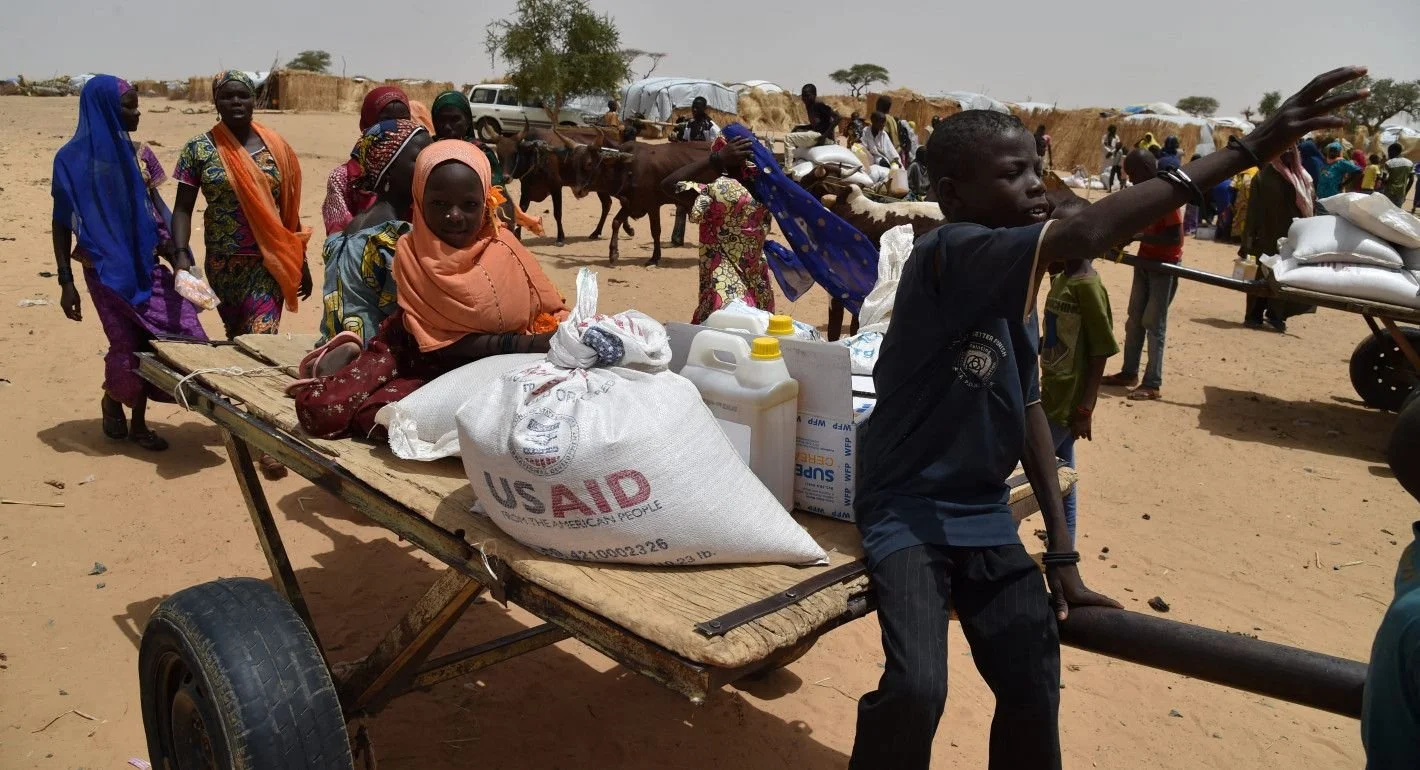
In addition to the current violent crimes Sudanese civilians are facing, cities such as el-Fasher have been under siege for many months, resulting in mass-displacement and famine. Famine has plagued Sudan since the onset of the war, and the instability and lack of access to resources which Sudanese people had to cope with was exacerbated when the US announced drastic cuts to its international aid agency, USAID.

USAID previously provided 44% of funding for Sudan’s humanitarian response in 2024. Following the withdrawal of USAID support, over 80% of Sudanese emergency kitchens were shuttered, and many in dire medical conditions forced to go without lifesaving treatment. The removal of US support for Sudanese people in the most dangerous of humanitarian situations has resulted in great amounts of suffering which could have been prevented, or at least lessened, had the US continued to provide assistance.

This combination of cuts to USAID programs which Sudanese civilians were dependent upon for survival and the trade partnerships the US maintains with the UAE implicate the US in the horrors currently unfolding in Sudan. It is the responsibility of the US government to utilize their significant economic and political leverage among the key players in this conflict to put a stop to the suffering and cruelty facing Sudanese civilians.

America’s Foreign Aid to Other Countries Benefits Us

By: Saira Uttamchandani

During the time that President Trump has been in office for his second presidential term, his administration has paused all U.S. foreign aid, resulting in a multi-billion-dollar cut to U.S. assistance overseas. The administration has dedicated itself to “maximiz[ing] governmental efficiency and productivity,” cutting spending that it feels is unnecessary via the Department of Government Efficiency (DOGE).

This is a shortsighted decision. 

America’s foreign aid greatly benefits other nations, as well as the American economy, security, and health. Cutting foreign aid is a mistake that harms national interests – something that all Americans should be concerned with, regardless of political affiliations.

Over the course of the 2023 fiscal year, the United States government spent 71.9 billion dollars on foreign aid, a little over 1% of the year’s total government spending. There are multiple agencies through which the United States dispenses funds, most notably the United States Agency for International Development (USAID) and the State Department. Since USAID’s establishment under the Kennedy administration, it has provided emergency food assistance, facilitated transitions to democracy, and helped with economic aid and stabilization in numerous countries. These causes have helped the United States economically, both directly and indirectly.

American foreign aid creates trade relationships that help grow the American economy. Over 95% of the world’s population lives outside the United States, meaning that 3 trillion dollars of U.S. GDP comes largely from American businesses selling to customers abroad. Reaching this large of a customer base requires strong relationships with other nations—relationships predicated on mutual understanding and cooperation, of which foreign aid is a big part. In fact, the vast majority of our country’s top trading partners are nations to which the United States has provided foreign aid

To stop fostering existing economic relationships and prevent the formation of potential new ones through distribution of foreign aid would devastate the economy. 

Additionally, cutting foreign aid allows our enemies to strengthen their relationships with other countries and gain the economic benefits that foreign aid once gave the United States. The US is the largest provider of foreign assistance, and stepping down from that role allows a competing hegemon such as China to fulfill that position and reap the economic and diplomatic benefits we once did. 

Currently, American foreign aid has a better reputation with recipient nations than Chinese and Russian foreign aidthis has happened over time due to the transparency of American aid. Thus, continuing to provide foreign assistance is an effective way for the US to maintain its image as more trustworthy than its enemies, a valuable asset in the global fight for power.

Furthermore, the American economy is heavily reliant on foreign trade. Millions of American jobs are involved. The President’s move to remove ourselves from the international practice of providing foreign aid poses a significant risk to these millions of Americans.

The relationships that foreign aid creates are also valuable beyond the economic sphere. Countries like China and Russia are not democracies. American foreign aid has helped with the democratization of the world, with practices such as fair judicial processes and media independence making other countries less vulnerable to foreign interference. This creates a safer world, as democracies are far less likely to engage in conflict with one another, and therefore more reliable allies for the United States in the fight against authoritarian regimes.

Foreign aid also contributes to disease eradication. Foreign aid has played a significant role in reducing the presence and spread of diseases such as HIV and tuberculosis through programs like the President's Emergency Plan for AIDS Relief (PEPFAR) and USAID. Spending money on foreign aid to combat diseases helps ensure they won’t reach American shores. To stop funding these efforts is to put millions of people who rely on US foreign aid for anti-viral treatment, vaccines, and other preventative measures at risk, as well as millions more due to the invigorated spread of disease. 

Therefore, rather than cutting foreign aid, President Trump should be utilizing it to increase our global competitiveness and protect American citizens and interests. Investing in foreign aid provides numerous benefits to the United States, and cutting it is a harmful mistake.

Reassessing Strategies for Foreign Aid, Lessons from Lesotho

By: Aidan Stern

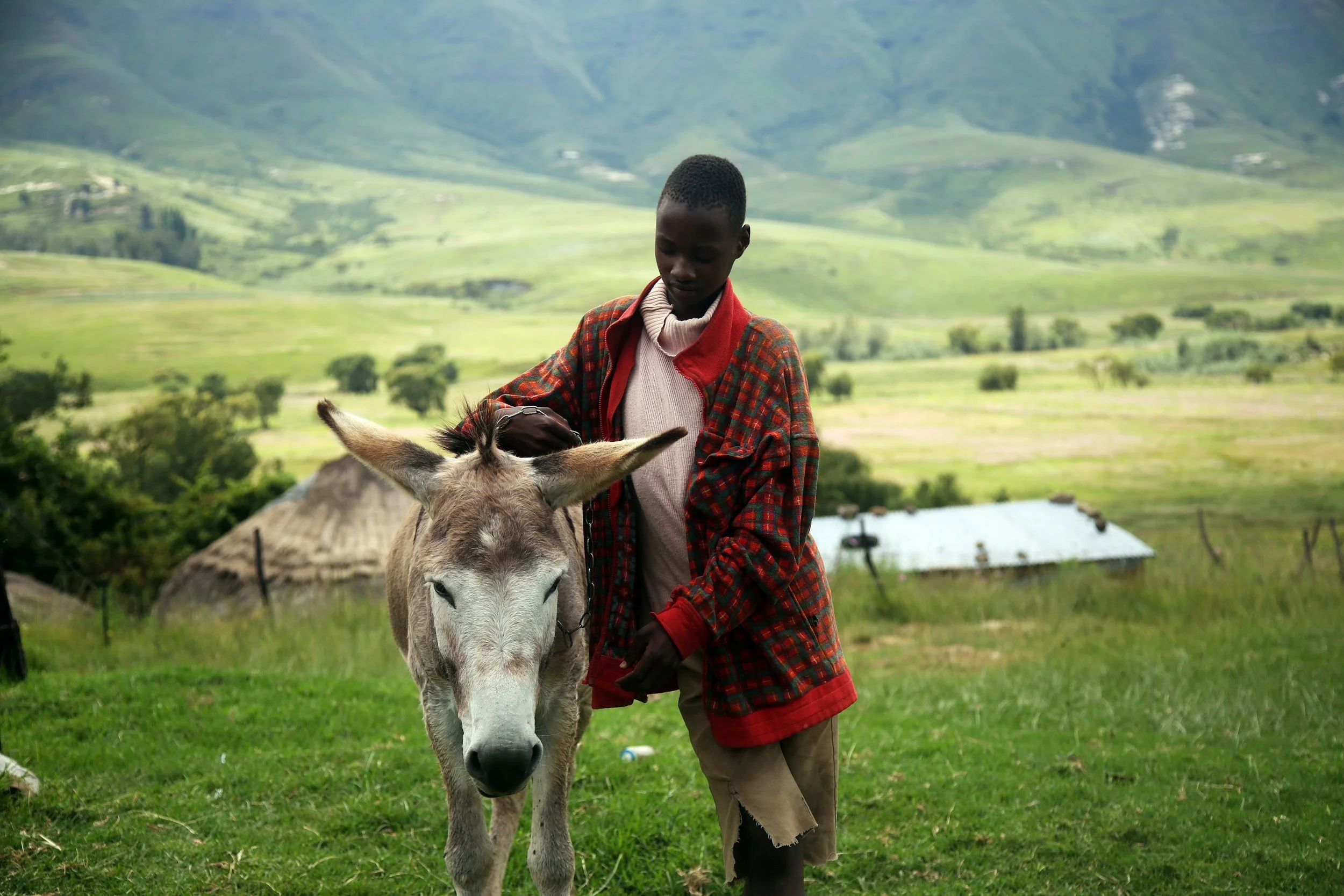
In 1975, the World Bank published a report about Lesotho, a land-locked, enclave nation completely surrounded by South Africa. The bank called the country a traditional subsistence economy, devoid of modern economic development. Rapid population growth, deteriorating agricultural production, and underdeveloped industries in Lesotho forced most laborers to migrate to South Africa for work in mines to support their families. 

Fitting traditional justifications for economic intervention, development agencies working in Lesotho gained $64 million in official assistance to address the plight of the Basotho people, aLesotho ethnic group. At the time, the money amounted to $49 for every person – man, woman, or child – living in Lesotho. Development initiatives rushed to establish a cash economy and build infrastructures like roads, fenced areas, and administrative hubs in rural communities to develop a cattle industry and accumulate credit. 

Despite what seemed to be the case on paper, three years into the project, a development office had been burned down and the Canadian Officer in charge of the program was fearing for his life. In the end, the aid organizations’ projects, co-opted by the ruling Basotho National Party, were used as propaganda and manipulated to centralize the state, exerting increased control over rural areas of the country. So, what went wrong?

The aid agencies failed to articulate actual conditions in Lesotho, instead focusing on a crisis narrative. The World Bank report ran contrary to many historical conditions and practices in Lesotho. They had a long history of stockpiling and exporting crops and livestock to South Africa. Further, labor migration was not an indicator of economic stress, but rather a long-established practice, where the Basotho acted as a labor reservoir for South African mines, farms, and industry. In turn, Basothos used earnings to purchase livestock to rear and sell when they could no longer work in the physically intensive South African industries. A farming economy didn’t materialize in the area because earlier encroachments of white settlers drove Basotho people into less productive land, creating dependence on a migratory economy. 

However, Ferguson and Lohmann debunked this narrative in their book The Anti-Politics Machine. In their terms, the international development apparatus, including the World Bank and aid agencies, “[rearranged] reality” to address problems that fit into a narrative of modern development. In doing so, the apparatus ignored the context of Lesotho’s economy and politics by shifting the problem to a purely technical standpoint. Problems became centered around solutions like developing an export based livestock economy, which clashed with long-term local conceptions of livestock as a measure of wealth and investment. The mass production of livestock and privatization of public lands would lead to overgrazing and the degradation of the land that hurts pastoralists in the long run. 

Additionally, development agencies failed to realize the political context of their development efforts by solely focusing on the government as a tool for the administration of their projects. This failure led to the expansion of a bureaucratic government equipped with better infrastructure and more resources that enabled them to prevent democratic activism and gain control over local functions. 

It is important to note that foreign aid has come a long way since the 1970s, but still has a long way to go. Solutions rely on community involvement and empowerment. Initiatives like Africa’s Great Green Wall, a massive water fixation project spanning from the Atlantic Ocean to the Red Sea to combat the expansion of the Sahara Desert, are great examples of projects which show improvements and lingering challenges with aid implementation. The project is highly ambitious, under-financed, diluted with government grift, and plagued with conflicts that prevent communities from working to replenish their land against desertification. However, there are plenty of agents facilitating conflict resolution, negotiating deals on grazing rights for pastoralists and protections for farmers among project sites. Furthermore, the UN has worked alongside the government of Chad, a partner nation in the project, to solve refugee crises by integrating refugees and host communities through joint efforts to build water harvesting structures. By focusing on the smaller project sites within the massive scale of the Great Green Wall, workers have found success enabling local communities. Luckily, the development community has been moving in the right direction, and stories of community empowerment are becoming more mainstream.

In the future, the UN and other development agencies must focus on stories of problem-solving, trust-building, and communal facilitation. True success in these initiatives originates in the people who become empowered to change their homes on their terms. As students at the University of Virginia, or anyone that reads the Virginia Journal, we have the opportunity to demand more of the organizations that work to better our and others’ lives. The first step in this is educating yourself about effective action and holding the organizations you help to a greater standard.

International Law and Accountability: The Case of the Israel-Palestine Conflict

By: Nilufer Molla

The purpose of international law is to establish the responsibilities of each state in relation to its conduct toward other countries and its treatment of national and international citizens. The current Israel-Palestine conflict demonstrates the consequences when legal obligations are outlined on paper, but have no real power from major international bodies to enforce or support them.   

The 2023 hostilities started when Hamas launched an attack on Israeli settlements, taking 254 hostages and prompting the Israeli Defense Forces (IDF) to take retaliatory action. Since October 7th, 2023, Israel has made continuous efforts to target Hamas; however, the victims have primarily been the civilian population of Palestine, with no assurance of justice or security. What followed has been a conflict that has further escalated into the systematic erasure of the Palestinian people.

Forced displacement, starvation, and bombings that amount to war crimes, crimes against humanity, and, according to legal scholars, genocide, must be addressed. However, we see little to no action taken to hold the perpetrators accountable for such violations. In fact, ceasefire agreements and other international laws continue to be broken by both nations, with one causing more humanitarian damage than the other. For example, after establishing a ceasefire in mid-January 2025, Israel launched surprise attacks in Gaza in March, violating yet another ceasefire agreement. The attacks killed and injured over 1000 civilians, demonstrating the fragility of these agreements when little enforcement exists.

Article 50 of the Fourth Geneva Convention prohibits not only the denial of humanitarian aid, but also the obstruction of its passage. Article 54 of Additional Protocol 1 prohibits starvation as a weapon of war. 

However, since May 2024, the UN World Food Programme has reported that roughly 85% of aid convoys to Gaza have been intercepted or blocked by Israeli authorities. And, famine has been confirmed. Ross Smith, the WFP’s Director of Emergencies, described the situation as “clearly a disaster unfolding in front of our eyes, in front of our television screen.” Including numerous other violations, the resulting damage includes but is not limited to the destruction of hospitals, irrevocable malnutrition, long-term famine, and loss of innocent life. 

Present international law violations are not an aberration. The Israel-Palestine conflict stretches back generations before October 2023, and ceasefire violations date as early as 1949. Specifically, since its creation, there has been a visible pattern of Israel breaking ceasefire agreements and truces with other countries. Immediately after the Israeli state was created in 1948, it violated the Armistice Agreement by attacking demilitarized zones, resulting in the deaths of numerous Palestinian civilians. Though it must be considered that these actions may have been preemptive in anticipation of an attack, the broader argument is that the absence of enforcement and action towards accountability leads to cyclical violations and violence. 

The absence of international humanitarian law is not the main issue; instead, the persisting failure to enforce it is. This pattern of continuous violations is not unique to the Israel-Palestine conflict. The United Nations (UN) often limits itself to condemnation while violence escalates on the ground. Other countries, in the past and present, have also experienced human rights violations without the United Nations’ intervention.  

When addressing several present and past Israel-Palestine human rights violations, the United Nations has appeared to only produce reports and non-legally-binding resolutions while urging that Israel’s “military operations must be conducted in strict accordance with international humanitarian law.” While condemnation is a positive step, addresses are not sufficient, especially within such a major international body. 

The International Criminal Court (ICC) had finally issued arrest warrants for Israeli Prime Minister Benjamin Netanyahu and the former defense minister in November 2024, after about a decade since the start of the investigation. The warrant was issued over war crimes and crimes against humanity in Gaza; however, no further action has been taken by the ICC. ICC member states are now obligated to arrest those charged when they are in their territory. UN powers appear to be limited, but a modern and more active stance must be taken while lives are at risk.

Since the creation of the UN, the question of Palestine has always existed. The main aspect of the UN offers a forum for discussion on conflict prevention. But even these efforts have experienced continuous pushback from Israel with United States support. While global leaders wait to come to a consensus, thousands of lives have already been lost in the process. 

This conflict makes one thing clear: if a country can violate international law, even striking UN agencies themselves, with no consequence, the entire system meant to promote and preserve global peace and security becomes, to an extent, meaningless.

Trump's Contradictory Stance on Foreign Policy

By: Jacob Rabin

For better or for worse, the early days of President Trump’s second term have consisted of an intense shakeup of the United States’ foreign policy priorities. Although some of the administration’s measures are still pending legal challenges, widespread actions including vast trade deals, foreign aid cuts, and tariffs have rattled the international status quo.

Trump has sought to claw back at least $8 billion previously allotted for foreign aid. He also blocked another $4.9 billion in aid approved by Congress already. His administration has claimed to have reached trade deals with dozens of countries, although the number of finalized agreements likely remains in the single digits. Trump has imposed some level of tariffs on nearly all nations, although it has been tough to decipher exactly how many countries are affected and at what level. Either way, he has moved beyond the handful of trade disputes typical of recent administrations and instead initiated a near-global tariff regime.

The most fascinating parts of Trump’s decisions are the actions directed at our long term allies, namely Canada and the United Kingdom. Canada alone accounts for roughly $762 billion in annual trade with the United States, including nearly $350 billion in American exports and $28 billion in agricultural goods. The United Kingdom absorbs about $85 billion in U.S. exports each year. Yet, both countries, who have long been integral security and economic partners, have been publicly scolded for unfair trade and subjected to new tariff frameworks. Trump’s complex web of tariffs on British and Canadian goods, among others, has already raised prices for key sectors of the economy like aluminum, autos, and machinery.

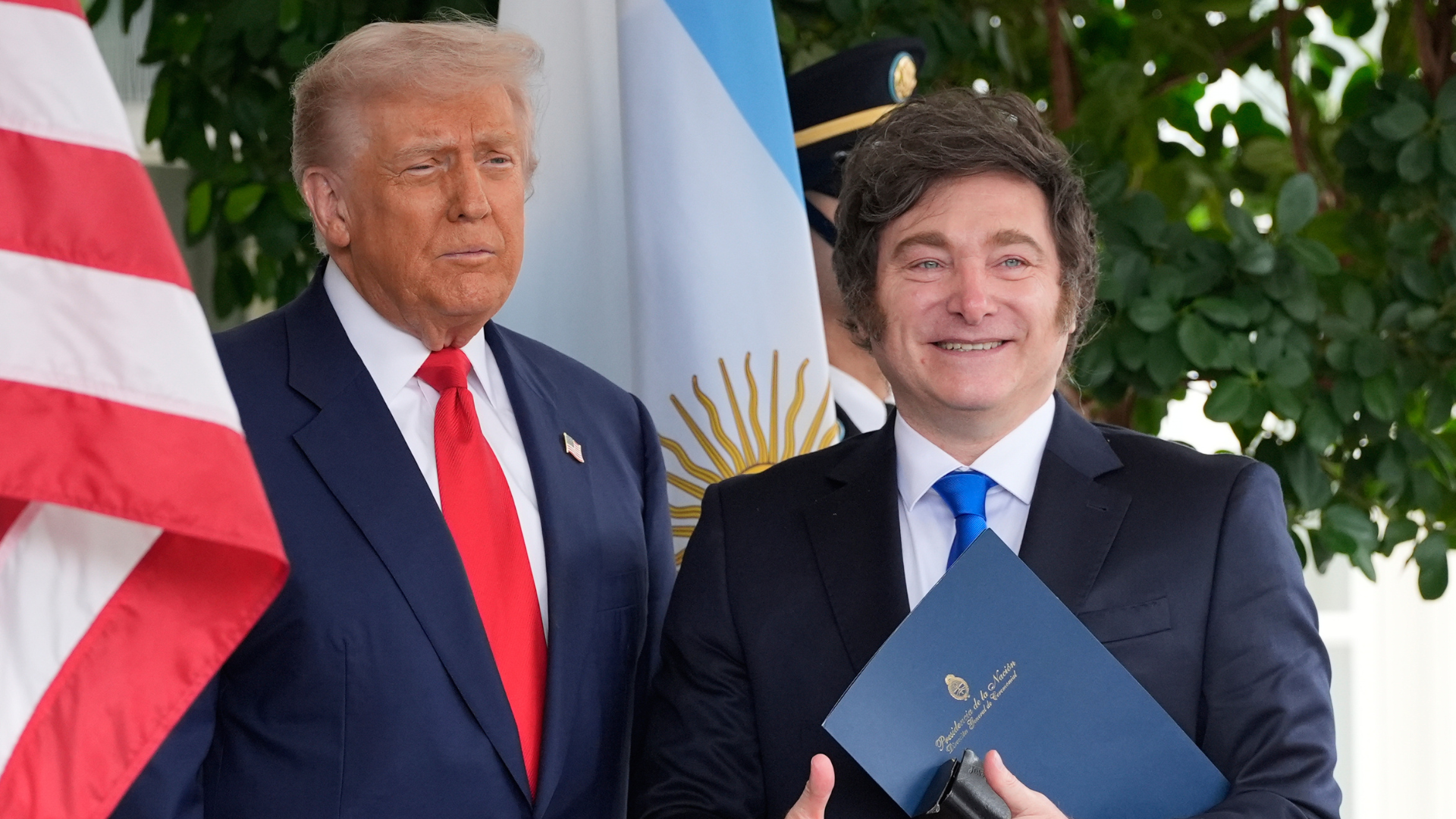
But amidst these widespread changes, one nation has been on the receiving end of American generosity and aid: Argentina. On October 9th, the U.S. announced an agreement with Argentina to provide a $20 billion currency swap lifeline to Argentina to prevent a collapse of the peso, which would have triggered widespread economic distress. This investment was followed just a few days later by another $20 billion, reportedly focused on the debt market. This move was catalyzed by the Trump administration but is to be funded by private actors and sovereign funds. Additionally, in July the Trump administration announced they were working on a plan to reinstate visa-free travel for Argentine passport holders, a strong diplomatic gesture. 

All of this for what? Just $16.5 billion in exports? When compared to the $350 billion in goods sent to Canada, it is clear that these are not economic decisions; they are ideological ones. Trump has called Argentina’s conservative leader, Javier Milei, his “favorite president” and the timing of the aforementioned financial bailout, just days before Argentina’s October 26 legislative elections, was unmistakable. The goal of these actions was immediately clear. Trump wanted to prop up Milei’s conservative party rather than risk losing ground to the left-leaning Peronist opposition movement.

This aid has come at the expense of Americans, many of whom have been longtime supporters of Trump. The beef industry has been hit particularly hard. Senator Fischer, a Republican from Nebraska who has supported Trump on nearly everything urged the administration to prioritize America’s ranchers. She warned, warned that Trump's policies are not “the way” to address rising beef prices; she asserts that government intervention in the beef market will hurt cattle ranchers and urges the Trump administration to “focus on trade deals that benefit [American] [agricultural] producers” rather than “imports that will do more harm than good.” Justin Tupper, the President of the United States Cattlemen's Association went further, saying, “A deal of this magnitude with Argentina would undercut the very foundation of our cattle industry.” 

Other Republicans were critical, or at the very least skeptical. Josh Hawley, a Republican senator from Missouri said, “My intuitive response to bailouts in general, whether talking about bank executives or foreign countries, is to be very skeptical.” In fact, 48% of Trump voters expressed disapproval of the net $40 billion package for Argentina.

Trump’s foreign policy decisions make little sense currently, but this isn’t a new revelation. People far smarter than me have been making this argument since day one. However, we must continue to ask why. Americans deserve to know why their government is underwriting the success of a foreign leader while farmers and manufacturers at home face rising costs and shrinking markets. Asking that question isn’t disloyal—it’s patriotic. In the end, holding our government accountable is far more American than bailing out a far-right ruler half a world away.

Mirrored Corruption in Southeast Asia 

By: Margaret Jane Piatos

In Southeast Asia, political reform is like a game of musical chairs. In the past year alone, both the Philippines and Indonesia have faced waves of public outrage over corruption and governance failures, and each time, their leaders responded by rearranging it.

In early 2024, the Philippines was submerged: literally and politically. A massive ₱500-billion (US$10.15 billion) flood control program, designed to protect provinces from typhoon damage, became the center of a national scandal after reports revealed that much of the funding had become “ghost projects.” Entire floodwalls existed only on paper, and many communities in Pampanga and Bulacan watched their homes drown again during the rainy season. Days later, President Ferdinand Marcos Jr. announced a sweeping cabinet reshuffle, replacing several high-profile leaders in what he called a “renewal of government integrity.” But few believed that new faces meant new ethics. 

The Philippines reshaped nearly every branch of government. The Department of Public Works and Highways (DPWH) Secretary Manuel Bonoan stepped down amid investigations, replacing former Department of Transportation Secretary Vince Dizon, who swiftly demanded courtesy resignations from senior officials and filed graft complaints against implicated contractors.

The Senate, too, saw upheaval. Francis “Chiz” Escudero was ousted as Senate President, accused of delaying impeachment proceedings and linked to firms that profited from flood projects, and Vincent “Tito” Sotto III reclaimed the presidency. In the House of Representatives, Speaker Martin Romualdez, a cousin of the president, resigned following allegations of budget insertions, succeeded by Faustino “Bojie” Dy, who vowed “zero tolerance” for corruption. 

To many Filipinos, this felt more like repositioning than reform. The symbolism was clear: in a country where corruption routinely erodes public trust, reshuffling the cabinet may avoid the headlines, but it cannot rebuild the foundations of integrity. 

Across the sea, Indonesia was living through its own spectacle. In October of 2025, mass protests erupted across Jakarta, Surabaya, and Yogyakarta after police killed a motorcycle taxi driver during a labor demonstration. The protests, initially about police brutality, soon grew into a broader indictment of corruption and elite privilege. Lawmakers’ generous housing allowances, rising food prices, and the widening gap between politicians and citizens fueled resentment. Just a week later, President Prabowo Subianto unveiled his second major cabinet reshuffle since taking office. 

Purbaya Yudhi Sadewa, former head of the Deposit Insurance Corporation, became Finance Minister. Djamari Chaniago replaced Budi Gunawan as Coordinating Minister for Political and Security Affairs. The Minister of Youth and Sports, Dito Ariotedgo, was replaced by Erick Thohir, a businessman and former Minister of State-Owned Enterprises. President Prabowo also announced a new Hajj and Umrah Ministry, expanding what he called the “Merah Putih Cabinet,” although it had the opposite effect.

Indonesians were unconvinced. For many, the reshuffle symbolized not renewal, but repetition, not addressing the public’s demands. Instead of reform, it appeared to be a disguise to project control while preserving political loyalty: the same robust networks, merely rearranged.

Both Prabowo and Marcos rely on reshuffling as a political strategy rather than a governance tool. It suggests responsiveness, even if nothing changes beneath the surface. What makes this cycle so dangerous is not merely the corruption itself, but the illusion of progress it sustains. Each reshuffle is framed as a cleansing measure, yet it reinforces the same networks of patronage and elite exchange that enabled the corruption to begin with. 

This illusion of reform carries beyond politics. Foreign and domestic confidence wavers as fiscal accountability weakens. Inequality deepens when funds intended for infrastructure or welfare are diverted into private interests. Most dangerously, public cynicism grows. The more leaders rely on reshuffles to manage outrage, the more fragile their democracies become. 

In this way, the Philippines and Indonesia are mirror images of one another: vibrant democracies on paper, but systems still driven by personal loyalty and patronage. Each government appointment rewards alliances, and each scandal threatens them. But corruption is not just tolerated; it becomes institutionalized. Until they stop playing musical chairs, every promise of reform will sound the same.

Boat Strikes Make Everyone Less Safe

By: Saira Uttamchandani

Since September, the United States has attacked several boats off the coast of Venezuela that were allegedly carrying illegal drugs into the United States, killing tens of people in the process. The Trump administration has defended these actions, asserting that “[e]ach boat that we sink carries drugs that would kill more than twenty-five thousand Americans,” and that they will “blow [drug smugglers] out of existence.”

These attacks reflect a dubious interpretation of international law with possible significant geopolitical and legal consequences.

While the first strike was carried out in early September, the administration has laid the foundation for these attacks since the President assumed office in January.

On Inauguration Day, President Trump signed an executive order that allowed for drug cartels and criminal organizations to be classified as “foreign terrorist organizations.” This classification has historically been reserved for politically violent organizations such as ISIS and al-Qa’ida. Drugs and border security were critical issues in President Trump’s campaign, and are at the forefront in the minds of Americans. Still, the actions being taken by this administration to address these issues are irresponsible. 

In February, eight cartels in Latin America were classified as “foreign terrorist organizations,” including Tren de Aragua (TDA), a Venezuelan street gang, and in August, the United States deployed missile destroyers off the coast of Venezuela in a more concerted effort to deter Latin American drug cartels.

The White House has also asserted that President Maduro of Venezuela is working with Tren de Aragua members to spread drugs and crime in the United States, even though an April 2025 memorandum from the National Intelligence Council asserts that “the Maduro regime probably does not have a policy of cooperating with TDA and is not directing TDA movement to and operations in the United States.”

As a result, the White House has deported several reported Tren de Aragua members, arguably without due process, and increased the bounty that was on Maduro for previous narcoterrorism charges.

Several possible international law violations may be associated with these attacks.

One example is that engaging in these activities in Venezuela’s territory is a violation of its sovereignty, which deems the United States’ actions “internationally wrongful,” according to the United Nations’ Responsibility of States for Internationally Wrongful Acts.

These attacks could also be considered an interference with a nation’s sovereignty, because they interfere with Venezuela’s “inherently sovereign functions,” such as law enforcement. The United States’ destruction of evidence of drugs and related evidence directly interferes with Venezuela’s ability to serve as law enforcement in these cases. Ultimately, this may harm America’s interests by inhibiting or disincentivizing the local prosecution of drug smugglers in their country of origin.

Another potentially applicable international law violation is wrongful intervention in Venezuela’s internal affairs. To be considered wrongful intervention, the operation(s) in question must involve coercive interference with the domaine réservé, which is essentially the “internal or domestic affairs of a State.”

The International Court of Justice (ICJ) ruled in Nicaragua v. United States in 1986 that “the element of coercion, which defines, and indeed forms the very essence of, prohibited intervention, is particularly obvious in the case of an intervention which uses force,” which is the case here. Regarding the domaine réservé interference, serving as a law enforcement force via deadly attacks, the United States interferes with Venezuela’s internal or domestic affairs.

For such attacks to be considered self-defense, which is what the Trump administration has asserted that they are, Article 51 of the United Nations Charter specifies that a state has the right to defend itself in the case of an “armed attack.”

This raises several concerns. First, there are many steps involved in producing and smuggling drugs. This longer causal chain and period of time between actions weaken the case that this can be considered an armed attack.

Second, the ICJ implied in the majority view of Nicaragua that armed attacks are only “the most grave forms of the use of force.” While drug trafficking is terrible, it is hard to imagine that it reaches this high threshold.

This weakening of international law has several implications. For one, it raises questions about the actions of other nations. The United States plays a significant role in global affairs, and its disregard for international law may send a message to other countries that it is acceptable for them to do the same, making the world less safe.

Additionally, the buildup to these attacks, including the reclassification of TDA, deportations, and an increased bounty on President Maduro, raises concerns that the US could be perceived as trying to justify a political war under the guise of an invasion. Secretary of State Marco Rubio added to this perception by saying the President “wants to wage war on these groups” and previously claiming that “Venezuela and the Maduro regime has become a threat to the region and even to the United States.” 

These extrajudicial attacks by the US open the door to greater future possibilities of lawlessness in other Latin American countries, if Latin American countries follow this American example.

There are also domestic concerns that the US is using Venezuela to justify actions within the United States, like deportations without due process. More broadly, it can be seen as part of a pattern of actions that stretches the perimeter of executive action well beyond what is considered acceptable by most legal scholars. These actions include the recent deployment of the National Guard in Los Angeles. There are similar themes of violated sovereignty, and the actions taken with Venezuela do not inspire confidence that the current administration will honor this sovereignty. It could continue deploying the National Guard in cities across the United States.

The administration’s actions, at best, stretch the boundaries of several aspects of international law, and at worst, are a flagrant violation. This disregard for international law spells out dangerous consequences for Americans and foreigners alike.

The Cost of Exclusion: How H-1B Visa Policy Changes Threaten U.S. Innovation and Security

By: Céleste Wetmore

The United States is no stranger to a competition. Throughout the second half of the 20th century, Americans faced a nuclear arms race with the Soviet Union. Today, the U.S. competes neck-to-neck with China in a technology race equally essential to national security. In this race, the U.S. federal government relies on the private sector’s success, investing billions to integrate private sector tech solutions into intelligence and national security efforts, therefore developing a dependence on private sector strategies. However, the Trump administration’s recent changes to the H-1B visa acquisition process could jeopardize the very individuals needed to protect our national security.

The H-1B visa program connects specially skilled foreign applicants with American employers “who cannot otherwise obtain needed abilities from the U.S. workforce” by authorizing the temporary employment of qualified individuals not otherwise authorized to work in the United States. The program is heavily used, particularly in the science, technology, engineering and math (STEM) fields. In fiscal year (FY) 2024, 65 percent of the 400,000 approved applications were renewals, illustrating the private sector’s continuous reliance on individuals working under an H-1B visa.

Throwing a wedge into this process, President Trump recently announced a new $100,000 fee on H-1B visa petitions. Following the policy’s effective date on September 21, 2025, employers looking to hire new H-1B applicants are now required to pay this amount before continuing the petition process. The Trump administration hopes this move will incentivize private companies to hire out of the American applicant pool. However, the Trump administration has failed to consider the policy’s troubling implications given the current context.

The Trump administration’s actions disrupt a private sector that is paramount to national security efforts and built with contribution from foreign talent accessed through the H-1B visa. The COVID-19 pandemic demonstrated the critical importance of H-1B workers in responding to national emergencies. For instance, between FY 2010 and FY 2019, eight U.S. companies that helped develop the COVID-19 vaccine received H-1B approvals for 3,310 biochemists, biophysicists, chemists, and other scientists.

At this moment,  the Trump administration should be attracting talent, not chasing it away. Where the COVID-19 pandemic was unexpected, the global technology race is publicly and rapidly gaining momentum, especially with the Artificial Intelligence movement.  While both nations are superpowers, the U.S. holds a unique edge: massive private investment in a variety of industries, including recent AI development, an amount nearly 12 times that of China in 2024.  In FY 2025, Meta, Microsoft, and Amazon were top employers of H-1B visa holders, companies projected to invest 240 billion into AI development by the end of 2025.  Historically, the US has excelled at attracting top STEM talent from abroad, while China has struggled to do so. However, his policy change could push international talent back to the East. In FY 2023, Indian nationals accounted for 73 percent of approved H-1B visas, with Chinese nationals a distant second at 11.7 percent. China produced 47 percent of the top AI talent in 2022, far surpassing the United States at second place with 18 percent. With an increasingly competitive American visa process, however, Indian and Chinese talent is likely to deflect into Chinese research and development (R&D) efforts, giving critical advantage to a major U.S. adversary.

Republicans argue that companies take advantage of H-1B visa workers: paying foreigners less than Americans to save profits, therefore disadvantaging American applicants and the national economy. Following this logic, targeting companies with extra costs should force executives to reevaluate the benefits of supporting H-1B recipients and refocus on American talent. While this argument for the administration’s new policy holds a legal basis, the U.S. government is responsible for holistically evaluating the effects of their policies. This responsibility is further augmented when federal national security efforts are in danger of extensive indirect impact.

Whether the static dynamic aligns with the Trump administration’s political agenda or not, the reality is that the private sector operates with a dependence on foreign workers. The $100,000 fee is a crude fix—forcing key R&D companies to drastically shift their workforce over the next year will take funding and focus away from crucial R&D initiatives. Projects will be disrupted, potentially exposing vulnerabilities within U.S. national security. Even worse, the foreign talent driving America’s tech edge will funnel to other countries. The U.S. currently leads private enterprise in AI innovation, but China is undoubtedly its primary technological rival. With Indian and Chinese nationals accounting for over 80% of H-1B visa holders, restricting their entry risks diverting world-class talent toward Beijing instead.

Now is hardly the time to clog the international talent pipeline and disturb the delicate private-public exchange that keeps the U.S. ahead of China. If the Trump administration is desperate to address abuse of the H-1B visa, it must conduct triage: employ a delicate, calculated approach to extend support to impacted companies currently reckoning with these workforce changes.