Céleste Wetmore

Recalibrating U.S. Intervention in Iran to Enable a Stable Successor State

By: Céleste Wetmore

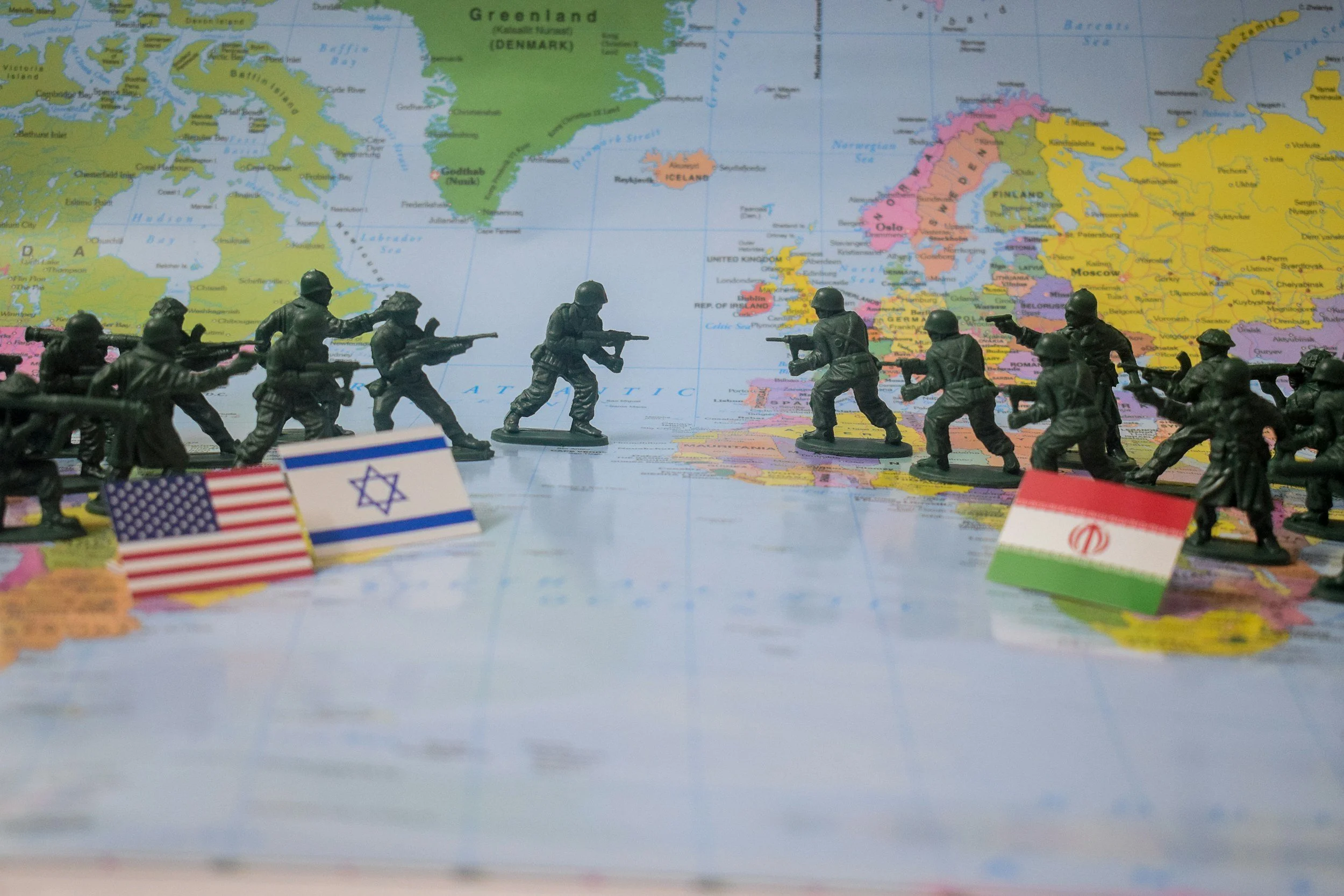
Following American-Israeli strikes on Iran on February 28, 2026, Americans and Iranians alike applauded the death of authoritarian Iranian Supreme Leader Ayatollah Ali Khamenei, who died alongside top Iranian security officials. Many were hopeful that the elimination of Khamenei and decapitation of his regime would create an opportunity for Iranians to seize control of their government and cultivate a new era, with one Iranian American celebrating the “beheading of the snake.” One month following the decisive move, Iran is no closer to a democracy.

The lack of a democratic surge following Operation Epic Fury and subsequent American efforts reflects a disconnect between intention, strategy, and outcome. If the American objective in Iran is indeed regime change, then the U.S. must address internal and external blockades to support Iranian civilians and meaningfully enable political shifts. 

A revolution requires a viable environment. Threats to Iranian infrastructure are a key driver of domestic instability that could suppress political action, yet such intimidation has been at the center of the conflict and only exacerbated since the closure of the Strait of Hormuz. Economic pressures on the American and global market have distracted from stated political objectives at the start of the war, including President Trump’s early-on call for Iranians to “take over” their government — encouragement met with threats from Iran’s Police Chief, who vowed to treat protestors as enemies. 

Recalibration is needed amid this political and economic chaos. To deliver on American enablement of a government takeover in Iran, key decisionmakers must distinguish between waging war against Iran’s regime and creating an environment conducive to public action. This means a tactical focus on government capabilities while avoiding attacks on public energy infrastructure that create enduring domestic distress. The ongoing war in Ukraine explicitly demonstrates the crippling effects of assaults on public infrastructure.

In November of 2025, Russian attacks on Ukrainian energy infrastructure stoked chaos across the country, introducing severe hardship to civilian life. Similar conditions in Iran would almost certainly pivot any Iranian focus on revolution to the issue of survival. However, recent threats to bomb Iran’s bridges and energy, oil, and water infrastructure exemplify the heightened potential for a humanitarian crisis that would preclude civilian-led government change and directly undermine the survival of the civilian population. As objectives shift and the war presses on, facilitating regime change is likely to fall on the list of priorities. While the U.S. would certainly benefit from a non-authoritarian regime in Iran, it is responsible not for establishing one but for sparing the Iranian people from feeling the brunt of military aggression. Regardless of American action, a legitimate regime change can only come from the people.

Even if Iranians are sufficiently emboldened to confront a sufficiently weakened government, external conditions within the broader region could still obstruct the development of a democracy. Furthermore, anti-American non-state actors could take advantage of the intermediary power void. Two scenarios are likely if the regime successfully falls: the resulting power vacuum pushes Iran into civil war, reminiscent of 2003 Iraq after the American decapitation of Saddam Hussein, or an equally anti-American Iranian regime inserts itself with the help of regional partners.

To prevent this, the U.S. must scramble and deter Hezbollah and the Houthis, traditional partners of the Iranian regime and members of Iran’s Axis of Resistance. Even with Khamenei’s regime neutralized, these actors could obstruct or directly attack civilian efforts.

The U.S. is still in the position to make key strategic pivots to empower Iranian civilians to “take” their government. However, critics question whether American involvement is in anyone’s best interest. While some scholars champion the fall of Libya’s dictator Muammar al-Qaddafi and his regime as a humanitarian success facilitated by NATO, critics argue that NATO involvement prolonged the conflict and magnified the death toll. Since that fateful intervention in 2011, Libya has undergone a period of severe political instability and currently operates under a precarious dual-government system. 

At the least, American strategy must ensure that the tactical dismantling of the current regime does not create a terminal impediment to the emergence of a successor state. A viable transition requires a measured policy that safeguards public infrastructure and neutralizes regional disruptors while weakening the remnants of Khamenei's dictatorial regime. Ultimately, a stable Iranian state cannot be built upon physical, economic, and social wreckage.

Partnership Should Be Central to America’s Critical Minerals Strategy

By: Céleste Wetmore

The Chinese manufacture more than clothing, iPhones, and other consumer goods. Their current near-monopoly over rare earth element (REE) mining and, most critically, production is keeping them in the limelight as the 2030s approach. Given the importance of REEs in military equipment and relevant capabilities, the United States aims to reduce reliance on exports from China. However, given the difficult nature of REE location, mining, and production, these endeavors’ results will be suboptimal if attempted alone. The U.S. must exercise more strategic diplomacy to build a sustainable supply chain outside of China’s mineral processing monopoly.

While REEs themselves are not rare, they are rarely found in sufficient abundance in a single location for their mining to be economically viable. Even then, concentrated mineral deposits often occur in remote, isolated locations with sparse availability near the surface and radioactive elements mixed in, making them expensive to locate and extract. REEs include 17 metallic elements crucial to technological efficiency across sectors, and nearly 70% of actively mined rare earth minerals are found in the Bayan Obo mine in central China. The second, third, and fourth largest actively mined deposits are found in the U.S., Burma, and Australia, respectively, but these efforts added up to just 23% of global production in 2024.

Graph sourced from the Government of Canada

The clear imbalance of these numbers is formidable, but considering that extraction has steadily increased outside China since 2017, the most urgent issue at hand is REE refinement. Any successful mining effort is useless without the capabilities to process and utilize REEs to produce electronics and other pressing goods. This refinement process is China’s specialty: Beijing currently controls 90% of refined production, a complex process that requires specialized knowledge and machinery. 

Modern day innovation, business, and life are centered around the electronics, machines, and renewable energy made possible by REEs. They are the backbone of U.S. military technology and defense systems. To put it in perspective: a single F-35 fighter jet calls for over 900 pounds of REEs. Looking to the future, the U.S. will not be able to remain the strongest military in the world without REEs, necessitating a reliable supply chain.

The current REE supply chain is fundamentally dependent upon Chinese refinement capabilities, creating a dangerous bottleneck for the U.S. and partners, including key North Atlantic Treaty Organization (NATO) allies. China has been developing technical know-how, processing procedures, and manufacturing facilities since the 1980s. Driven by fierce domestic competition and enabled by loose environmental regulations and low labor costs, Chinese companies have accelerated extraction and production timelines and achieved an absolute advantage in REE processing.

Graph sourced from Statista 2026

As can be reasonably expected from any powerful state when in possession of such significant leverage, the Chinese government has proven willingness to levy these coveted production capabilities to build its relative advantage. In 2023, China imposed a ban on the export of technologies used for rare earth separation and processing, obstructing the development of such capabilities outside its borders. 

Western companies have struggled to roll out these advanced technical operations alongside pollution concerns, and it can take years to construct and fully operationalize separation, processing, and manufacturing facilities. Considering China’s natural resource endowment coupled with their unprecedented economic growth over the last few decades, no one country will be able to match China’s dominance in the global supply chain for REEs — at least, not quickly.

In the long-term, the U.S. should strive to develop an REE supply chain as independent as possible, and the U.S. is working toward this end. However, it would be dangerous to accept reliance on China during an intermediary development period that could last years — as it did in China. Dependence on an ally yields a dependency, possible to overcome eventually, but a dependency on China creates a proven vulnerability. The U.S. must lead collaboration to develop a strong, sustainable REE supply chain outside of China. 

The 2025 U.S.-Australia critical minerals partnership established a bilateral commitment between the countries to invest more than $3 billion into critical minerals projects, including an advanced refinery in Western Australia. This strategic step must set a precedent for U.S. policymakers in taking action to build the mining and production capabilities needed to reduce dependence on China. While China controls the world’s largest REE reserves, with 44 million metric tons, Brazil, India, and Australia hold nearly 35 metric tons combined and are all working to develop refinement capabilities. This simple math demonstrates the potential of a partnership and the necessity of pooled resources and investment to even approach China’s place at the top of the critical minerals food chain.

REE mining and production present several obstacles, hence the need to join multiple countries’ specialities and strengths. Collaboration ensures mutual security that will strengthen the U.S. and its historic defense and commercial partners, including those in NATO, the United Nations, and Major Non-NATO Allies. Partnerships will be crucial to establishing a reliable REE supply chain and processing capabilities in the short-term as America seeks self-sufficiency in the long-term.

The Cost of Exclusion: How H-1B Visa Policy Changes Threaten U.S. Innovation and Security

By: Céleste Wetmore

The United States is no stranger to a competition. Throughout the second half of the 20th century, Americans faced a nuclear arms race with the Soviet Union. Today, the U.S. competes neck-to-neck with China in a technology race equally essential to national security. In this race, the U.S. federal government relies on the private sector’s success, investing billions to integrate private sector tech solutions into intelligence and national security efforts, therefore developing a dependence on private sector strategies. However, the Trump administration’s recent changes to the H-1B visa acquisition process could jeopardize the very individuals needed to protect our national security.

The H-1B visa program connects specially skilled foreign applicants with American employers “who cannot otherwise obtain needed abilities from the U.S. workforce” by authorizing the temporary employment of qualified individuals not otherwise authorized to work in the United States. The program is heavily used, particularly in the science, technology, engineering and math (STEM) fields. In fiscal year (FY) 2024, 65 percent of the 400,000 approved applications were renewals, illustrating the private sector’s continuous reliance on individuals working under an H-1B visa.

Throwing a wedge into this process, President Trump recently announced a new $100,000 fee on H-1B visa petitions. Following the policy’s effective date on September 21, 2025, employers looking to hire new H-1B applicants are now required to pay this amount before continuing the petition process. The Trump administration hopes this move will incentivize private companies to hire out of the American applicant pool. However, the Trump administration has failed to consider the policy’s troubling implications given the current context.

The Trump administration’s actions disrupt a private sector that is paramount to national security efforts and built with contribution from foreign talent accessed through the H-1B visa. The COVID-19 pandemic demonstrated the critical importance of H-1B workers in responding to national emergencies. For instance, between FY 2010 and FY 2019, eight U.S. companies that helped develop the COVID-19 vaccine received H-1B approvals for 3,310 biochemists, biophysicists, chemists, and other scientists.

At this moment,  the Trump administration should be attracting talent, not chasing it away. Where the COVID-19 pandemic was unexpected, the global technology race is publicly and rapidly gaining momentum, especially with the Artificial Intelligence movement.  While both nations are superpowers, the U.S. holds a unique edge: massive private investment in a variety of industries, including recent AI development, an amount nearly 12 times that of China in 2024.  In FY 2025, Meta, Microsoft, and Amazon were top employers of H-1B visa holders, companies projected to invest 240 billion into AI development by the end of 2025.  Historically, the US has excelled at attracting top STEM talent from abroad, while China has struggled to do so. However, his policy change could push international talent back to the East. In FY 2023, Indian nationals accounted for 73 percent of approved H-1B visas, with Chinese nationals a distant second at 11.7 percent. China produced 47 percent of the top AI talent in 2022, far surpassing the United States at second place with 18 percent. With an increasingly competitive American visa process, however, Indian and Chinese talent is likely to deflect into Chinese research and development (R&D) efforts, giving critical advantage to a major U.S. adversary.

Republicans argue that companies take advantage of H-1B visa workers: paying foreigners less than Americans to save profits, therefore disadvantaging American applicants and the national economy. Following this logic, targeting companies with extra costs should force executives to reevaluate the benefits of supporting H-1B recipients and refocus on American talent. While this argument for the administration’s new policy holds a legal basis, the U.S. government is responsible for holistically evaluating the effects of their policies. This responsibility is further augmented when federal national security efforts are in danger of extensive indirect impact.

Whether the static dynamic aligns with the Trump administration’s political agenda or not, the reality is that the private sector operates with a dependence on foreign workers. The $100,000 fee is a crude fix—forcing key R&D companies to drastically shift their workforce over the next year will take funding and focus away from crucial R&D initiatives. Projects will be disrupted, potentially exposing vulnerabilities within U.S. national security. Even worse, the foreign talent driving America’s tech edge will funnel to other countries. The U.S. currently leads private enterprise in AI innovation, but China is undoubtedly its primary technological rival. With Indian and Chinese nationals accounting for over 80% of H-1B visa holders, restricting their entry risks diverting world-class talent toward Beijing instead.

Now is hardly the time to clog the international talent pipeline and disturb the delicate private-public exchange that keeps the U.S. ahead of China. If the Trump administration is desperate to address abuse of the H-1B visa, it must conduct triage: employ a delicate, calculated approach to extend support to impacted companies currently reckoning with these workforce changes.