Spring 2026

“Operation Epic Fury” is a Violation of International Law and Sets a Dangerous Precedent

By: Saira Uttamchandani

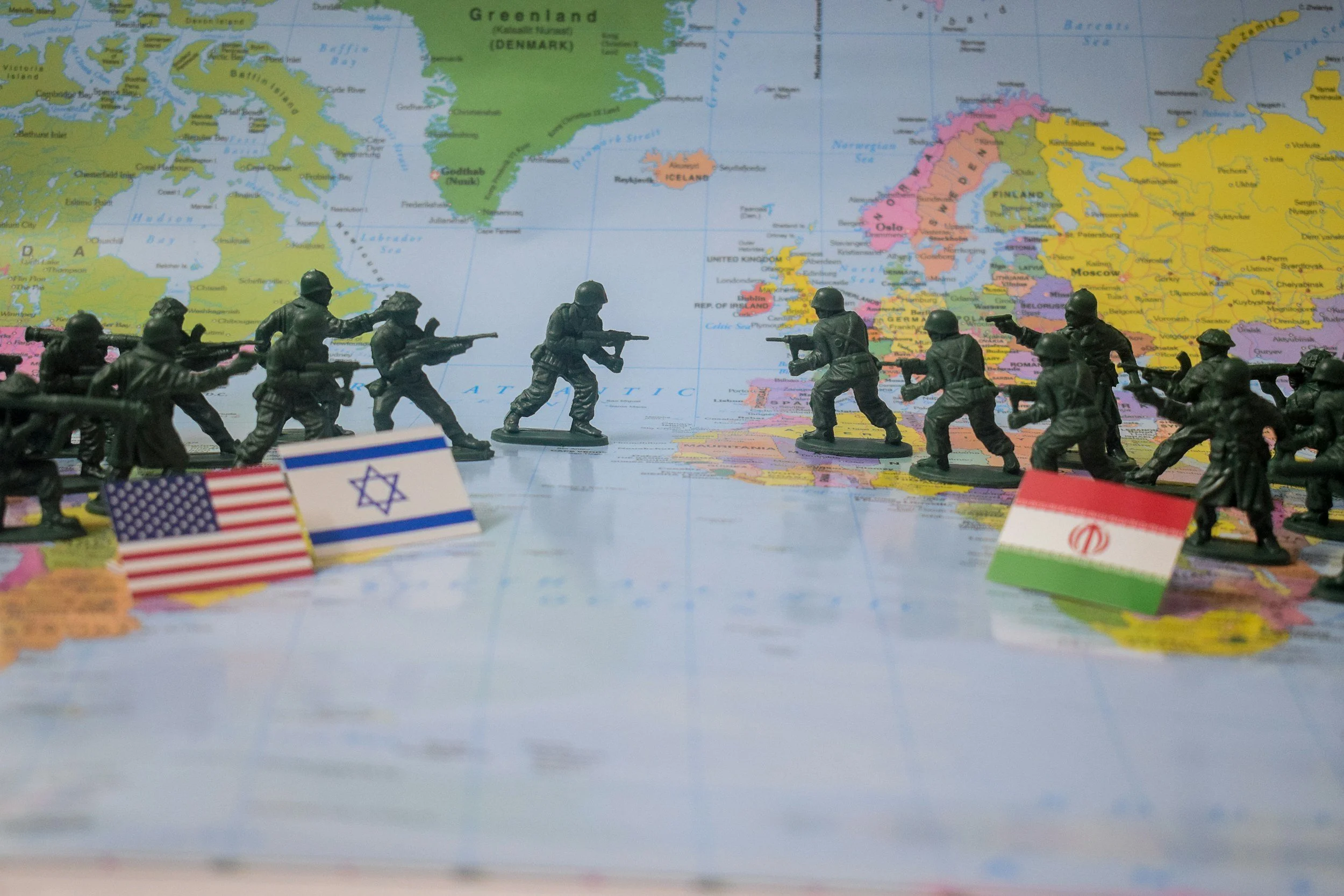
Recently, the United States and Israel engaged in “Operation Epic Fury,” also known as “Operation Roaring Lion.” This was a coordinated set of attacks from Israel and the United States against Iran, with the goals of destroying Iran’s navy, its missile production, and other weapons-related objectives. 

This attack is a clear violation of international law.

The operation has generally received positive responses from Western international leaders, with some also acknowledging that the attack violated international law, which seems contradictory. For example, the foreign minister of Belgium said the operation was “justified for global security,” while simultaneously stating that “the way in which this operation was conducted does not comply with the norms [of international law].”

The foreign minister is correct that no international law norms were disregarded during this operation. Article 2 of the United Nations Charter makes it very clear that Operation Epic Fury is illegal under international law:

Article 2(4) states that “All Members shall refrain in their international relations from the threat or use of force against the territorial integrity or political independence of any State.”

There are two exceptions to this rule:

The United States, Israel (and Iran!) are all members of the UN, meaning that they are legally bound to comply with the charter. However, the attack against Iran is very clearly a violation of Article 2(4), and neither exception applies. The Security Council gave no authorization for Operation Epic Fury, and neither Israel nor the United States was being attacked by Iran when the operation was carried out.

President Trump’s reasoning for the attack is based on the desire to “defend the American people by eliminating imminent threats from the Iranian regime.” President Trump has claimed Iran plans to “develop its nuclear program and plans to develop missiles to reach [the] U.S.” However, Trump has previously stated that the United States “obliterated” Iran’s nuclear program, raising questions about what exactly the worry surrounding Iran’s nuclear development entails. While there is debate in the international law community about whether the self-defense exception can apply to imminent threats, even if it did, the excuse does not hold up.

The typical standard to determine self-defense in the face of an imminent threat, or preemptive self-defense, is the Caroline test, which has been cited since the mid-nineteenth century. The Caroline test states the following:

  1. The threat is imminent and requires force; therefore, peaceful alternatives to force are not plausible.

  2. The response and threat must be proportional.

Iran does not fit these qualifications.

The United States’ apparent disregard for international law raises significant concerns about global conflict and relations. Before international regulations like the U.N. Charter, war was frequently waged as a form of international interaction and considered acceptable. Since the U.N. Charter was put in place, war has no longer been viewed in as positive a light and as an acceptable form of international relations.

However, with “Operation Epic Fury” signaling the United States’ disregard for post-charter norms and President Trump making dismissive comments such as, “I don’t need international law,” this quell in violence is in danger. 

A return to pre-U.N. Charter norms would not serve the international community well, and it is imperative that nations, especially those as influential as the United States, protect the current global legal order. The United States was one of the main members behind the U.N. Charter. If such a critical member, who still holds great sway and influence in the global sphere today, views it as acceptable to disregard international law, it could cause other nations to do the same.

Recalibrating U.S. Intervention in Iran to Enable a Stable Successor State

By: Céleste Wetmore

Following American-Israeli strikes on Iran on February 28, 2026, Americans and Iranians alike applauded the death of authoritarian Iranian Supreme Leader Ayatollah Ali Khamenei, who died alongside top Iranian security officials. Many were hopeful that the elimination of Khamenei and decapitation of his regime would create an opportunity for Iranians to seize control of their government and cultivate a new era, with one Iranian American celebrating the “beheading of the snake.” One month following the decisive move, Iran is no closer to a democracy.

The lack of a democratic surge following Operation Epic Fury and subsequent American efforts reflects a disconnect between intention, strategy, and outcome. If the American objective in Iran is indeed regime change, then the U.S. must address internal and external blockades to support Iranian civilians and meaningfully enable political shifts. 

A revolution requires a viable environment. Threats to Iranian infrastructure are a key driver of domestic instability that could suppress political action, yet such intimidation has been at the center of the conflict and only exacerbated since the closure of the Strait of Hormuz. Economic pressures on the American and global market have distracted from stated political objectives at the start of the war, including President Trump’s early-on call for Iranians to “take over” their government — encouragement met with threats from Iran’s Police Chief, who vowed to treat protestors as enemies. 

Recalibration is needed amid this political and economic chaos. To deliver on American enablement of a government takeover in Iran, key decisionmakers must distinguish between waging war against Iran’s regime and creating an environment conducive to public action. This means a tactical focus on government capabilities while avoiding attacks on public energy infrastructure that create enduring domestic distress. The ongoing war in Ukraine explicitly demonstrates the crippling effects of assaults on public infrastructure.

In November of 2025, Russian attacks on Ukrainian energy infrastructure stoked chaos across the country, introducing severe hardship to civilian life. Similar conditions in Iran would almost certainly pivot any Iranian focus on revolution to the issue of survival. However, recent threats to bomb Iran’s bridges and energy, oil, and water infrastructure exemplify the heightened potential for a humanitarian crisis that would preclude civilian-led government change and directly undermine the survival of the civilian population. As objectives shift and the war presses on, facilitating regime change is likely to fall on the list of priorities. While the U.S. would certainly benefit from a non-authoritarian regime in Iran, it is responsible not for establishing one but for sparing the Iranian people from feeling the brunt of military aggression. Regardless of American action, a legitimate regime change can only come from the people.

Even if Iranians are sufficiently emboldened to confront a sufficiently weakened government, external conditions within the broader region could still obstruct the development of a democracy. Furthermore, anti-American non-state actors could take advantage of the intermediary power void. Two scenarios are likely if the regime successfully falls: the resulting power vacuum pushes Iran into civil war, reminiscent of 2003 Iraq after the American decapitation of Saddam Hussein, or an equally anti-American Iranian regime inserts itself with the help of regional partners.

To prevent this, the U.S. must scramble and deter Hezbollah and the Houthis, traditional partners of the Iranian regime and members of Iran’s Axis of Resistance. Even with Khamenei’s regime neutralized, these actors could obstruct or directly attack civilian efforts.

The U.S. is still in the position to make key strategic pivots to empower Iranian civilians to “take” their government. However, critics question whether American involvement is in anyone’s best interest. While some scholars champion the fall of Libya’s dictator Muammar al-Qaddafi and his regime as a humanitarian success facilitated by NATO, critics argue that NATO involvement prolonged the conflict and magnified the death toll. Since that fateful intervention in 2011, Libya has undergone a period of severe political instability and currently operates under a precarious dual-government system. 

At the least, American strategy must ensure that the tactical dismantling of the current regime does not create a terminal impediment to the emergence of a successor state. A viable transition requires a measured policy that safeguards public infrastructure and neutralizes regional disruptors while weakening the remnants of Khamenei's dictatorial regime. Ultimately, a stable Iranian state cannot be built upon physical, economic, and social wreckage.

The Duterte ICC Case Could Define the Future of International Accountability

Photo © ICC-CPI. Used with permission.

By: Margaret Jane Piatos

When the International Criminal Court (ICC) issued a warrant for former Philippine President Rodrigo Duterte and later confirmed his continued detention in March 2026, the moment marked far more than the legal downfall of a controversial leader. It has become one of the most consequential tests of international criminal law in decades. At stake is whether global legal institutions can meaningfully hold powerful national leaders accountable for widespread human rights violations. Ultimately, the manner in which the case is determined will set a critical precedent for holding past, current, and future national leaders accountable for large-scale human rights violations.

Duterte’s anti-drug campaign, “war on drugs,” launched immediately after he took office on June 30, 2016. Framed as a public safety initiative to eliminate narcotics and restore order, the campaign authorized aggressive police operations and killings aimed at eliminating drug dealers and users. Duterte frequently portrayed the drug trade as an existential threat to Philippine society and promised to eradicate it through force. 

The campaign quickly turned deadly. Philippine government data recorded more than 6,000 deaths connected to anti-drug operations while Duterte was in office. Human rights organizations estimate the real number is likely far higher at more than 12,000 deaths, many of them among the country’s urban poor. At least 2,555 killings were attributed directly to the Philippine National Police, while thousands more were carried out by unidentified gunmen widely believed to be connected to security forces. 

For critics, the pattern suggested something more than isolated abuses. The ICC alleges that Duterte is responsible for crimes against humanity of murder and attempted murder under Article 7(1)(a) of the Rome Statute, committed as part of a “widespread and systematic attack against a civilian population,” between 2011 and 2019. The investigation covers not only his presidency but also his earlier tenure as mayor of Davao City, where he ruled for more than two decades.

Duterte never hid his willingness to use violence as a crime-fighting strategy. On the eve of his presidential victory in 2016, he told a crowd of supporters: 

“Forget the laws on human rights. If I make it to the presidential palace, I will do just what I did as mayor. You drug pushers, hold-up men and do-nothings, you better go out. Because I'd kill you,” he said at his final campaign rally. 

“I'll dump all of you into Manila Bay, and fatten all the fish there.”

During a 2024 Philippine Senate inquiry into the drug war, Duterte offered what he called “no apologies, no excuses” for the campaign and took responsibility for the killings carried out during his presidency. He also admitted to employing a small death squad during his time as mayor of Davao.

Yet Duterte continues to maintain powerful support. Philippine politics is characterized less by rigid ideological parties as we see in the United States, and more by coalitions built around prominent political clans and regional alliances. Duterte rose to power as a populist outsider from Mindanao, the second largest island in the Philippines, positioning himself as a tough alternative against the traditional political establishment in Manila. Many supporters credit him with restoring order and confronting criminal networks that previous administrations failed to control. 

This enduring domestic support illustrates one of the central tensions in the ICC case. For families of victims, the investigation represents a rare opportunity for justice. For Duterte’s supporters, the prosecution is viewed as international interference in Philippine sovereignty. 

The legal battle is now firmly underway. Duterte was surrendered to the ICC in March 2025 after a secret arrest warrant was issued and later made public. His initial appearance before the Court took place shortly after, and the confirmation of charges hearing was held in February 2026. On March 6, 2026, the ICC Appeals Chamber rejected Duterte’s appeal challenging the review of his detention and confirmed that he would remain in custody while proceedings continue. 

Beyond the Philippines, the case's implications extend to the broader international system. In recent years, several governments have adopted aggressive security policies to combat crime and terrorism. Countries such as El Salvador, where President Nayib Bukele has implemented emergency powers and mass arrests to crack down on gangs, and India, where counterterrorism laws have expanded state surveillance, illustrate how governments are increasingly relying on strong executive authority in the name of public safety. These policies often expand executive power and weaken procedural safeguards. If the ICC successfully prosecutes a former head of state for crimes against humanity, it would reinforce the principle that national leaders cannot hide behind sovereignty when large-scale abuses occur. If it fails to do so, the credibility of international accountability mechanisms is likely to weaken. 

Ultimately, the significance of the Duterte investigation lies not only in what it says about the Philippines but also in what it signals to leaders around the world. 

The Transatlantic Alliance's Greatest Threat Is Coming From Within

By: Anna Douglas Piper

Russia and China do not need to defeat the transatlantic alliance. They only need to wait for it to defeat itself.

As NATO allies debate defense spending, China’s rising influence in Indo-Pacific relations, and how to proceed in the Russia-Ukraine War, a crisis is taking place closer to home. On both sides of the Atlantic, the democratic foundations that the alliance was built upon are under strain, which presents urgent security concerns. Democratic erosion within the transatlantic community is a greater long-term threat to the alliance than external adversaries, and the U.S. and EU must prioritize shared democratic resilience as a strategic imperative.

The Atlantic Council’s Sona Muzikarova argues that this populist advance, while once confined to certain regions, is growing into a wider cross-continental movement. Democratic reversals are not new, as waves occurred between the world wars and during the Cold War. However, we are now seeing shifts in countries that were previously considered stable, including the US, India and Greece. These shifts have been driven not by underground, secretive military-style coups, but by democratically elected leaders that appear to be using a similar set of strategies to expand power. Emerging trends in previously reliable Poland, Romania, and Czechia reflect a growing concern of a cross-continental shift.

The security threat is not simply that citizens around the world are losing faith in democracy. The threat is that political elites are responding to this loss of faith by moving away from the institutional commitments that hold alliances together. Hungary is a clear example in its developments of the past 15 years. Viktor Orbán, after winning election in 2010, subsequently diminished the power of the Hungarian National Assembly, rewrote the constitution, and moved away from democratic rule. Today, Hungary is seen as an uncooperative antagonist in the EU, and tens of thousands of citizens have gathered in the past year to protest Orbán’s rule. Researchers show that this phenomenon is not simply between pro- and anti-democratic values, but between anti-establishment and technocratic approaches to governance. 

On Washington’s end of the alliance, citizens are experiencing a similar erosion of trust in institutions and democratic norms. According to Freedom House’s Freedom in the World Index, the United States has fallen by 11 points from 2011 to 2023 in democratic health, placing the U.S. behind many long-standing democratic nations on the 100-point scale. Freedom House studies attribute the phenomenon in the US to structural forces, including deepening political polarization, persistent inequality, and a rapidly changing media environment. However, the key is in how leaders respond. If institutional resilience depends on how political elites proceed, then the future of the US democratic health relies on elite commitment to the institutions that sustain it. Elite behavior is the decisive variable in whether democratic institutions hold; when considering this trend alongside parallel institutional pressures in Europe, these developments have the potential to threaten the alliance as a whole. 

Reports show that the world is seeing “a truly global wave of autocratization,” and for the first time in over 50 years, countries are moving more towards autocracy than democracy. These developments are reflected in weakening transatlantic relations, which are occurring simultaneously in trade, security, international institutions, and democratic values. This phenomenon is an unprecedented convergence of pressures, and one that threatens the entire European-American order. 

It is necessary to understand how these developments threaten the security of both regions. If an alliance built to defend democracy is only as strong as the democracies within it, what happens when those democracies begin to fracture from within? When the anchors of the transatlantic alliance experience declining trust in democracy, the entire system is called into question – this effectively weakens the credibility of the democratic model that the alliance itself is built to defend. If external adversaries like Russia and China seek to exploit democratic weakness for their own gain, current trends mean there will soon be little unified alliance left to resist them. 

There are many evolving attitudes on how to combat this problem. Some argue directly against "appeasing" the US, claiming that strengthening Europe as an independent region is necessary to ensure resilience in the face of changing relations with Washington. Yet abandoning the alliance system would leave both regions more vulnerable, not less. The key is to make elite defection from democratic norms more costly, to reduce the appeal of prioritizing short-term political incentives over long-term institutional commitments. Mechanisms in the EU exist for member states who violate democratic norms, but enforcement has been weak. Institutional structures must be strengthened in order to constrain self-serving elite behavior, regardless of who holds power. Judicial independence, press freedom, and legislative oversight must all be bolstered, both domestically and in international institutions. Internationally, this also means increasing transatlantic engagement between elites to reduce isolationism and strengthen shared norms. Bringing together policymakers, economic leaders and engaged citizens can strengthen the transatlantic relationship, making individual elite defection less likely and much harder. These strategies are not just national political concerns, but alliance assets. 

University of Chicago professor Susan Stokes argues that “effective resistance to democratic erosion requires strong institutions, social trust, and political elites committed to upholding democratic norms.” If elite commitment is the current variable, then the solution is building domestic institutions and transatlantic structures that make democratic commitment the rational choice for elites. If this doesn’t happen, the entire alliance system is in danger. 

And, as political scientist John Peterson has demonstrated, “the futures of the liberal order, transatlantic alliance and western democratic politics are inextricably bound together.” The transatlantic alliance was built to defend democracy from external threats. Today, the greater threat is coming from within, and if not corrected, could bring down the system before Russia and China even need to try. 

The Ongoing Persecution of the Uyghurs: China’s False “War on Terror”

By: Nilufer Molla

The Uyghurs are a distinct Turkic ethnic group inhabiting the northwest region of China. Officially called the “Xinjiang Uyghur Autonomous Region,” Uyghurs know it as “East Turkestan.” 

For two brief periods in the twentieth century, Uyghurs achieved liberation and established an East Turkestan Republic. However, China has continued to seize the land. Ever since, the Uyghurs have struggled for legitimate autonomy and have faced continuous human rights violations and oppression. As the Chinese government restricts Uyghur culture, it simultaneously targets Islam. 

Today, this repression is justified under the banner of counterterrorism. What the Chinese government may call a “war on terror” is something else entirely.

The Chinese government claims the repression of Uyghurs is necessary for national security. Still, targeting the religion of the Uyghurs is an attempt at cultural assimilation by detaching them from a key part of their identity. 

Islam has shaped Uyghur culture following their collective conversion between the 10th and 15th centuries. It has become deeply integrated into the culture, language, and lifestyle, which is precisely why it is a target.

Since China’s occupation, Uyghurs’ deep connection with Islam has acted as a “shield”  in resisting the Chinese government’s attempts at cultural erasure and assimilation. Contrastingly, Hui Muslims, China’s largest ethnoreligious group, have enjoyed religious freedom. The Hui possess a blend of Islamic and Chinese cultures. Since they are better integrated into Chinese society due to cultural similarity, their religious practices are tolerated, proving China’s unique targeting of Uyghur Muslims due to their resistance to cultural assimilation. 

Now, over a million Uyghurs have been imprisoned in internment camps, of which the Chinese government first denied the existence. When finally addressed in 2018, they were branded as “reeducation” centers meant to teach Mandarin and prevent the influence of extremism. Though there have been a variety of reasons to place Uyghurs in these camps, it appears their only crime is being Muslim. 

Leaked documents reveal the listed reasons for detention to include growing a beard, praying regularly, and wearing a veil. Furthermore, in 2019, the U.S. embassy and consulates in Japan reported that Chinese authorities forced Uyghur Muslims to eat pork. If refused, they were vaguely labeled as “extremists” or threatened with being sent to the internment camps. As terrorism involves religiously motivated violence, it is clear that the grounds for accusing these Uyghurs of terrorism are completely illogical due to the irrelevance of peaceful expression to religious extremism and violent terrorism.

Especially during Ramadan, Uyghurs are at a greater risk. Ramadan is a sacred month in the Islamic calendar during which Muslims fast and focus on deepening their spiritual devotion. For roughly a month, Muslims wake up for a small meal called “Suhoor” or “Sehri” before the first prayer to prepare for their day’s fast. 

For Uyghur Muslims in China, just turning on the living room light to do so poses a great risk. 

They often resort to pre-preparing their meals and eating in the dark to avoid detection and risk being sent to the camps or abused. In Islam, eating in the bathroom is strongly discouraged; however, for some, it is the only room in the house without windows, so the light can be left on while they eat. Because if light could be seen from the home, it was enough reason to believe they were fasting Muslims. 

A 2016 interview conveyed the horrors of being caught. Adil Abdulghufur recalls “one disaster” that happened to him. Chinese authorities violently dragged him from his bed while he was asleep. Covered in blood, he continuously asked what he had done. They said, “You screamed ‘Allahu Akbar.’” He pleaded that he was not praying, but, unconvinced, they beat him, chained him, and hung a “25-kilogram cement board around his neck,” with the words “For stubborn prisoners who refuse to bow to Chinese rule” carved on it. 

Unique to these “prisoners,” questions would be administered to “test” them, such as:

“Were the heavens and the earth created by God or by nature?”

“Is East Turkistan part of China, or is it a separate country?”

“Will you pray in the future?”

“What kind of person is Osama Bin Laden?”

“If Chinese and Uyghurs live together, will society flourish?”

Required to answer only with “yes” or “no” (and there is a “correct” answer for each question), Uyghurs will be categorized into groups based on “compliance,” which would determine their fate.

Especially after September 11, 2001, governments all over the world expanded surveillance to combat terrorism. China seized this moment. By framing the Uyghur identity as a security threat, the Chinese government found an international cover for policies that would otherwise be viewed for what they really are: cultural erasure and assimilation. 

As China targets Uyghurs while tolerating Hui Muslims’ religious expression, it’s clear that the so-called “war on terror” is actually a war on Uyghur identity.

Artificial Intelligence Is the 21st Century’s Nuclear Weapon

By: Margaret Jane Piatos

American companies have spent $335 billion and counting on artificial intelligence (AI) between the years 2013 and 2023, and today, 79% of Americans interact with AI several times a day. What began as a niche technological field has quickly become embedded in finance, healthcare, education, defense, and even personal decision-making. As governments and corporations race to dominate this emerging technology, the pace of development far outstrips that of regulation.

AI is as dangerous and as strategically transformative as nuclear weapons were in the 20th century, and it must be governed with the same urgency and international cooperation before competition turns into catastrophe.

In the 20th century, nuclear weapons transformed international politics almost overnight. They redefined how we fought wars, and consequently, who held hegemony. But nuclear technology also forced the world to confront a terrifying reality: innovation without restraint could mean total destruction. 

The atomic bomb dropped on Hiroshima in 1945 killed an estimated 100,000 people. Modern tactical nuclear weapons are far more powerful, and at the height of the Cold War, the global arsenal grew large enough to destroy human civilization many times over.  It took regulations such as the 1968 Nuclear Non-Proliferation Treaty, the International Atomic Energy Agency, and Cold War arms-reduction agreements like SALT and START, to stabilize the system. 

Today, artificial intelligence is advancing even faster — and with far fewer guardrails.

Unlike nuclear weapons, AI does not require rare uranium or massive reactors. However, it requires data, computing power, and engineering talent. That makes it easier to develop and more difficult to contain. Yet its strategic impact may be just as profound. AI can enhance cyberwarfare, power autonomous weapons systems, manipulate financial markets, disrupt infrastructure, and more. The state that leads in AI will not just have faster software, but it will have a structural advantage in economic productivity, military capability, and information control.

And countries know it.

The United States and China are locked in a race for AI dominance. Washington frames AI leadership as critical to national security and economic competitiveness. Although the United States still maintains a far larger nuclear arsenal with 5,277 warheads compared to China’s 600 warheads, today's balance of power may not be determined by stockpile size alone. 

Beijing has openly declared its ambition to become the world leader in AI, embedding AI development into its long-term industrial planning and military modernization strategy. In some areas, particularly the integration of AI into surveillance systems and military deployments, China may be moving faster and with greater coordination than Western approaches. 

The European Union, meanwhile, is racing to shape regulatory standards that could define global norms. Through its landmark AI Act, the EU has moved to classify AI systems by risk level, impose strict transparency requirements on high-risk applications, and ban certain uses such as social scoring and some forms of biometric surveillance. By prioritizing safety and human oversight, the EU is attempting to export its regulatory model beyond Europe’s borders. If successful, the EU could set the rules of the road for AI governance worldwide, not by dominating innovation, but by defining the standards companies must meet to access one of the world’s largest markets. 

This competition resembles the early years of the arms race, but with one critical difference: AI development is primarily driven by private companies operating across borders. Governments are competing not only with rivals abroad but also, motivated by President Trump’s AI challenge, racing to outpace domestic innovation. 

That dynamic creates a dangerous incentive structure. When speed becomes the priority, safety becomes secondary. The result is an emerging AI arms race without clear rules or shared red lines.

The risks are not hypothetical. Autonomous weapons systems could make battlefield decisions faster than human oversight allows. AI-generated misinformation could undermine public trust in democratic institutions. Advanced cyber capabilities could cripple infrastructure without a single missile being launched. And as AI systems grow more complex, even their creators may struggle to predict their behavior.

Nuclear weapons taught the world a painful lesson: revolutionary technologies cannot be managed through optimism alone. Governance must evolve alongside capability. 

AI requires a similar mindset. It means establishing guardrails before chaos forces them upon us. Nations should cooperate to limit fully autonomous lethal weapons, prevent AI from controlling nuclear launch systems, and establish monitoring mechanisms for the most advanced AI models. Export controls on advanced semiconductor chips are already a step toward recognizing AI’s strategic importance, but they are only the beginning.

Some argue that AI is too embedded in civilian life and too rapidly evolving to be regulated like nuclear weapons. They are right that AI is different. But that makes regulation more urgent. And we must treat it as such, before competition becomes a catastrophe. 

The Innate Politicism of the Olympics

By: Aliza Susatijo

With winter storms keeping people indoors, the 2026 Milan Cortina Winter Olympics have taken center stage this season. Dazzled by intricate figure skating routines and the dizzying speed of downhill alpine skiing, it is easy to get absorbed in the thrill of the games. 

Yet the Olympics also represent a global effort for each country to put forth its best athletes, participating in a tradition that unites countries in a celebration of human accomplishment. As athletes compete for their countries, it has become a debate as to whether this representation causes athletes to become associated with their respective country’s politics. Is it possible to maintain the Olympics as purely an apolitical commemoration of worldwide sports, or is it irresponsible to ignore pressing political issues while the Olympics unfold?

In 2022, Russia and Belarus were banned from participating in the Beijing Paralympic Winter Games after Russia invaded Ukraine and Belarus supported Moscow. 

This decision came after multiple countries and numerous athletes threatened to boycott the games out of fear for their safety in the Olympic Village. This ban has been ongoing, with select Russian and Belarusian athletes eligible to compete as Individual Neutral Athletes (AINs) under a neutral state, unassociated with their home countries. While this compromise has lasted throughout the 2024 Paris Summer Olympics and this year’s Winter Olympics, there remains a thinly veiled tension. 

Ukrainian skeleton racer Vladyslav Heraskevych was disqualified by the International Olympic Committee (IOC) for wearing a helmet emblazoned with the images of his fellow Ukrainian athletes killed in Russia’s invasion. The helmet was considered inconsistent with the Olympic Charter and Guidelines on Athlete Expression because of its active presence in the game, which violates the Charter’s policies on political expression, as it could interfere with play. 

Yet Heraskevych’s helmet was not an inflammatory political statement. Rather, it was a commemoration of the athletes who should have been alongside him at the Olympics that day. 

Unique to this season’s Olympics, it has been reported that U.S. Immigration and Customs Enforcement agents were deployed by the U.S. government to Milan during the games, spurring a variety of responses. The IOC called their presence “distracting,” and hundreds of Italian demonstrators protested in Milan with signs that say “ICE out of Milan” or “ICE Out Of Everywhere.” 

U.S. athletes, such as freestyle skier Hunter Hess, have been asked about ICE’s actions and the division of communities in the United States. Hess expressed his reluctance to represent all aspects of the United States, stating that “Just ’cause I’m wearing the flag doesn’t mean I represent everything that’s going on in the US.” After this statement, President Trump took to Truth Social to condemn Hess, calling him a “real Loser” for speaking against America. 

In moments such as this, athletes face a predicament as they aim to differentiate representing their country in the sport they love from supporting all the policies and mandates of their country. 

With the audience and influence that the Olympics hold, it is difficult for the IOC to toe the line between allowing freedom of expression for its athletes and avoiding political statements that distract from the games themselves. Athletes must contend with representing their country and expressing their own opinions as individuals. While competing on a world stage and being broadcast internationally, it is understandable that athletes may make a political statement, whether that is in defense of or against their country. 

With clear regulations on hate speech or statements that may endanger athletes within the Olympic Village, athletes should be able to safely voice their beliefs without fear of retribution from the IOC or their home country. 

From Heraskevych to Hess, athletes work their entire lives to reach this world stage. Just as they compete as representatives of their country, they should also be able to represent the ideals and sentiments that they believe in.

Partnership Should Be Central to America’s Critical Minerals Strategy

By: Céleste Wetmore

The Chinese manufacture more than clothing, iPhones, and other consumer goods. Their current near-monopoly over rare earth element (REE) mining and, most critically, production is keeping them in the limelight as the 2030s approach. Given the importance of REEs in military equipment and relevant capabilities, the United States aims to reduce reliance on exports from China. However, given the difficult nature of REE location, mining, and production, these endeavors’ results will be suboptimal if attempted alone. The U.S. must exercise more strategic diplomacy to build a sustainable supply chain outside of China’s mineral processing monopoly.

While REEs themselves are not rare, they are rarely found in sufficient abundance in a single location for their mining to be economically viable. Even then, concentrated mineral deposits often occur in remote, isolated locations with sparse availability near the surface and radioactive elements mixed in, making them expensive to locate and extract. REEs include 17 metallic elements crucial to technological efficiency across sectors, and nearly 70% of actively mined rare earth minerals are found in the Bayan Obo mine in central China. The second, third, and fourth largest actively mined deposits are found in the U.S., Burma, and Australia, respectively, but these efforts added up to just 23% of global production in 2024.

Graph sourced from the Government of Canada

The clear imbalance of these numbers is formidable, but considering that extraction has steadily increased outside China since 2017, the most urgent issue at hand is REE refinement. Any successful mining effort is useless without the capabilities to process and utilize REEs to produce electronics and other pressing goods. This refinement process is China’s specialty: Beijing currently controls 90% of refined production, a complex process that requires specialized knowledge and machinery. 

Modern day innovation, business, and life are centered around the electronics, machines, and renewable energy made possible by REEs. They are the backbone of U.S. military technology and defense systems. To put it in perspective: a single F-35 fighter jet calls for over 900 pounds of REEs. Looking to the future, the U.S. will not be able to remain the strongest military in the world without REEs, necessitating a reliable supply chain.

The current REE supply chain is fundamentally dependent upon Chinese refinement capabilities, creating a dangerous bottleneck for the U.S. and partners, including key North Atlantic Treaty Organization (NATO) allies. China has been developing technical know-how, processing procedures, and manufacturing facilities since the 1980s. Driven by fierce domestic competition and enabled by loose environmental regulations and low labor costs, Chinese companies have accelerated extraction and production timelines and achieved an absolute advantage in REE processing.

Graph sourced from Statista 2026

As can be reasonably expected from any powerful state when in possession of such significant leverage, the Chinese government has proven willingness to levy these coveted production capabilities to build its relative advantage. In 2023, China imposed a ban on the export of technologies used for rare earth separation and processing, obstructing the development of such capabilities outside its borders. 

Western companies have struggled to roll out these advanced technical operations alongside pollution concerns, and it can take years to construct and fully operationalize separation, processing, and manufacturing facilities. Considering China’s natural resource endowment coupled with their unprecedented economic growth over the last few decades, no one country will be able to match China’s dominance in the global supply chain for REEs — at least, not quickly.

In the long-term, the U.S. should strive to develop an REE supply chain as independent as possible, and the U.S. is working toward this end. However, it would be dangerous to accept reliance on China during an intermediary development period that could last years — as it did in China. Dependence on an ally yields a dependency, possible to overcome eventually, but a dependency on China creates a proven vulnerability. The U.S. must lead collaboration to develop a strong, sustainable REE supply chain outside of China. 

The 2025 U.S.-Australia critical minerals partnership established a bilateral commitment between the countries to invest more than $3 billion into critical minerals projects, including an advanced refinery in Western Australia. This strategic step must set a precedent for U.S. policymakers in taking action to build the mining and production capabilities needed to reduce dependence on China. While China controls the world’s largest REE reserves, with 44 million metric tons, Brazil, India, and Australia hold nearly 35 metric tons combined and are all working to develop refinement capabilities. This simple math demonstrates the potential of a partnership and the necessity of pooled resources and investment to even approach China’s place at the top of the critical minerals food chain.

REE mining and production present several obstacles, hence the need to join multiple countries’ specialities and strengths. Collaboration ensures mutual security that will strengthen the U.S. and its historic defense and commercial partners, including those in NATO, the United Nations, and Major Non-NATO Allies. Partnerships will be crucial to establishing a reliable REE supply chain and processing capabilities in the short-term as America seeks self-sufficiency in the long-term.