Saira Uttamchandani

“Operation Epic Fury” is a Violation of International Law and Sets a Dangerous Precedent

By: Saira Uttamchandani

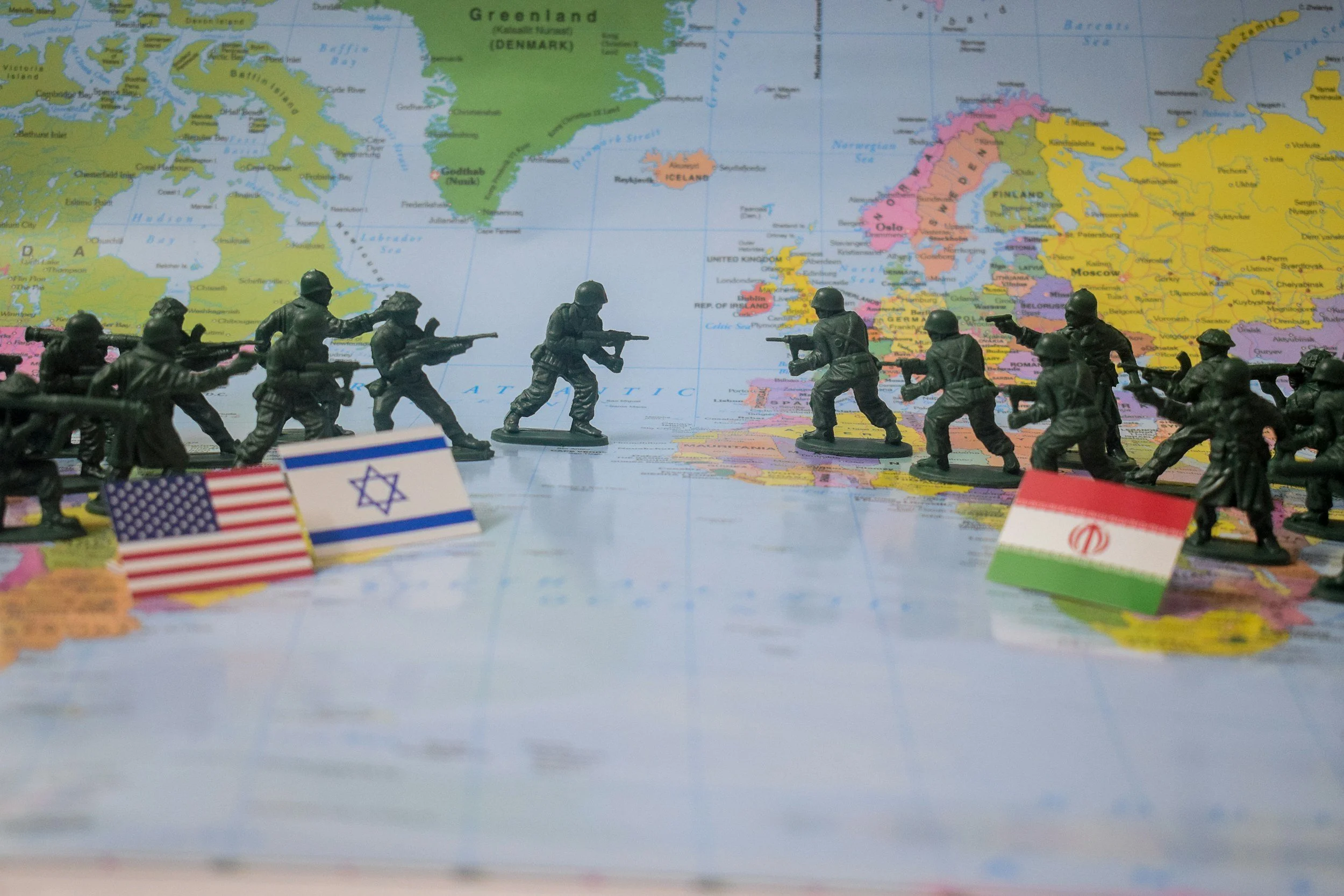
Recently, the United States and Israel engaged in “Operation Epic Fury,” also known as “Operation Roaring Lion.” This was a coordinated set of attacks from Israel and the United States against Iran, with the goals of destroying Iran’s navy, its missile production, and other weapons-related objectives. 

This attack is a clear violation of international law.

The operation has generally received positive responses from Western international leaders, with some also acknowledging that the attack violated international law, which seems contradictory. For example, the foreign minister of Belgium said the operation was “justified for global security,” while simultaneously stating that “the way in which this operation was conducted does not comply with the norms [of international law].”

The foreign minister is correct that no international law norms were disregarded during this operation. Article 2 of the United Nations Charter makes it very clear that Operation Epic Fury is illegal under international law:

Article 2(4) states that “All Members shall refrain in their international relations from the threat or use of force against the territorial integrity or political independence of any State.”

There are two exceptions to this rule:

The United States, Israel (and Iran!) are all members of the UN, meaning that they are legally bound to comply with the charter. However, the attack against Iran is very clearly a violation of Article 2(4), and neither exception applies. The Security Council gave no authorization for Operation Epic Fury, and neither Israel nor the United States was being attacked by Iran when the operation was carried out.

President Trump’s reasoning for the attack is based on the desire to “defend the American people by eliminating imminent threats from the Iranian regime.” President Trump has claimed Iran plans to “develop its nuclear program and plans to develop missiles to reach [the] U.S.” However, Trump has previously stated that the United States “obliterated” Iran’s nuclear program, raising questions about what exactly the worry surrounding Iran’s nuclear development entails. While there is debate in the international law community about whether the self-defense exception can apply to imminent threats, even if it did, the excuse does not hold up.

The typical standard to determine self-defense in the face of an imminent threat, or preemptive self-defense, is the Caroline test, which has been cited since the mid-nineteenth century. The Caroline test states the following:

  1. The threat is imminent and requires force; therefore, peaceful alternatives to force are not plausible.

  2. The response and threat must be proportional.

Iran does not fit these qualifications.

The United States’ apparent disregard for international law raises significant concerns about global conflict and relations. Before international regulations like the U.N. Charter, war was frequently waged as a form of international interaction and considered acceptable. Since the U.N. Charter was put in place, war has no longer been viewed in as positive a light and as an acceptable form of international relations.

However, with “Operation Epic Fury” signaling the United States’ disregard for post-charter norms and President Trump making dismissive comments such as, “I don’t need international law,” this quell in violence is in danger. 

A return to pre-U.N. Charter norms would not serve the international community well, and it is imperative that nations, especially those as influential as the United States, protect the current global legal order. The United States was one of the main members behind the U.N. Charter. If such a critical member, who still holds great sway and influence in the global sphere today, views it as acceptable to disregard international law, it could cause other nations to do the same.

America’s Foreign Aid to Other Countries Benefits Us

By: Saira Uttamchandani

During the time that President Trump has been in office for his second presidential term, his administration has paused all U.S. foreign aid, resulting in a multi-billion-dollar cut to U.S. assistance overseas. The administration has dedicated itself to “maximiz[ing] governmental efficiency and productivity,” cutting spending that it feels is unnecessary via the Department of Government Efficiency (DOGE).

This is a shortsighted decision. 

America’s foreign aid greatly benefits other nations, as well as the American economy, security, and health. Cutting foreign aid is a mistake that harms national interests – something that all Americans should be concerned with, regardless of political affiliations.

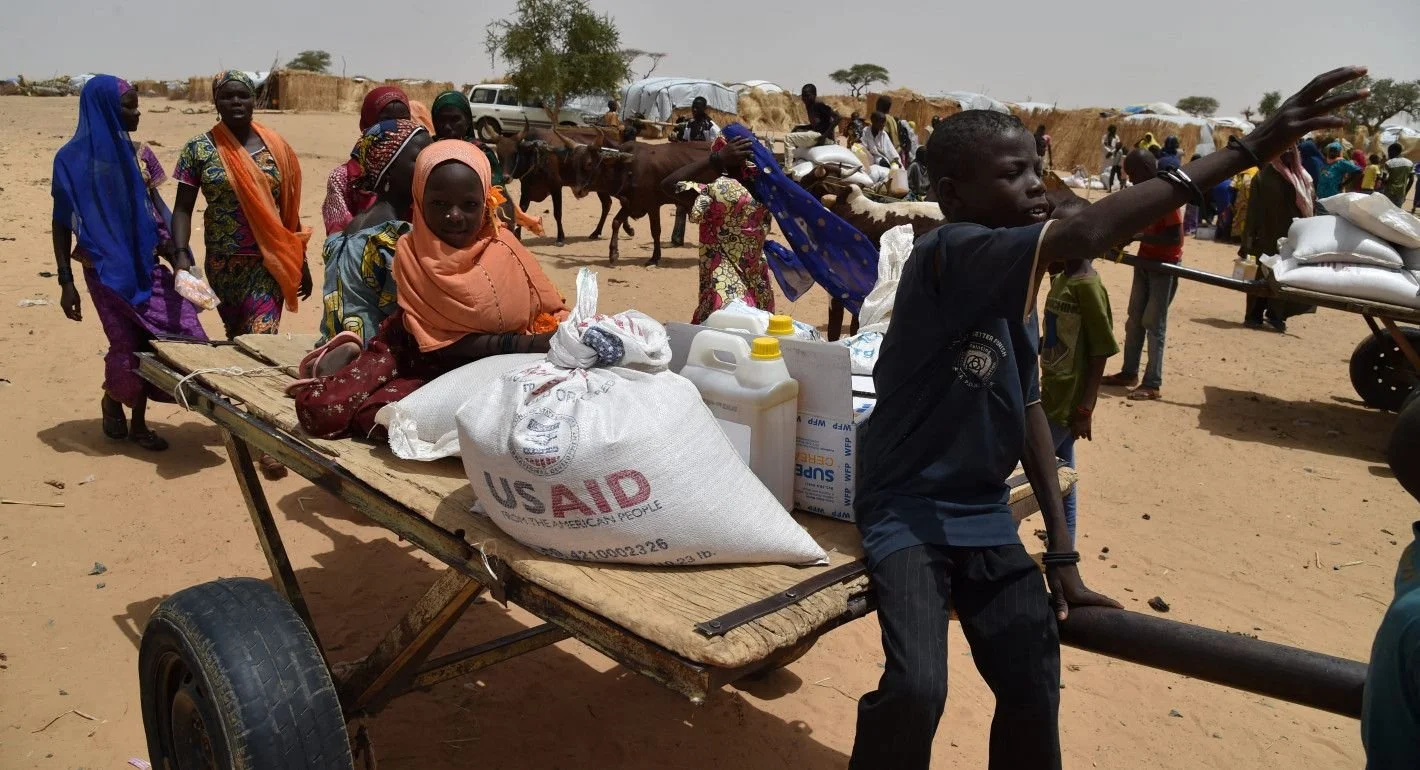
Over the course of the 2023 fiscal year, the United States government spent 71.9 billion dollars on foreign aid, a little over 1% of the year’s total government spending. There are multiple agencies through which the United States dispenses funds, most notably the United States Agency for International Development (USAID) and the State Department. Since USAID’s establishment under the Kennedy administration, it has provided emergency food assistance, facilitated transitions to democracy, and helped with economic aid and stabilization in numerous countries. These causes have helped the United States economically, both directly and indirectly.

American foreign aid creates trade relationships that help grow the American economy. Over 95% of the world’s population lives outside the United States, meaning that 3 trillion dollars of U.S. GDP comes largely from American businesses selling to customers abroad. Reaching this large of a customer base requires strong relationships with other nations—relationships predicated on mutual understanding and cooperation, of which foreign aid is a big part. In fact, the vast majority of our country’s top trading partners are nations to which the United States has provided foreign aid

To stop fostering existing economic relationships and prevent the formation of potential new ones through distribution of foreign aid would devastate the economy. 

Additionally, cutting foreign aid allows our enemies to strengthen their relationships with other countries and gain the economic benefits that foreign aid once gave the United States. The US is the largest provider of foreign assistance, and stepping down from that role allows a competing hegemon such as China to fulfill that position and reap the economic and diplomatic benefits we once did. 

Currently, American foreign aid has a better reputation with recipient nations than Chinese and Russian foreign aidthis has happened over time due to the transparency of American aid. Thus, continuing to provide foreign assistance is an effective way for the US to maintain its image as more trustworthy than its enemies, a valuable asset in the global fight for power.

Furthermore, the American economy is heavily reliant on foreign trade. Millions of American jobs are involved. The President’s move to remove ourselves from the international practice of providing foreign aid poses a significant risk to these millions of Americans.

The relationships that foreign aid creates are also valuable beyond the economic sphere. Countries like China and Russia are not democracies. American foreign aid has helped with the democratization of the world, with practices such as fair judicial processes and media independence making other countries less vulnerable to foreign interference. This creates a safer world, as democracies are far less likely to engage in conflict with one another, and therefore more reliable allies for the United States in the fight against authoritarian regimes.

Foreign aid also contributes to disease eradication. Foreign aid has played a significant role in reducing the presence and spread of diseases such as HIV and tuberculosis through programs like the President's Emergency Plan for AIDS Relief (PEPFAR) and USAID. Spending money on foreign aid to combat diseases helps ensure they won’t reach American shores. To stop funding these efforts is to put millions of people who rely on US foreign aid for anti-viral treatment, vaccines, and other preventative measures at risk, as well as millions more due to the invigorated spread of disease. 

Therefore, rather than cutting foreign aid, President Trump should be utilizing it to increase our global competitiveness and protect American citizens and interests. Investing in foreign aid provides numerous benefits to the United States, and cutting it is a harmful mistake.

Boat Strikes Make Everyone Less Safe

By: Saira Uttamchandani

Since September, the United States has attacked several boats off the coast of Venezuela that were allegedly carrying illegal drugs into the United States, killing tens of people in the process. The Trump administration has defended these actions, asserting that “[e]ach boat that we sink carries drugs that would kill more than twenty-five thousand Americans,” and that they will “blow [drug smugglers] out of existence.”

These attacks reflect a dubious interpretation of international law with possible significant geopolitical and legal consequences.

While the first strike was carried out in early September, the administration has laid the foundation for these attacks since the President assumed office in January.

On Inauguration Day, President Trump signed an executive order that allowed for drug cartels and criminal organizations to be classified as “foreign terrorist organizations.” This classification has historically been reserved for politically violent organizations such as ISIS and al-Qa’ida. Drugs and border security were critical issues in President Trump’s campaign, and are at the forefront in the minds of Americans. Still, the actions being taken by this administration to address these issues are irresponsible. 

In February, eight cartels in Latin America were classified as “foreign terrorist organizations,” including Tren de Aragua (TDA), a Venezuelan street gang, and in August, the United States deployed missile destroyers off the coast of Venezuela in a more concerted effort to deter Latin American drug cartels.

The White House has also asserted that President Maduro of Venezuela is working with Tren de Aragua members to spread drugs and crime in the United States, even though an April 2025 memorandum from the National Intelligence Council asserts that “the Maduro regime probably does not have a policy of cooperating with TDA and is not directing TDA movement to and operations in the United States.”

As a result, the White House has deported several reported Tren de Aragua members, arguably without due process, and increased the bounty that was on Maduro for previous narcoterrorism charges.

Several possible international law violations may be associated with these attacks.

One example is that engaging in these activities in Venezuela’s territory is a violation of its sovereignty, which deems the United States’ actions “internationally wrongful,” according to the United Nations’ Responsibility of States for Internationally Wrongful Acts.

These attacks could also be considered an interference with a nation’s sovereignty, because they interfere with Venezuela’s “inherently sovereign functions,” such as law enforcement. The United States’ destruction of evidence of drugs and related evidence directly interferes with Venezuela’s ability to serve as law enforcement in these cases. Ultimately, this may harm America’s interests by inhibiting or disincentivizing the local prosecution of drug smugglers in their country of origin.

Another potentially applicable international law violation is wrongful intervention in Venezuela’s internal affairs. To be considered wrongful intervention, the operation(s) in question must involve coercive interference with the domaine réservé, which is essentially the “internal or domestic affairs of a State.”

The International Court of Justice (ICJ) ruled in Nicaragua v. United States in 1986 that “the element of coercion, which defines, and indeed forms the very essence of, prohibited intervention, is particularly obvious in the case of an intervention which uses force,” which is the case here. Regarding the domaine réservé interference, serving as a law enforcement force via deadly attacks, the United States interferes with Venezuela’s internal or domestic affairs.

For such attacks to be considered self-defense, which is what the Trump administration has asserted that they are, Article 51 of the United Nations Charter specifies that a state has the right to defend itself in the case of an “armed attack.”

This raises several concerns. First, there are many steps involved in producing and smuggling drugs. This longer causal chain and period of time between actions weaken the case that this can be considered an armed attack.

Second, the ICJ implied in the majority view of Nicaragua that armed attacks are only “the most grave forms of the use of force.” While drug trafficking is terrible, it is hard to imagine that it reaches this high threshold.

This weakening of international law has several implications. For one, it raises questions about the actions of other nations. The United States plays a significant role in global affairs, and its disregard for international law may send a message to other countries that it is acceptable for them to do the same, making the world less safe.

Additionally, the buildup to these attacks, including the reclassification of TDA, deportations, and an increased bounty on President Maduro, raises concerns that the US could be perceived as trying to justify a political war under the guise of an invasion. Secretary of State Marco Rubio added to this perception by saying the President “wants to wage war on these groups” and previously claiming that “Venezuela and the Maduro regime has become a threat to the region and even to the United States.” 

These extrajudicial attacks by the US open the door to greater future possibilities of lawlessness in other Latin American countries, if Latin American countries follow this American example.

There are also domestic concerns that the US is using Venezuela to justify actions within the United States, like deportations without due process. More broadly, it can be seen as part of a pattern of actions that stretches the perimeter of executive action well beyond what is considered acceptable by most legal scholars. These actions include the recent deployment of the National Guard in Los Angeles. There are similar themes of violated sovereignty, and the actions taken with Venezuela do not inspire confidence that the current administration will honor this sovereignty. It could continue deploying the National Guard in cities across the United States.

The administration’s actions, at best, stretch the boundaries of several aspects of international law, and at worst, are a flagrant violation. This disregard for international law spells out dangerous consequences for Americans and foreigners alike.

Birthright Citizenship is an American Superpower

By: Saira Uttamchandani

The United States has upheld birthright citizenship since ratifying the 14th Amendment in 1868, which asserts that “All persons, born or naturalized in the United States, and subject to the jurisdiction thereof, are citizens of the United States.” While the Declaration of Independence famously claims that “all men are created equal,” our Constitution did not reflect this ideal - it was amendments like this one (the quoted excerpt specifically is part of the 14th Amendment’s Citizenship Clause) that helped our nation live up to the ideas espoused in those famous words.

While the United States is not the only country that grants birthright citizenship, it has become a key feature of American society. However, Trump has expressed his desire to get rid of birthright citizenship for the children of illegal immigrants or temporary residents, issuing an executive order to achieve this. 

Birthright citizenship has helped make America the great nation it is, and to get rid of it would be a mistake. Also, it would not necessarily solve the United States’ immigration issue that Trump promised to address.

The 1898 Supreme Court case, United States v. Wong Kim Ark, established that the “Fourteenth Amendment affirms the ancient and fundamental rule of citizenship by birth within the territory [...] including all children here born of resident aliens,”  setting the precedent for interpreting the phrase “subject to the jurisdiction thereof.” This interpretation was widely accepted and implemented until the 1985 book Citizenship Without Consent, which argued against birthright citizenship in the United States, and that “citizenship should be based on a theory of mutual consent.” Their arguments have surged in popularity with the recent immigration debate. 

Lawyers for the Trump administration have argued that the “subject to the jurisdiction thereof” component of the 14th Amendment does not apply to the children of illegal immigrants or visa holders. Numerous coalitions have expressed disagreement with the executive order, and several court decisions have blocked it. 

An issue with this desire to abandon birthright citizenship is that there is no agreement about changing the Citizenship Clause. Would a baby’s parents both have to be citizens or green card holders? What about the kids of refugees? People have different caveats that they want to include, and there is no consensus, no clear path forward.

There is also the economic impact to consider that millions of babies born in the US (there are about a quarter of a million babies born to undocumented immigrants in the US annually) are deemed undocumented rather than being granted citizenship. The majority of illegal immigrants pay taxes and work, contributing to the US economy. Several experts argue that this contribution is a net gain for the United States. To lose this revenue would hurt the American economy. 

While some of these babies might eventually be eligible to apply for naturalization (and an even smaller percentage will gain such status), most will not. Some of them will be deported, which costs taxpayers money. Some will stay here and be ineligible to contribute to Social Security, get jobs, and a myriad of other opportunities that greatly benefit the American economy. There is also the tax revenue aspect - the United States requires all US citizens to pay taxes. Excluding millions of people from becoming citizens is a big loss in potential tax revenue. 

There is also the fact that illegal immigrants are taking jobs that many Americans are not interested in. An example of this is the farming industry, where undocumented immigrants make up a large percentage of the workforce. They greatly contribute to the American economy, and to lose this workforce would be devastating.

Then, there’s the goal of reducing illegal immigration. Birthright citizenship is not the biggest draw for illegal immigrants - such a migration is most commonly influenced by economic desires, which would not be reduced by getting rid of birthright citizenship. 

To get rid of birthright citizenship would create a host of economic problems for the United States, while simultaneously not solving the migration issue that some politicians hoped it would. It seems clear that this is not the direction the current administration should go in.

AI Threatens to Exacerbate Global Inequality

By: Saira Uttamchandani

The development of artificial intelligence has led to some fascinating, increasingly popular inventions, such as the large language model ChatGPT. While artificial intelligence (AI) can do many interesting things, such as write music or create art, it also has had a significant positive  impact on various fields, such as finance, transportation, and medicine. As a result, investors are betting that the implementation of AI could raise global GDP by 7.5% by the year 2034. However, this incredible potential for growth could also exacerbate global inequality, as AI’s benefits are experienced unequally across countries and regions. Many developing countries lack the resources needed to take advantage of AI’s benefits and may also be the first to experience its harms.

Reaping the benefits of AI requires countries to have the necessary hard and soft infrastructure to support its use. This requires extensive digital connectivity, a technically savvy population, appropriate laws and regulations, and innovation. Higher-income countries are better prepared to take advantage of AI's benefits in all these areas due to the current wealth disparity between nations. Higher-income nations are thus better poised to benefit from artificial intelligence financially and economically. As these countries continue to benefit from artificial intelligence, it threatens to increase global inequality, as AI has the ability to increase productivity and generate greater wealth. 

Artificial intelligence also requires a lot of energy for the algorithm running, data center operation, and other similar tasks. This poses an issue, as lower-income countries often lack access to stable and reliable energy sources. This means they are less likely to benefit from the use of AI compared to higher-income nations, further increasing the chasmic divide. 

Artificial intelligence has been shown to improve economic productivity and economic status. If lower-income countries do not have access to these benefits, they will continue to fall behind as higher-income countries grow richer. Similarly, AI requires extensive computing power to run effectively, which many lower-income countries do not have. This is yet another difficulty lower-income countries face when trying to harness the power of artificial intelligence. 

It would be bad enough if developing countries were only less able to take advantage of AI's benefits, but this harm is exacerbated by the fact that AI also threatens to weaken the economies of developing countries through labor market disruption and a lack of technological skills in the countries’ workforce.

Labor market disruption via artificial intelligence has already begun. For example, automated assembly lines are replacing human workers, especially among “routine and repetitive” jobs, which automation can easily replace. Many corporations, such as Nike and Apple, outsource labor to developing countries, and a significant part of these countries’ GDP can be attributed to these manufacturing jobs. As they invest in their factories to improve productivity, the workers who are replaced by artificial intelligence have less disposable income and dollars to reinvest into the economy of these developing countries, thus stunting growth.

Incorporating artificial intelligence also increases demand for workers with skills to work alongside these new systems. 

AI is different from previous significant technological developments. For example, compared to the Industrial Revolution, AI is more likely to impact both blue-collar and white-collar jobs, and there is much more potential for high-skilled workers to reap the benefits. Complementary jobs in cybersecurity and IT, which already pay quite well compared to other fields, will surge as AI creates new opportunities As a result, high earning workers may experience a disproportionate increase in their income. These high-wage earners are disproportionately located in developed countries and, therefore, workers in lower-income countries may not experience the benefits as robustly.

In an increasingly automated world where artificial intelligence is continuously growing at remarkable speeds, we must recognize the unequal benefit  it provides and the harm it causes.

The U.S. Needs to Stand With Canada

By: Saira Uttamchandani

Last summer, the news of Canadian Sikh activist Hardeep Singh Nijjar’s murder in Surrey, British Columbia, shocked the world. He was shot in his truck outside of the the Guru Nanak Sikh Gurdwara (a Sikh temple), sparking an uproar in Canada’s Sikh community. Nijjar was known for being a prominent activist for the creation of Khalistan, an independent Sikh state. This led the Indian media and government to label him a terrorist, while he gained a large following in the Sikh community.

This situation escalated when Canadian Prime Minister, Justin Trudeau, asserted in September of 2023 that there were “credible allegations” that the Indian government was connected to Nijjar’s murder. 

These accusations have sparked a wave of disputes between Canada and India, culminating in the expulsion of six Indian diplomats from Canada. 

The United States has been pulled directly into this affair, with the Department of Justice announcing in November the thwarted murder of Canadian-American Gurpatwant Singh Pannun, an associate of Nijjar who was also an advocate for the Sikh separatist movement. U.S. prosecutors are asserting that the accused, Nikhil Gupta, was directed by an official of the Indian government, Vikash Yadav.

As each others’ “closest allies,” the United States has a moral obligation to support Canada in this dispute, despite the US’ growing financial and strategic ties with India. Additionally, the legal and ideological ramifications of not condemning these extrajudicial killings threatens American interests as well.

India is not only a major trading partner for the United States, but also a key ally in the security sphere. It’s proximity to China has also helped counterbalance and deter the latter’s influence and promote democracy in the region, a cause that is incredibly important to the United States.

However, the importance of the Canadian-American alliance cannot be understated. They share the longest border of two countries in the world, trade hundreds of billions of dollars between them, have close military relations, and similar cultures. The partnership strengthens both nations on a global stage in multiple sectors. A lack of condemnation towards India regarding this issue not only sends a signal to Canada that their shared values of due process and democracy and close relationship are less important than placating India, but also sends a global message of acceptance of India’s actions.

The United States and India have a strong partnership that is founded upon the shared ideal of democracy. Extrajudicial killing contradicts the core of democracy, and violates the fundamental right to life that all individuals have, leading the United States to explicitly condemn it. A supposed democratic institute such as the Indian government must protect this right and punish those who violate it, and an ally of the United States should share such a cardinal value.

Not only does the Indian constitution protect the right to life in Article 21, but the Indian government has signed numerous international treaties, such as the International Covenant on Civil and Political Rights (which the United States has also signed) that affirm that the right to life is protected. Specifically, the ICCPR affirms individuals’ rights to a fair trial and due process, both of which were violated in the case of this extrajudicial killing. 

The fact that the government of an American ally is acting in such discordance with our fundamental values is a huge ideological concern. Not standing with Canada in this dispute sends a conflicting global message about what the United States stands for, weakening its position as the leader of the free world and a powerful global player overall. Furthermore, failing to condemn India’s actions sends a message that these extrajudicial killings are acceptable, suggesting to India—and potentially other nations—that there are no foreign relations consequences for such breaches of international law, thereby emboldening them to continue.

This is an incredibly slippery slope of injustice. It is imperative that the United States makes it known that they stand by their foundational values.