Spring 2025

African Governments Perpetuate Intimate Partner Violence

By: Priya Buddhavarapu

The global average of reported intimate partner violence (IPV) cases is 30%. In Sub-Saharan Africa it’s, 36% and in East Africa it’s 44%. 

IPV refers to abuse or aggression in a relationship, including physical violence, sexual violence, stalking, and psychological aggression. Women in rural areas, as well as marginalized groups, such as sexual minorities, are more likely to face IPV. 

There are three primary stigma components that prevent IPV help-seeking measures. “Cultural stigma refers to societal norms that put into question the experiences of women facing abuse. “Stigma internalization” refers to the practice of women believing the negative stereotypes about themselves . “Anticipated stigma” accounts for the judgement women believe they will face (i.e. status loss and discrimination). 

However, still underlying these variants of stigma is the perpetuation of “victim blame and deservingness” attitudes. Many victims often hold themselves accountable for IPV if they feel they have violated gender role expectations; have provoked their partners; or feel that they are less deserving of empathy or humane treatment, particularly apparent in racial minority women. 

Even still, other victims lack awareness that what they are experiencing is non-consensual and wrong; it is within the scope of their marriage, they believe, to be treated in such a way. These narratives are only revolutionized by societal stereotypes that IPV is the result of provocation of the partner by the victim. 

Taken together, each of these factors justify the following: when a woman is facing IPV, it is incredibly difficult to seek help. I propose two reasons for why this conclusion is particularly relevant across the African continent

First, on average, African nations tend to rank lower on the democracy index than other European, North American, and Asian regions. In 2024, the Democracy Index (calculated by the criteria of the Economist Group) of Sub-Saharan Africa was 4.00,North Africa  was 3.12, while Western Europe was 8.28.  

There also tends to be a relationship between the quality of human rights and a country’s adherence to democratic principles, providing some insight on why women nations with lower Democracy Index scores might face more consequences in pursuing IPV help-seeking measures, particularly when the dominant culture is highly sensitive and conservative

Second, rural African women may face even less awareness on issues such as consent and sexual safety; compounded with the conservative tendencies of these rural communities to uphold societal customs and traditions, this may exacerbate IPV and other forms of domestic violence across isolated communities. Furthermore, the lack of infrastructure in rural regions of Sub-Saharan Africa also inhibits a woman’s access to proper reporting networks. 

Thus, due to a lower awareness, societal stigma, and the lack of reporting mechanisms, IPV is particularly grave for the 55%-85% of African women residing in rural areas.

If IPV is a prominent issue across the continent, what, then, stands in the way of government-led preventative measures? 

One argument worth considering regards privacy rights. How is the government supposed to interfere in the affairs of a consensual marriage without infringing on individual privacy rights? This question is particularly relevant for African nations such as South Africa, Nigeria, and Ghana, with comprehensive privacy protection legislation

However, in the case of other nations with few established freedoms and low Democracy Index scores, this question seems ironic– why would privacy rights even be of concern? 

The answer might lie not in privacy rights, but potentially in the continuous systemic marginalization of African women. Whether it be through inheritance rights or education policies, women remain at the bottom of the African social ladder, maintaining little access to education, land, credit, and education. If these governments fail to protect these rights, there is little hope that they will address IPV in the near future. 

Thus, in order to effectively combat IPV, legal reform towards the rights of African women must first occur. Until then, our efforts must go towards spreading awareness and changing our own deep-seated negative perceptions of IPV. 

Birthright Citizenship is an American Superpower

By: Saira Uttamchandani

The United States has upheld birthright citizenship since ratifying the 14th Amendment in 1868, which asserts that “All persons, born or naturalized in the United States, and subject to the jurisdiction thereof, are citizens of the United States.” While the Declaration of Independence famously claims that “all men are created equal,” our Constitution did not reflect this ideal - it was amendments like this one (the quoted excerpt specifically is part of the 14th Amendment’s Citizenship Clause) that helped our nation live up to the ideas espoused in those famous words.

While the United States is not the only country that grants birthright citizenship, it has become a key feature of American society. However, Trump has expressed his desire to get rid of birthright citizenship for the children of illegal immigrants or temporary residents, issuing an executive order to achieve this. 

Birthright citizenship has helped make America the great nation it is, and to get rid of it would be a mistake. Also, it would not necessarily solve the United States’ immigration issue that Trump promised to address.

The 1898 Supreme Court case, United States v. Wong Kim Ark, established that the “Fourteenth Amendment affirms the ancient and fundamental rule of citizenship by birth within the territory [...] including all children here born of resident aliens,”  setting the precedent for interpreting the phrase “subject to the jurisdiction thereof.” This interpretation was widely accepted and implemented until the 1985 book Citizenship Without Consent, which argued against birthright citizenship in the United States, and that “citizenship should be based on a theory of mutual consent.” Their arguments have surged in popularity with the recent immigration debate. 

Lawyers for the Trump administration have argued that the “subject to the jurisdiction thereof” component of the 14th Amendment does not apply to the children of illegal immigrants or visa holders. Numerous coalitions have expressed disagreement with the executive order, and several court decisions have blocked it. 

An issue with this desire to abandon birthright citizenship is that there is no agreement about changing the Citizenship Clause. Would a baby’s parents both have to be citizens or green card holders? What about the kids of refugees? People have different caveats that they want to include, and there is no consensus, no clear path forward.

There is also the economic impact to consider that millions of babies born in the US (there are about a quarter of a million babies born to undocumented immigrants in the US annually) are deemed undocumented rather than being granted citizenship. The majority of illegal immigrants pay taxes and work, contributing to the US economy. Several experts argue that this contribution is a net gain for the United States. To lose this revenue would hurt the American economy. 

While some of these babies might eventually be eligible to apply for naturalization (and an even smaller percentage will gain such status), most will not. Some of them will be deported, which costs taxpayers money. Some will stay here and be ineligible to contribute to Social Security, get jobs, and a myriad of other opportunities that greatly benefit the American economy. There is also the tax revenue aspect - the United States requires all US citizens to pay taxes. Excluding millions of people from becoming citizens is a big loss in potential tax revenue. 

There is also the fact that illegal immigrants are taking jobs that many Americans are not interested in. An example of this is the farming industry, where undocumented immigrants make up a large percentage of the workforce. They greatly contribute to the American economy, and to lose this workforce would be devastating.

Then, there’s the goal of reducing illegal immigration. Birthright citizenship is not the biggest draw for illegal immigrants - such a migration is most commonly influenced by economic desires, which would not be reduced by getting rid of birthright citizenship. 

To get rid of birthright citizenship would create a host of economic problems for the United States, while simultaneously not solving the migration issue that some politicians hoped it would. It seems clear that this is not the direction the current administration should go in.

The Importance Of United States' Involvement in Latin America And The Caribbean

By: Charlotte Sparling

Latin America and the Caribbean (LAC) region are crucial regional trading partners with the United States. Beyond their geographic proximity, these countries share economic interests and security concerns. Therefore, it is crucial to have strong relationships as instability concerns in LAC often impact the United States

As such, US Congressional members have sought to strengthen relations with LAC. However, the US is not alone in its interest in the region. China has increasingly inserted itself as a major player. 

Following the Venezuelan elections, which were widely viewed as fraudulent, President Xi Jinping of China was among the first to congratulate Nicolas Maduro on his victory. Instances like these concern the United States that China’s presence in the region is a stability concern.

Currently, the United States provides roughly 31% of LAC merchandise imports and 16% of foreign direct investments to the region. Among LAC, however, Mexico is the United States’s biggest trade partner, accounting for 71% of trade. In turn, 62% of US exports to LAC go to Mexico.

While the United States has sought to continue its regional involvement, US investors face challenges in the region. These include transportation problems, corruption, lacking property rights protection, and nontransparent regulatory and legal frameworks.

Continued efforts, including President Biden’s America’s Partnership for Economic Prosperity plan to increase competition and investment in the region to bolster supply chains, have sought to strengthen relations. However, what has been done so far is not enough. 

Over the past decade, China has surpassed the US as South America’s biggest trading partner. China has sought influence through coordinating financing, trade, and investment. From 2005 to 2020, they provided over $138 billion in loans to Latin America, and from 2000 to 2021, regional trade increased from $12 billion to $445 billion. Such programs have placed China in a valuable role as an indispensable trade partner to several LAC countries. This threatens the United States presence in the region and could disrupt trade relations with the US.

In addition to trade and economic efforts, China has invested in public messaging to boost their image as an invaluable ally through efforts that include bidding for high-profile projects.

Worryingly, since 2012, President Xi Jinping has visited the region eleven times, in contrast to President Obama, who visited the region twelve times, and President Trump, who only visited once during his first term. Undeniably, Chinese efforts have seen success. China’s Belt and Road Initiative has twenty-one Latin American countries' signatures. Brazil, Argentina, and Mexico saw China’s involvement as a net positive. However, there are growing sentiments of weariness over bad behavior by the Chinese, “including debt traps, cheap goods flooding the market, and crowding out domestic manufacturers.”

In Brazil, Chinese investments fell to an all-time low in thirteen years. In Panama, 68% said the Chinese government was “untrustworthy” in both 2018 and 2021, a rise from 48% in 2016. Similar to Chinese involvement in Africa, the Chinese government’s foreign direct investments did not live up to their initial claims. Adding to this, since their peak in the 2010s, Chinese investments have slowed down, creating a window of opportunity for the US.

The United States should prioritize meaningful engagement to address pressing and specific issues through positive messaging. Instead of combating China head on, the US should allow China to continue its existing programs which have already shown the people of LAC the long term associated costs. Instead, the United States should focus on what it can do to improve its own reputation in the region.

Already, US companies have been shown to operate with “transparency, environmental standards, and labor standards.” Unlike the Chinese Belt and Road Initiative, the US hires local workers. While benefiting the US, this involvement also helps the region as a whole.

The seeds of doubt towards China have been sowed; it is now time for the US to take advantage of this gap and revamp its efforts in the region to ensure strong US-LAC relations.

The Wage Economy Contributes To Food Insecurity Among the Inuit

By: Priya Buddhavarapu

We live in a world where one jar of nutella costs $48 for some Inuit communities. 

The Inuit people, traditionally spread across the northern regions of North America, Greenland, and Russia, are a vast and diverse indigenous group that have, for centuries, thrived in the relentless Arctic environment. By engaging in cultural practices such as seasonal subsistence hunting, gathering, and preservation methods, as well as values such as sharing, respect for elders, and extended familial units, the Inuit people are able to call the Arctic tundra their home. The term Inuit Qaujimajatuqangit (IQ) refers to the various types of Inuit traditional knowledge that encompass these values. 

In the recent past, many of these communities have been undergoing a transition from the traditional subsistence economy to a wage economy, perpetuated by the increasing costs of hunting and fishing, the effects of climate change in Arctic regions, changing interests, and loss of IQ. The average Inuit wage worker, however, faces an extreme disparity compared to the average urban citizen. From factors such as job shortages to a lack of affordable housing and healthcare, there exist several barriers to the economic wellbeing of several Inuit communities. 

One consequence of this economic transition stands out, an acute food security crisis. Food insecurity refers to when a household or community has limited or uncertain access to safe and healthy food. Due to environmental changes and the manpower of communities being diverted to the wage economy, many Inuit people are no longer able to rely on IQ and traditional practices to self-sustain. In one Inuit region, 70% of adults were found to be living in a food-insecure household.  In Nunavut, a large region in northern Canada populated by twenty-five Inuit communities, food insecurity is at crisis level

A solution to this, some offer, is to treat Inuit individuals like other citizens, expecting them to rely on the transport and purchase of market foods, or food shipped from southern areas. This is, in fact, what is currently being done in several communities across Canada and Alaska.

This, however, is unfeasible. 

Due to the longer distance and lack of adequate transportation across these northern regions, produce spoils quickly. If products do make it to their destination, costs are unattainably expensive. Additionally, the food that is readily available in these areas is usually highly processed and calorically dense, leading to high obesity rates among Inuit populations. This is juxtaposed with the starvation arising from inconsistent access. Furthermore, Inuit adolescents and children are at heightened risk for mental health issues such as depression and anxiety, compounding the adverse health effects of food insecurity.

Moreover, the shift to the wage economy has also driven a shift in traditional Inuit values. Most notably, this has been the destruction of the Inuit family structure and culture of sharing. Research has consistently shown that subsistence hunting is crucial to Inuit identities and economic wellbeing. Fully employed Inuit are significantly more likely to adapt to solely sharing within a nuclear family structure, whereas partially employed or sport-hunting guides are more likely to share subsistence food with extended family and distant kin. 

Values of sharing,cooperation, and the traditional Inuit familial structure are being disrupted by this economic shift. What was once collective now is becoming individualistic. 

The issues that the shift from a subsistence to a wage economy has caused  have severely contributed to the enormous food insecurity crisis present in these regions. Compounded with the effects of climate change, communities are seeing effects from health degradation to community collapse. 

In combating this issue, governments must listen to the voices of representative Inuit bodies, relying on IQ and their longstanding knowledge of their lands to address and ensure consistent access to safe and nutritious foods. While a solution to this complex issue will not come easy, it is imperative to rely on deeply relevant guidance that has survived centuries of obstacles. 

Trump’s Harmful New Plan For Gaza And Its Pushback

By: Jacob Rabin

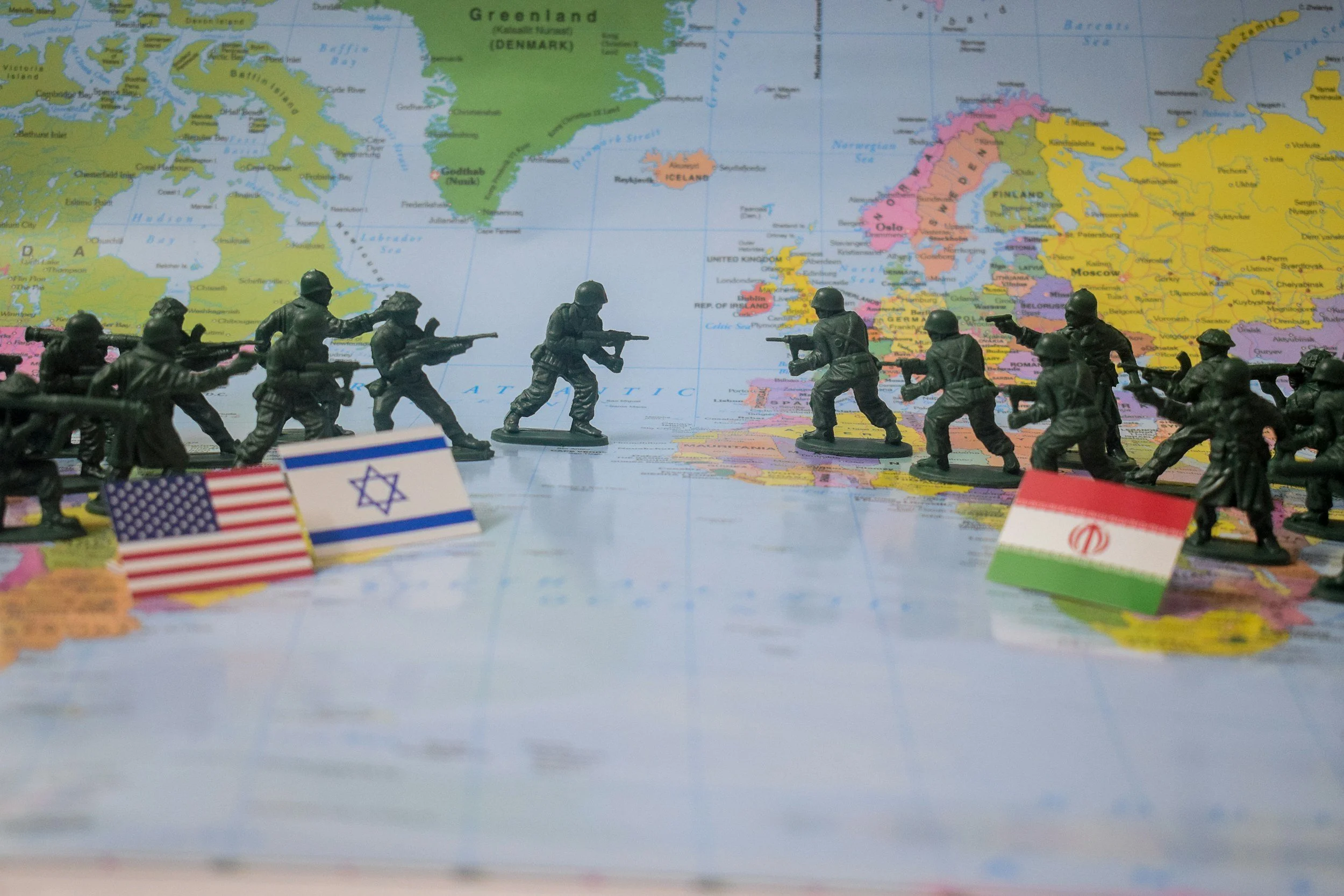
Trump recently produced global shockwaves when he announced an American plan to control Gaza during a bilateral press conference with Israeli Prime Minister Netanyahu. Although the Gaza Strip has been governed by different nations and groups since the Mandate of Palestine began after the end of World War II, the United States has absolutely no claim to any of Gaza or its resources. 

Trump’s plan to “take over” and “own” Gaza is borderline insane as a result. Furthermore, Trump’s proposition that other Middle Eastern nations would absorb the current Palestinian population that resides in Gaza is unthinkable, particularly as American allies in the region scoff at the notion.

The conflict in the Middle East between Israel and Hamas that also involved Iran and Hezbollah has been a traumatic event involving the loss of much life and the destruction of much property. Beginning with Hamas’s incursion into Israel on October 7, 2023, Israeli military action has been across the region as the country has sought to protect itself from further attack. 

As Israel’s longest-standing ally, the United States has provided billions of dollars in aid since the country was first recognized, reflecting not just a desire for an independent Israel but also showing the importance of Israel’s security to American interests in the Middle East. As the only true democracy in the Middle East, the United States relies on Israel immensely. 

Nothing changed after the October 7th attack, with the United States having provided nearly $18 billion in military aid as of October 2024, the one-year point of the conflict. The reintroduction of a Trump administration into the picture has only led to a renewal of the United States’ commitment to Israel.

Some have even argued that Israel and Prime Minister Netanyahu were extending the war in Gaza until an eventual Trump re-election – with Netanyahu being the first foreign head of state to visit the White House, those beliefs have not been dissuaded. The bilateral press conference between the two leaders simply reinforced the argument that Trump and Israel are in essential lockstep. 

However, even as the two agreed on topics such as their opinion on the Biden administration and the dangers of Iran, a clear (if unsaid) division occurred. President Trump introduced his new plan that would entail the United States taking control of Gaza, saying, “We'll own it.”

Even Prime Minister Netanyahu seemed to view the proposal negatively, saying, “President Trump is taking it to a much higher level. His words and tone overwhelmingly make clear that Israel would not be a fan of further American presence in the region.

In addition to several American allies rejecting the plan, Republican lawmakers also expressed discomfort, feeling that it was just another empty plan similar to Trump’s ideas about the Panama Canal and Greenland.

Secretary of State Marco Rubio and Press Secretary Karoline Leavitt seemed to walk Trump’s plan back, saying that the United States would simply rebuild Gaza and Palestinians would only be temporarily displaced.

Even with pushback from nearly every avenue, Trump only doubled down on his plan, posting an AI-generated video depicting a resort in Gaza being built out of the rubble. Even if this talking point is nonsense, it is still absurd that the President of the United States is engaging in such spitballing.

While peace in Gaza, and the Middle East more broadly, is necessary, the solution is not more American involvement. The United States has no business or right to involve itself deeply in foreign affairs strictly for American benefit. This is especially true when Americans' lives are at risk. Instead, we should continue to work with Israel to maintain a ceasefire, allowing peace to return to the region.

Lessons From Ukraine to be Applied to a War Over Taiwan

By: Charlotte Sparling

The war in Ukraine has entered its fourth year. Despite predictions that Ukraine would quickly succumb to the Russians, they are still fighting. 

In response to aerial attacks, Ukraine’s drone strikes targeting airfields, oil refineries, and other critical institutions seek to cripple Russia. Furthermore, since the start of 2025, Ukrainian forces have “stabilized much of the 800-mile front line inside Ukraine, stalling Russian advances and counter attacking” in the surrounding area by the cities of Toretsk and Pokrovsk. 

Through these efforts, Ukrainian forces continue to fight to hold the line.

Russia has responded to Ukrainian defense by employing extensive resources, with North Korean troops only adding to that. Combined Russian and North Korean troops seized villages and cut supply lines to main Ukrainian forces in Sudzha. 

The United States and Europe have continued to provide Ukraine with key support. As questions arise about future American support, the status of Ukraine is becoming increasingly contingent on European aid. The United States currently provides roughly half of the aid to Ukraine. If that is to substantially decrease, Europe would need to quickly step up.

Together, Europe’s resources “constitute a massive air force, giant navy and formidable army.” Yet, the quantity of resources has decreased compared to during the Cold War. Consequently, these countries have begun to revamp their stockpiles. The collective European resource pool surpasses Russian resources, but this rebuilding focus is still crucial.

Global leaders must learn from the Russo-Ukrainian war and apply these lessons in preparing Taiwan for the possibility of a Chinese invasion.  

In East Asia, China continues to pressure Taiwan, as seen by their aggressive posturing. For decades, Taiwan has faced this threat, with China almost every day probing Taiwanese defenses with warships and fighter jets with the aim to “to destroy the sovereignty of a free and democratic Taiwan and subordinate it to communist China.”

Former Director of the CIA, William Burns, noted instructions from Chinese president, Xi Jinping, to prepare for an invasion of Taiwan by 2027.

The implications of an invasion “are enormous, potentially including a global economic crisis far worse than the shock caused by the Covid-19 pandemic.”

Preventative measures are vital to prevent such a calamity for the surrounding region. Japan, the Philippines, South Korea, and Australia would become especially vulnerable if the US failed to act.

Following Russia’s invasion of Ukraine, Taiwanese leaders stood by the victim, Ukraine.“ ‘Ukraine today, Taiwan tomorrow’ is now a commonly used phrase in Taiwan.”

Therefore, the US needs to secure Ukrainian sovereignty if it hopes to do the same with Taiwan. Just like dominos, if one is to stand, so too must the other.

The West failed to deter Putin’s invasion, and Ukraine’s future does not contain a guarantee of a reversal to pre-invasion conditions. Russia probed responses to its actions in 2014 amidst its invasions of Crimea, Donbas, Syria, Georgia, and Chechnya. Later, in 2022, Russia carried out the invasion of Ukraine itself. 

“If you want peace, be prepared for war.”

China is watching America’s reactions to Ukraine to anticipate what American involvement would look like if China invaded Taiwan. While there are heavy economic costs weighing on Europe following their break with Russia, the costs of a Taiwanese invasion would be far greater.

If the US abandons Ukraine, roughly half of its support would disappear. Simultaneously, a Russian victory would embolden China to move against Taiwan.

These two conflicts are intertwined. Accordingly, Taiwanese officials have learned from Ukraine and have made changes such as restructuring their military by lengthening service terms and training. They have also expanded their drone program after observing the key role drones have played in Ukraine.

The war in Ukraine has exposed modern warfare challenges, US and European military readiness to respond, and has brought about crucial lessons for the future. 

While deterrence with Russia failed, there is an increased need for it to work with China.

The Congo in Crisis

By: David Ball

The conflict in the Eastern Congo has been the deadliest war since World War 2, with over 5 million killed. What has been a 25-year-old conflict might be reaching another boiling point, in which could reshape the DRC and the lives of millions for years to come. The recent capture of Goma and Bukavu has led to 7,000 deaths, over 940,000 people displaced, and hundreds of human rights abuses, such as: rape, abduction, child soldier recruitment, and claims of ethnic cleansing. While this is currently occurring, the international world and the United States are largely apathetic to the crisis and the millions of people it has and will affect.

The main rebel group in Eastern Congo, named the M23, takes its name from the March 23, 2009 agreement between the Congolese government and the CNDP militia—a peace treaty whose implementation many former CNDP fighters, predominantly Congolese Tutsis, later found unsatisfactory. Frustrated by the treaty’s failure to fully integrate them into the national military and broader society, these fighters rebelled, giving rise to the M23 movement in 2012. M23 has direct ties to Rwanda’s Tutsi-led government, which has provided direct military assistance, including recruitment and logistical aid to the rebels.

Beyond ethnic and political grievances, economic motives play a significant role in Rwanda’s support for the rebels. North and South Kivu, where M23 operates, is rich in minerals, including diamonds and cobalt. The DRC is the world’s largest cobalt producer and the fourth-largest diamond producer, and has an estimated $24 trillion in mineral deposits under its soil. By backing M23, Rwanda can control these resources, and exploit the Congo’s vast untapped wealth.

The conflict between M23, Rwanda, and the Democratic Republic of the Congo is far from new. M23 first came into prominence in 2012, when it invaded Goma with backing from Rwanda. The subsequent fallout from the invasion unleashed a wave of human rights abuses, including sexual violence, arbitrary arrests, and executions. However, with support from the UN, the Congolese army, and international strong-arming, the M23 was eventually forced to retreat, and Rwanda agreed to stop funding its operations.

This time, however, the situation is different. Not only is M23 stronger, with increased backing from Rwanda, but the UN and the Congolese government have struggled to push back the advancing rebels. On February 17, the M23 captured Bukavu, the capital of South Kivu province, home to over 800,000 people. The continued instability and territorial expansion of M23 forces have already displaced an estimated 1.65 million people in the region, and over 800 thousand children are out of school due to the conflict.

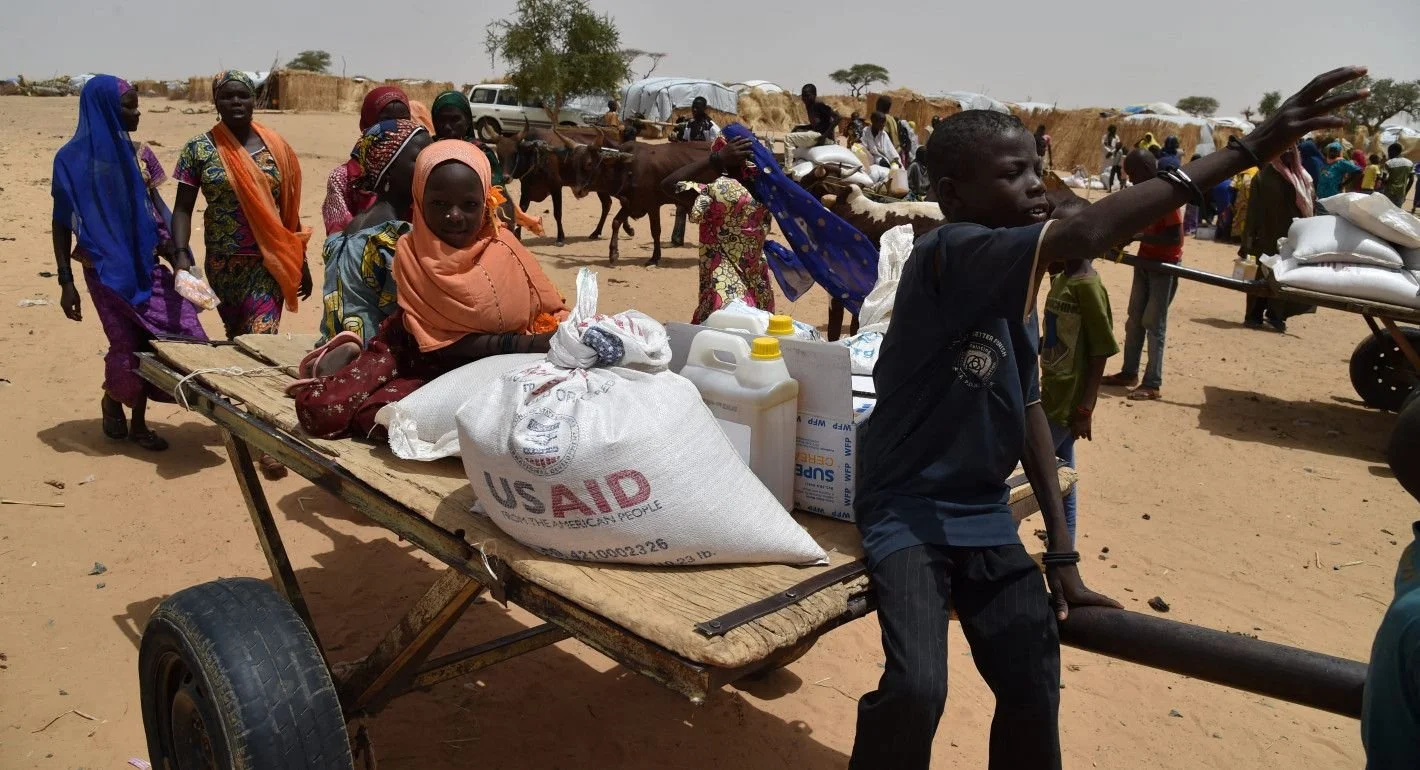
While the conflict has escalated, there is still an opportunity for a solution. Many European nations including the UK are in talks to plan sanctions against Rwanda,in order to pressure Kagame to pull back his military and logistical support. While this helped resolve the conflict in 2012, Kagame will be harder to convince this time around. Rwanda has increasingly relied on China for foreign assistance, and the cessation of USAID programs in the region has cut off the economic pressure that the U.S. can put to curb Rwanda's support for M23. On February 22nd, the UN Security Council demanded that Rwanda withdraw all its troops from eastern Congo, as proposed by France. While this is certainly a step forward, the UN’s credibility in the region is mediocre at best. Its peacekeeping efforts have been largely controversial, facing domestic opposition - even at the point that the Congo’s president - Tshisekedi asked the organization to withdraw from the Congo in 2023. Additionally, it has been unable to operate in areas occupied by M23 forces, severely limiting its effectiveness.

It is clear that there needs to be a new approach to curb the rapidly deteriorating situation in the Eastern Congo. The U.S. should cut military aid to programs that support M23, and sanction Rwandan military members who are directly imbedded with the rebels and others who commit war crimes, as they did in 2012. Ugandan forces have also been embedded in Eastern Congo since 2021, to help fight jihadist rebel groups. If Uganda decides to take advantage of the chaos, there could be a repeat of the Second Congo War, which caused the deaths of between 3-5 million and the displacement of millions more. To stop the conflict from expanding, the U.S. should leverage its diplomatic prestige to bring Congo, Rwanda, and Uganda to the negotiating table. This conflict should also be more publicized, both in academic circles and online. Rwanda uses sports to advertise itself. By spreading the word about brands such as Arsenal, Bayern, and PSG supporting Rwanda, we can put pressure on Kagame to resolve the conflict.

While this issue may seem distant, its consequences affect the livelihoods of millions of people. In March of 2023, Human Rights Watch released a report stating that “A 46-year-old mother of six, who fled Mushaki in Masisi territory on February 25…  said [that] … four of them raped me. As they were raping me, one said: ‘We’ve come from Rwanda to destroy you.’”

60 years ago, the first president of the DRC, Patrice Lumumba wrote his last letter to his wife, before his assassination. He stated “We are not alone. Africa, Asia, and the free and liberated peoples in every corner of the globe will ever remain at the side of the millions of Congolese who will not abandon the struggle until the day when there will be no more colonizers and no more of their mercenaries in our country.”