Jacob Rabin

Trump's Contradictory Stance on Foreign Policy

By: Jacob Rabin

For better or for worse, the early days of President Trump’s second term have consisted of an intense shakeup of the United States’ foreign policy priorities. Although some of the administration’s measures are still pending legal challenges, widespread actions including vast trade deals, foreign aid cuts, and tariffs have rattled the international status quo.

Trump has sought to claw back at least $8 billion previously allotted for foreign aid. He also blocked another $4.9 billion in aid approved by Congress already. His administration has claimed to have reached trade deals with dozens of countries, although the number of finalized agreements likely remains in the single digits. Trump has imposed some level of tariffs on nearly all nations, although it has been tough to decipher exactly how many countries are affected and at what level. Either way, he has moved beyond the handful of trade disputes typical of recent administrations and instead initiated a near-global tariff regime.

The most fascinating parts of Trump’s decisions are the actions directed at our long term allies, namely Canada and the United Kingdom. Canada alone accounts for roughly $762 billion in annual trade with the United States, including nearly $350 billion in American exports and $28 billion in agricultural goods. The United Kingdom absorbs about $85 billion in U.S. exports each year. Yet, both countries, who have long been integral security and economic partners, have been publicly scolded for unfair trade and subjected to new tariff frameworks. Trump’s complex web of tariffs on British and Canadian goods, among others, has already raised prices for key sectors of the economy like aluminum, autos, and machinery.

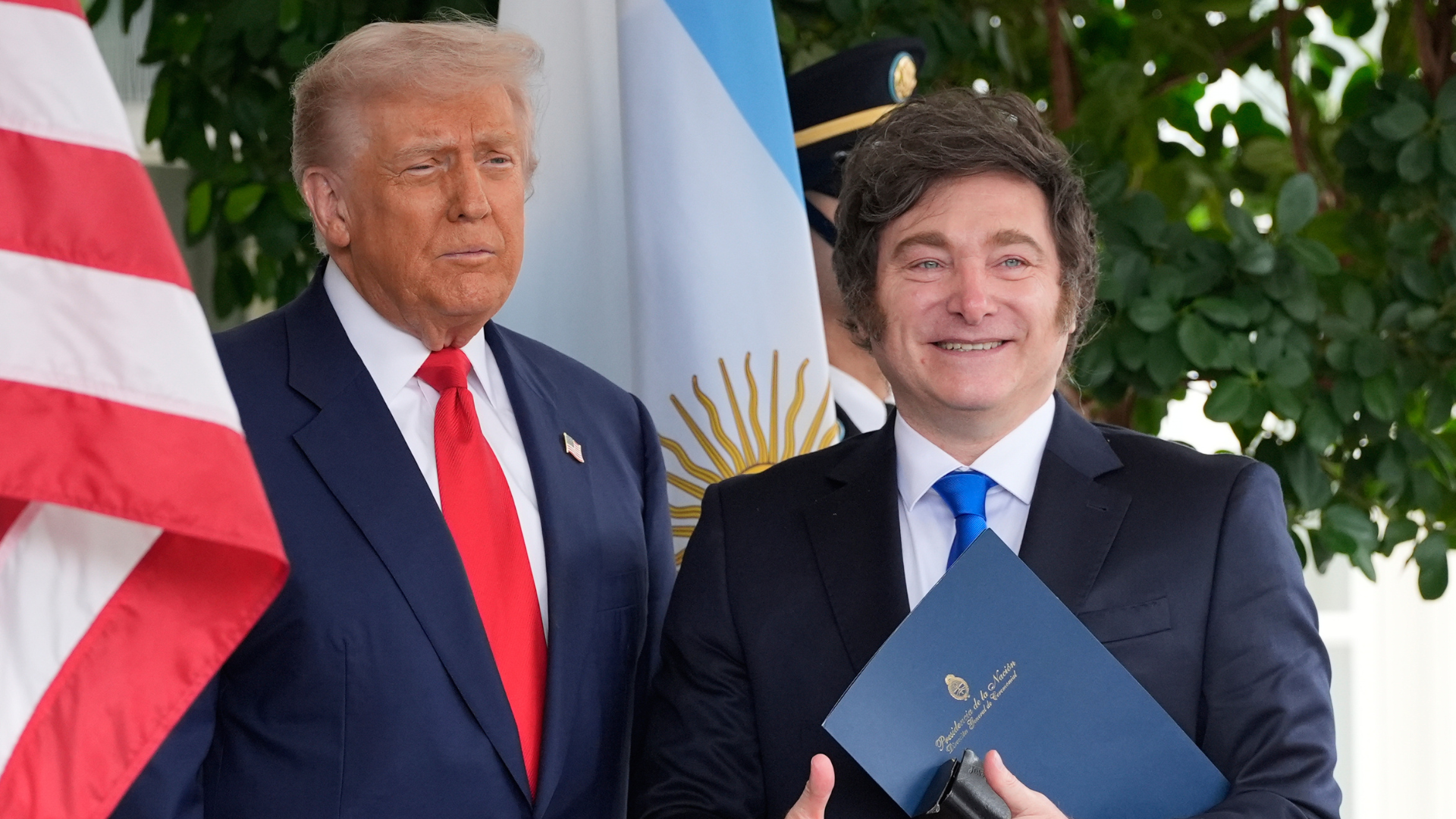
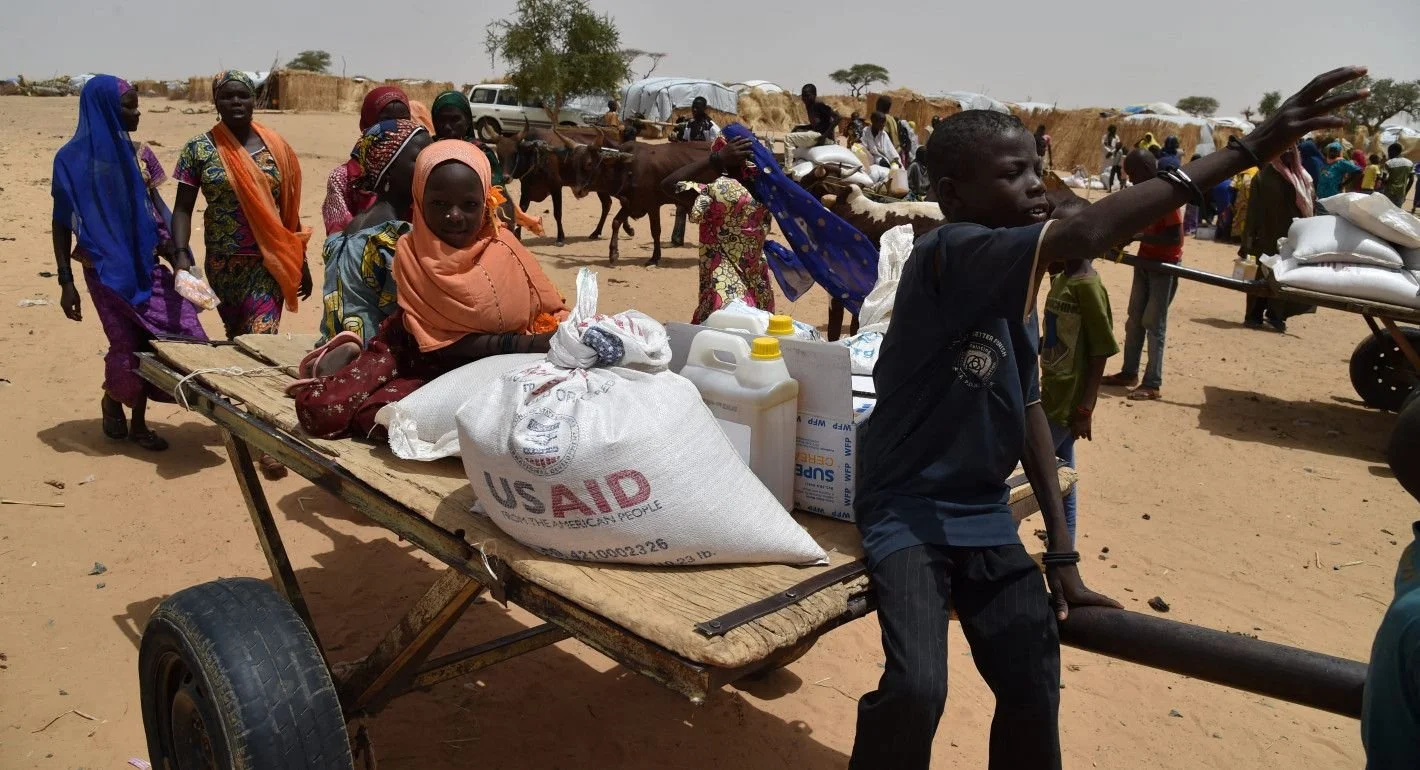
But amidst these widespread changes, one nation has been on the receiving end of American generosity and aid: Argentina. On October 9th, the U.S. announced an agreement with Argentina to provide a $20 billion currency swap lifeline to Argentina to prevent a collapse of the peso, which would have triggered widespread economic distress. This investment was followed just a few days later by another $20 billion, reportedly focused on the debt market. This move was catalyzed by the Trump administration but is to be funded by private actors and sovereign funds. Additionally, in July the Trump administration announced they were working on a plan to reinstate visa-free travel for Argentine passport holders, a strong diplomatic gesture. 

All of this for what? Just $16.5 billion in exports? When compared to the $350 billion in goods sent to Canada, it is clear that these are not economic decisions; they are ideological ones. Trump has called Argentina’s conservative leader, Javier Milei, his “favorite president” and the timing of the aforementioned financial bailout, just days before Argentina’s October 26 legislative elections, was unmistakable. The goal of these actions was immediately clear. Trump wanted to prop up Milei’s conservative party rather than risk losing ground to the left-leaning Peronist opposition movement.

This aid has come at the expense of Americans, many of whom have been longtime supporters of Trump. The beef industry has been hit particularly hard. Senator Fischer, a Republican from Nebraska who has supported Trump on nearly everything urged the administration to prioritize America’s ranchers. She warned, warned that Trump's policies are not “the way” to address rising beef prices; she asserts that government intervention in the beef market will hurt cattle ranchers and urges the Trump administration to “focus on trade deals that benefit [American] [agricultural] producers” rather than “imports that will do more harm than good.” Justin Tupper, the President of the United States Cattlemen's Association went further, saying, “A deal of this magnitude with Argentina would undercut the very foundation of our cattle industry.” 

Other Republicans were critical, or at the very least skeptical. Josh Hawley, a Republican senator from Missouri said, “My intuitive response to bailouts in general, whether talking about bank executives or foreign countries, is to be very skeptical.” In fact, 48% of Trump voters expressed disapproval of the net $40 billion package for Argentina.

Trump’s foreign policy decisions make little sense currently, but this isn’t a new revelation. People far smarter than me have been making this argument since day one. However, we must continue to ask why. Americans deserve to know why their government is underwriting the success of a foreign leader while farmers and manufacturers at home face rising costs and shrinking markets. Asking that question isn’t disloyal—it’s patriotic. In the end, holding our government accountable is far more American than bailing out a far-right ruler half a world away.

Trump’s Harmful New Plan For Gaza And Its Pushback

By: Jacob Rabin

Trump recently produced global shockwaves when he announced an American plan to control Gaza during a bilateral press conference with Israeli Prime Minister Netanyahu. Although the Gaza Strip has been governed by different nations and groups since the Mandate of Palestine began after the end of World War II, the United States has absolutely no claim to any of Gaza or its resources. 

Trump’s plan to “take over” and “own” Gaza is borderline insane as a result. Furthermore, Trump’s proposition that other Middle Eastern nations would absorb the current Palestinian population that resides in Gaza is unthinkable, particularly as American allies in the region scoff at the notion.

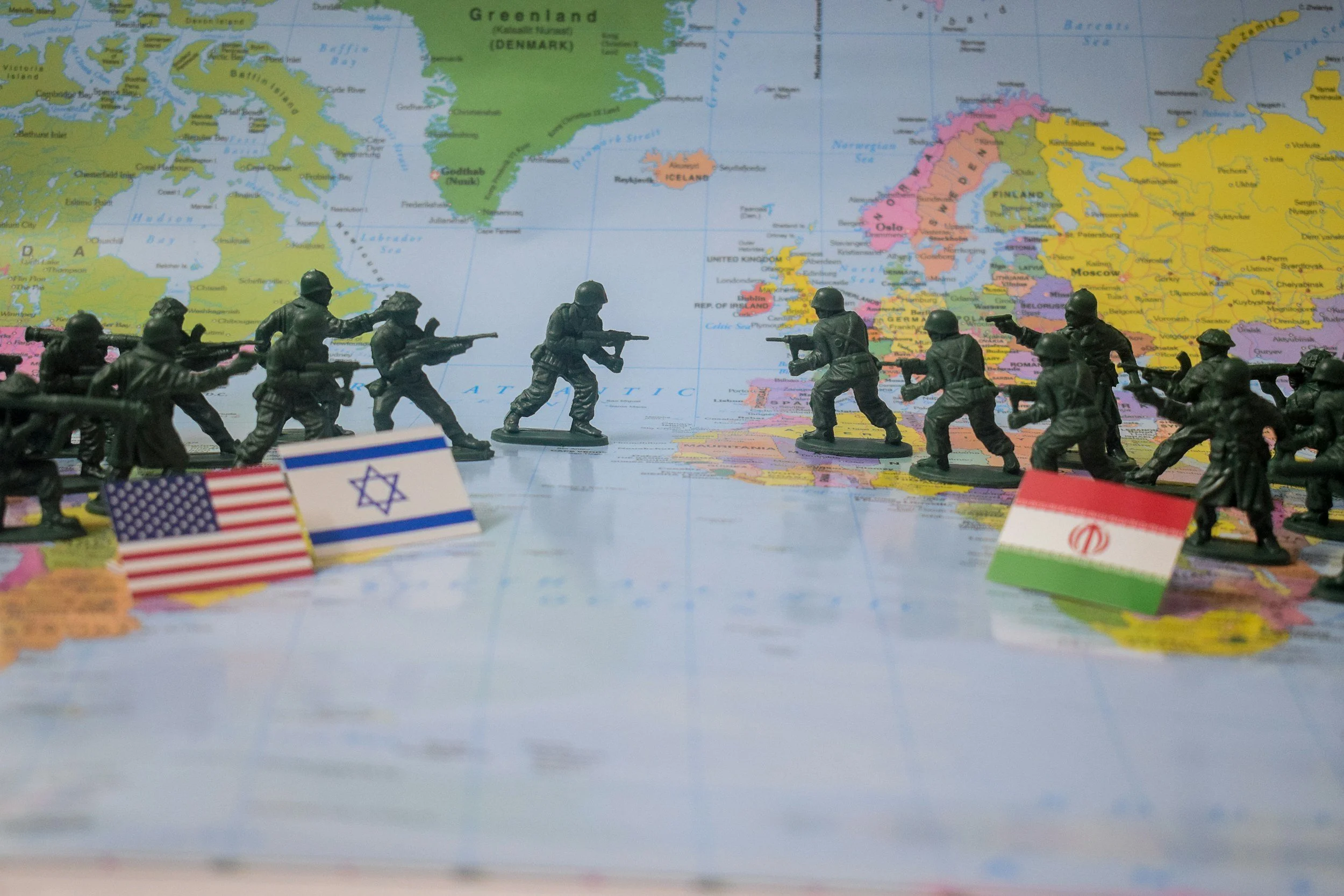
The conflict in the Middle East between Israel and Hamas that also involved Iran and Hezbollah has been a traumatic event involving the loss of much life and the destruction of much property. Beginning with Hamas’s incursion into Israel on October 7, 2023, Israeli military action has been across the region as the country has sought to protect itself from further attack. 

As Israel’s longest-standing ally, the United States has provided billions of dollars in aid since the country was first recognized, reflecting not just a desire for an independent Israel but also showing the importance of Israel’s security to American interests in the Middle East. As the only true democracy in the Middle East, the United States relies on Israel immensely. 

Nothing changed after the October 7th attack, with the United States having provided nearly $18 billion in military aid as of October 2024, the one-year point of the conflict. The reintroduction of a Trump administration into the picture has only led to a renewal of the United States’ commitment to Israel.

Some have even argued that Israel and Prime Minister Netanyahu were extending the war in Gaza until an eventual Trump re-election – with Netanyahu being the first foreign head of state to visit the White House, those beliefs have not been dissuaded. The bilateral press conference between the two leaders simply reinforced the argument that Trump and Israel are in essential lockstep. 

However, even as the two agreed on topics such as their opinion on the Biden administration and the dangers of Iran, a clear (if unsaid) division occurred. President Trump introduced his new plan that would entail the United States taking control of Gaza, saying, “We'll own it.”

Even Prime Minister Netanyahu seemed to view the proposal negatively, saying, “President Trump is taking it to a much higher level. His words and tone overwhelmingly make clear that Israel would not be a fan of further American presence in the region.

In addition to several American allies rejecting the plan, Republican lawmakers also expressed discomfort, feeling that it was just another empty plan similar to Trump’s ideas about the Panama Canal and Greenland.

Secretary of State Marco Rubio and Press Secretary Karoline Leavitt seemed to walk Trump’s plan back, saying that the United States would simply rebuild Gaza and Palestinians would only be temporarily displaced.

Even with pushback from nearly every avenue, Trump only doubled down on his plan, posting an AI-generated video depicting a resort in Gaza being built out of the rubble. Even if this talking point is nonsense, it is still absurd that the President of the United States is engaging in such spitballing.

While peace in Gaza, and the Middle East more broadly, is necessary, the solution is not more American involvement. The United States has no business or right to involve itself deeply in foreign affairs strictly for American benefit. This is especially true when Americans' lives are at risk. Instead, we should continue to work with Israel to maintain a ceasefire, allowing peace to return to the region.

What the 2024 Election Taught Us About the Future of Foreign Election Interference

By: Jacob Rabin

The 2016 and 2020 elections proved that foreign actors had both the capacity and the desire to meddle in American elections. The 2024 election season showed us that not only has foreign interest in US elections remained high, but that these actors have devised new methods to interfere. Americans must be cognizant of these efforts, as it is likely they will continue to ramp up and evolve.

Following the 2016 election, a 448 page investigation by Special Counsel Robert Mueller determined that “The Russian government interfered in the 2016 presidential election in sweeping and systematic fashion.” Interference included cyber hacks of the Democratic National Committee, a systematic social media campaign, and even links between the Trump campaign and Russia.

In 2020, the National Intelligence Council determined that in addition to attempted election interference inside the United States, President Putin authorized “operations aimed at denigrating President Biden’s candidacy and the Democratic Party, supporting former President Trump, undermining public confidence in the electoral process, and exacerbating sociopolitical divisions in the US.” Meanwhile, it was determined that Iran “carried out a multi-pronged covert influence campaign intended to undercut former President Trump’s reelection prospects” as well as “undermine public confidence in the electoral process and US institutions, and sow division and exacerbate societal tensions in the US”

In 2024, however, we saw a revamped playbook, including much of the old and some new. Like before, the interference started months in advance of November 5th.

In September, the Department of Justice unveiled an indictment revealing that Russia funded right-wing “influencers” to spread Russian propaganda. The indictment says that the influencers were unknowingly duped, but their followings totaled millions.

Microsoft released a report in August detailing their analysis of Chinese, Russian, and Iranian efforts to target our elections, including fake websites about polarizing issues, impersonation of activist groups, and fake accounts and videos, all designed to sow doubt and divide the United States.

It could take just moments of scrolling on social media to see the effects of Artificial Intelligence and “bots” online. This X thread by an open source intelligence researcher named Elise Thomas reveals a plethora of bots, all posting in support of Donald Trump. A Clemson University research report determined that there was “An army of political propaganda accounts powered by artificial intelligence” posing “as real people on X to argue in favor of Republican candidates and causes.”

On an otherwise smooth Election Day, bomb threats that U.S. officials linked to Russia disrupted voting in multiple swing states. The Arizona Attorney General stated that two thirds of Arizona’s counties received threats. The Georgia Secretary of State reported that the state received over 60 threats, many to primarily Democratic voting counties. The FBI published a statement on Election Day stating that they were aware of the threats and that election integrity is “among the FBI’s highest priorities.”

Ultimately, this interference is not only aimed at disrupting and influencing American elections. It also seeks to undermine the confidence of the American public in our complex election system. So far, it has done just that. In conjunction with Donald Trump’s baseless lies, this misinformation has led only 65% of voters to believe the 2020 election was free and fair. Just 30% of Republicans said the same. These same numbers were 72% and 87% in 2004.

Ultimately all of these examples over the last 8 or more years tell the story of a monumental issue: American elections are at risk. 

We can only expect interference to continue and worsen. At the end of the day, intelligence agencies and social media networks can only do so much to limit what gets through. 

As American citizens, we must be diligent. We must spend our time learning, reading, and understanding what is going on and what is at stake. We cannot blindly believe anything on the internet–we must return to an age of critical thinking to protect ourselves and our future. Otherwise, there is no telling where things will spiral in the future.

With Recent Developments to the Nuclear Playing Field, the U.S.'s $1.7 Trillion Nuclear Rebuild Should Concern Us All

By: Jacob Rabin

In February 2023, Russia announced that it would suspend its participation in the New START treaty, the last remaining check on American and Russian nuclear stockpiles. At this point, there have been no negotiations with Russia on a new nuclear arms treaty.

China and the United States lack such a treaty as well, and China halted recent informal negotiations due to the United States continuing to sell arms to Taiwan.

These three countries represent over 92% of the world’s nuclear weapons. Although China’s stockpile lags far behind the United States and Russia, the Defense Intelligence Agency recently published a report stating that China has surpassed earlier growth projections, and by 2030 it is estimated China will have over 1,000 nuclear warheads.

After a brief respite following the Cold War, the threat of nuclear war has skyrocketed. The Bulletin of the Atomic Scientists’ Doomsday Clock still remains at 90 seconds to midnight, the closest it has ever been.

The United States government is being forced to respond to these recent developments. The United States is now in the process of a $1.7 trillion nuclear overhaul that is expected to be completed in three decades. The developments include building new nuclear facilities, modernizing aged warheads, developing  bombers, and submarines. Jill Hruby, the Director of the National Nuclear Security Administration (NNSA), the agency that oversees the country’s nuclear weapons, recently called the plan a “renaissance.”

Not only does the plan have massive implications for the future of nuclear war, but even on the home front, these developments will have significant impacts on the communities in which they occur. Although the United States no longer routinely tests nuclear warheads, the effects of even building these weapons have extensive effects. 

In 1989, the last time that the US produced plutonium “pits,” the facility in Colorado where production occurred was actually shut down by the Environmental Protection Agency for environmental violations. The effects persist to this day, with plutonium found in the air near the plant just this past summer.

Other communities will  either be temporarily or permanently changed as thousands of employees descend on rural towns.

This is worrying. As tensions continue to escalate between Russia and Ukraine,, a war in the Middle East becoming increasingly likely, and nonstop posturing in the South China Sea over Taiwan, it’s not like there aren’t ongoing conflicts involving nuclear powers. One mistake or overreaction could genuinely change the future trajectory of the planet.

The simple truth is that we need to be alarmed. This is a multifaceted issue whose neglect will have impacts on people both now and later. We need to bring more attention to his issue. We need to work together  to build a nuclear-free future where countries, including the United States, aren’t devoting trillions of dollars to technology that could legitimately destroy the world.